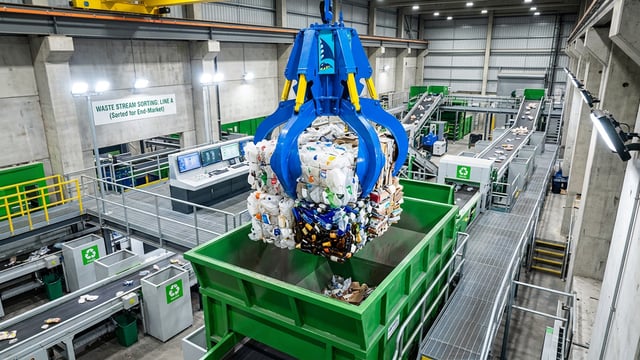
San Diego-based CP Group has acquired a majority stake in London-headquartered Recycleye, bringing one of Europe’s most active AI vision sorting specialists under the umbrella of a material recovery facility integrator that has designed and installed more than 450 sorting systems across six continents.
The transaction formalises a three-year development partnership that began in 2023 through CP Group’s optical sorting division, MSS. During that period, the two companies jointly deployed over 23 installations across the United States and Europe, centred on the Vivid-AI optical sorter, a system that pairs Recycleye’s computer vision platform with MSS’s air ejection separation technology.
From Collaboration to Consolidation
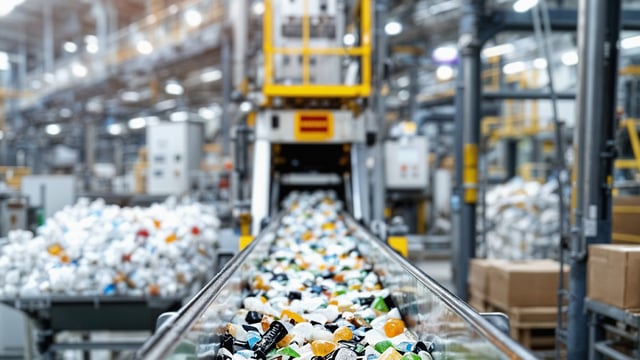
The acquisition builds on the technical foundation established through the Vivid-AI product line. Unlike robotic-arm-based AI sorting systems common in the sector, Vivid-AI uses high-speed pressurised air nozzles to separate materials identified by Recycleye’s vision algorithms. This approach enables higher belt speeds, greater throughput and reduced mechanical maintenance compared to pick-and-place robotic configurations, according to both companies.
Recycleye’s core platform, known as Recycleye Vision, uses deep learning to classify waste materials in real time across multiple categories, including black plastics, food-grade packaging and non-ferrous metal subtypes that conventional near-infrared sensors struggle to distinguish. The system is trained on a proprietary image dataset called WasteNet.
Addressing Tail-End Recovery and Labour Constraints
CP Group has positioned the deal as a response to persistent operational pressures facing MRF operators, including labour shortages, rising material purity requirements and throughput limitations. The combined technology portfolio is designed to reduce reliance on manual sorting, particularly at the final stages of the sorting line where residual recoverable value is often lost.
These so-called tail-end sorting applications represent a growing focus area in facility design. Small improvements in classification accuracy at this stage can meaningfully affect overall plant recovery rates and the commercial value of sorted output.
CP Group said it now operates one of the largest installed fleets of AI-driven optical sorting systems in Europe following the integration of Recycleye’s existing deployments.
Joint Development Roadmap Targets Hybrid AI-NIR Systems
Future product development is expected to focus on hybrid systems that combine artificial intelligence with near-infrared detection. This dual-modality approach aims to improve identification accuracy across complex, mixed waste streams where a single sensing method may be insufficient.
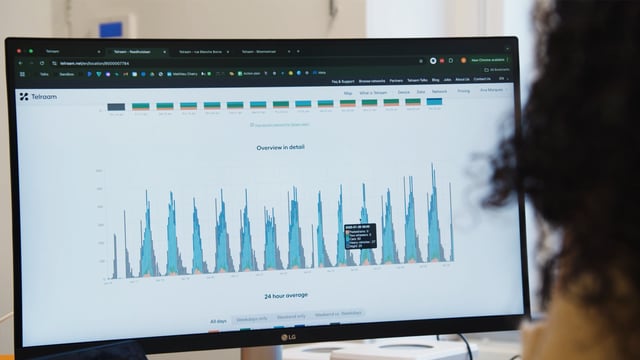
The companies also plan to develop real-time operational data capabilities, including performance monitoring, material composition analytics and automated process adjustments. These features would extend the role of AI beyond sorting into broader plant control and decision-support functions across the full MRF workflow.
Ownership Structure and Operational Continuity
Recycleye’s leadership, including CEO Victor Dewulf, and its full workforce will remain in place. The company will continue to serve customers internationally while coordinating engineering and commercial activity with CP Group across Europe and North America. Both organisations will maintain separate divisional structures.
CP Group itself underwent a significant ownership change in mid-2025, when Declaration Partners, a New York-based private investment firm, acquired a majority stake in the company. That investment was intended to accelerate research and development, fund advanced automation initiatives and support potential add-on acquisitions, making the Recycleye deal a clear early execution of that strategy.
M&A Momentum in AI-Powered Waste Sorting
The acquisition adds to a wave of consolidation and investment activity in the AI-enabled waste management sector. AMP Robotics, another major player in automated MRF sorting, raised $91 million in Series D funding in late 2024 to scale its AMP ONE municipal solid waste sorting systems, as previously covered by Kurrant. Startups including Jaipur Robotics have also attracted early-stage capital for AI-based waste processing.
The deal also reflects a recurring pattern in UK deep-tech, where AI capabilities developed in British universities and spinouts reach commercial maturity and are subsequently acquired by larger international strategic buyers rather than scaling independently.
Recycleye, founded in 2019 as a spinout linked to Imperial College London research, had previously raised approximately $25.7 million across multiple funding rounds, including a $17 million Series A in 2023. The acquisition price has not been disclosed.