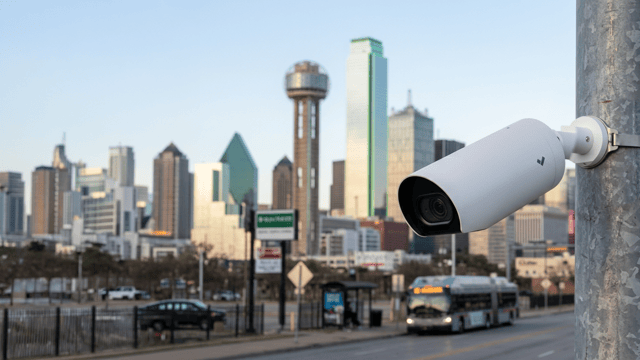
The City of Sacramento is placing AI-assisted camera systems on three dedicated parking enforcement vehicles to detect and cite drivers illegally blocking bike lanes, with a citywide rollout that prioritises school zones. A 60-day warning period launched on May 13, 2026, before live citations of $150 take effect on July 13.
Staffing Limits Drive the Shift to Vehicle-Mounted Automation
The expansion is a direct response to a documented enforcement gap. City officials acknowledged that despite receiving persistent complaints, particularly around Natomas-area schools, the volume of bike lane violations during peak school travel periods consistently outpaced officer capacity. By attaching detection systems directly to patrol vehicles, officers can flag violations continuously across their normal routes rather than relying solely on manual spot-checks.
The programme broadens Sacramento’s existing automated enforcement infrastructure. Since 2025, the city has operated AI-assisted enforcement through a partnership with Sacramento Regional Transit (SacRT), using camera systems on 100 transit buses to detect illegally parked vehicles blocking both bus stops and bike lanes. That initiative made Sacramento the first city in California and in the United States to enforce bike lane violations using technology mounted on public transit vehicles. The current deployment extends that capability to a new vehicle category: municipal parking enforcement cars that can operate beyond the fixed corridors served by bus routes.
“This program is about safety,” said Megan Carter, Traffic Engineer at the City of Sacramento, in the city’s May 2026 press release. “Vehicles blocking bike lanes force people into traffic, reduce visibility and create unnecessary risks near schools, transit stops and busy corridors. The warning period gives drivers time to adjust before live enforcement begins.”
Citations Already in the Tens of Thousands
The scale of the underlying problem is visible in the citation figures generated since the bus-mounted programmes launched. Between February 18, 2025, and May 12, 2026, the bus stop enforcement programme produced 32,478 violation citations. The bike lane enforcement programme, which began issuing warnings in April 2025 and live citations from June 13 of that year, generated 25,312 citations over a comparable period through May 2026. Together, those figures indicate a sustained, geographically distributed pattern of non-compliance that officer patrols alone cannot address at the volumes required.
The $150 citation fee that takes effect from July 13 was approved by the Sacramento City Council as part of the city’s updated fees and charges schedule, and applies equally to violations at red curbs and bus zones, representing a uniform uplift across multiple infraction categories.
How the Detection System Works
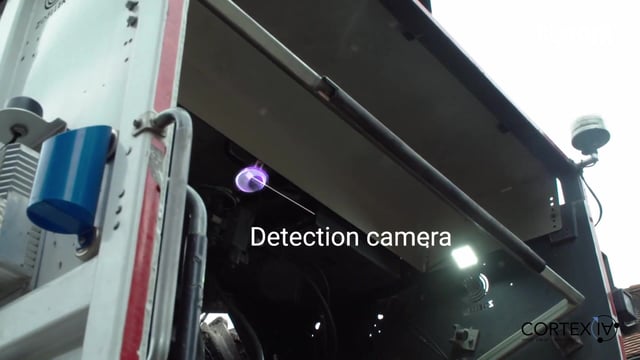
When an equipped enforcement vehicle is on patrol, its cameras continuously scan for vehicles stopped or parked in designated bike lanes. When a potential violation is detected, the system captures a short video clip, a timestamped location record, and a photograph of the vehicle’s licence plate. That evidence package is transmitted to parking enforcement officers for manual review, and no warning or citation is issued until a human officer approves the submission. Drivers who believe a citation was issued in error may contest it through the city’s standard parking citation review process.
The technology vendor for the parking enforcement vehicle expansion has not been officially identified in city communications. For the earlier bus-mounted phase, Hayden AI provided the camera and machine-learning systems installed on SacRT buses, while Duncan Solutions supplied the violation processing software.
AB 361: The Statute That Makes It Possible
The programme operates under Assembly Bill 361 (AB 361), state legislation that authorises California municipalities to issue parking citations generated by forward-facing cameras in bike lanes and transit zones. Prior to this statute, cities lacked clear legal authority to issue mail-based citations from vehicle-mounted camera systems. AB 361 has since become the enabling framework for a growing cluster of California city programmes, including those in Sacramento, Santa Monica, Oakland, Los Angeles, and Culver City.
School Zones as the Launch Priority
The initial enforcement focus falls on school zones across Sacramento, a priority that District 1 Councilmember Lisa Kaplan has consistently raised in council deliberations. The Natomas area in particular had been the subject of persistent complaints about bike lane obstructions during school drop-off and pick-up windows, periods when both the frequency of violations and the vulnerability of road users converge.
Automated Enforcement as a Vision Zero Instrument
Sacramento adopted its Vision Zero strategy in 2017, committing to eliminate traffic fatalities and serious injuries. An updated action plan, incorporating ten years of crash data and aligned with the federal Safe System Approach, was under development through 2025, with completion expected in spring 2026. Automated bike lane enforcement sits within that policy architecture: by reducing the frequency with which cyclists are displaced into live traffic lanes, the city aims to address one of the structural conditions that produces collisions between motor vehicles and vulnerable road users.
Placing detection systems on parking enforcement vehicles rather than solely on buses adds geographic flexibility that transit-mounted systems cannot provide. Coverage is no longer constrained to corridors served by bus routes, allowing officers to direct attention toward specific locations identified through complaint patterns and crash data. That targeting approach aligns with the Vision Zero model of concentrating interventions on the highest-injury network segments.
A Trend Taking Hold Across California
Sacramento’s move follows a broader pattern of California cities turning to vehicle-mounted AI enforcement to manage bike lane compliance at scale. Santa Monica launched its own parking enforcement vehicle programme on May 1, 2026. Data from that city’s earlier bus-mounted enforcement showed a 67% reduction in bus lane violations and a 40% drop in bus stop violations between July 2025 and March 2026, suggesting that sustained automated monitoring can produce measurable behavioural change over time.
Across the US more broadly, vehicle-mounted camera enforcement has grown rapidly. In New York City, routes using Hayden AI’s bus-mounted systems recorded an average 20% reduction in vehicle collisions and up to a 36% increase in bus speeds on select corridors, according to the company. For Sacramento, which is simultaneously scaling its Transportation Safety Team and updating its Vision Zero plan, automated parking enforcement represents a relatively low-cost, high-coverage tool for reducing road danger without a proportional increase in staffing.