Dubai’s public parking operator Parkin Company PJSC has launched the first phase of a city-wide smart parking camera rollout, deploying more than 700 AI-enabled units across on-street and controlled parking environments. The initiative marks a significant operational shift from meter-based enforcement to automated, camera-driven parking management, with the curb-side technology deployed in this phase described as the first of its kind in the Middle East.
A Two-Track Deployment Across On-Street and Lot Environments
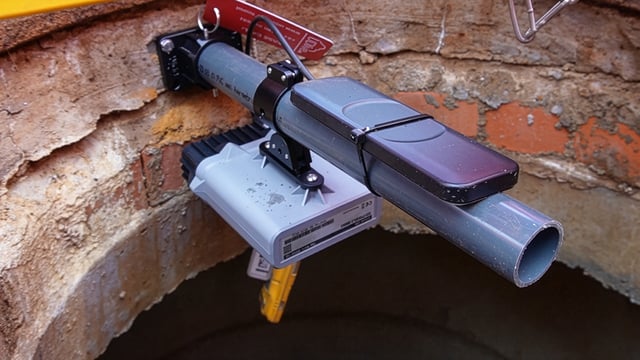
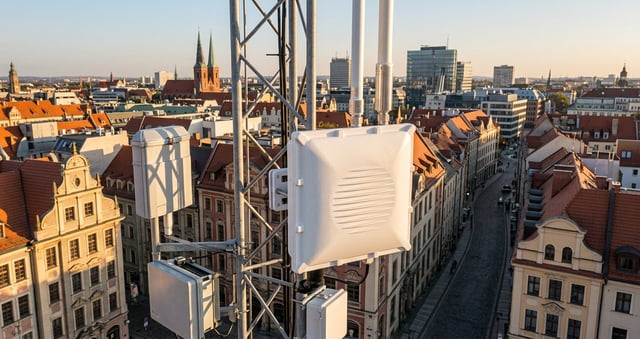
The rollout spans two parallel infrastructure tracks. More than 500 curb- and pole-mounted cameras are being installed at three high-density locations: Trade Centre 1, Burj Khalifa, and Al Corniche. Alongside this on-street network, an additional 200 cameras are being deployed across controlled parking lots distributed throughout the emirate. Both systems use AI-powered automatic number plate recognition to log vehicle entry and exit times, calculate parking duration, process fees, and flag violations without requiring driver interaction.
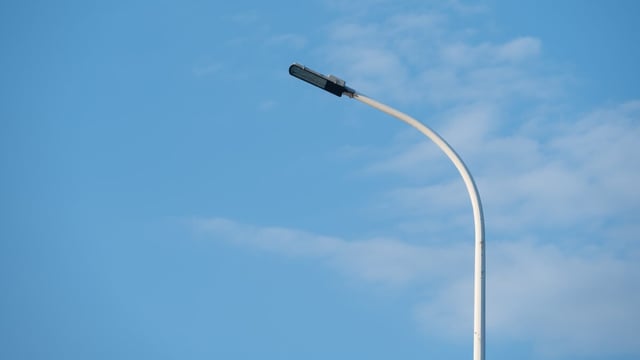
The curb-mounted units are engineered to integrate within existing street furniture rather than standing as separate enforcement infrastructure. All cameras across both tracks are solar-powered, removing the need for grid connections and reducing installation complexity in dense urban streetscapes.
Automated Payments and Real-Time Occupancy Data
Once operational, the system eliminates the need for drivers to initiate parking sessions manually via meters or SMS. Fees are calculated based on actual time parked and settled automatically through the Parkin app and Parkin Wallet, which is available on iOS, Android, and Huawei devices. The platform also feeds real-time occupancy data to a central system, enabling drivers to access live information on available spaces in monitored zones before arrival.
“This rollout marks an important step in scaling our smart parking infrastructure and strengthening how customers interact with parking across the Emirate,” said Eng. Mohamed Abdulla Al Ali, CEO of Parkin, in the company’s 13 May 2026 press release announcing the rollout. “We remain focused on enabling more efficient access to parking and ensuring seamless management for customers across every aspect of their parking journey, while supporting Dubai’s vision for smarter and more connected urban mobility.”
The automated enforcement model is also intended to reduce the incidence of incorrect fines, with penalty issuance tied directly to verified parking durations captured by the camera network rather than relying on manual inspection.
Parkin’s Scale and Strategic Position
Parkin currently operates approximately 229,000 paid parking spaces in Dubai under a 49-year concession agreement with the Roads and Transport Authority, making it the dominant operator in the emirate’s public parking market. Listed on the Dubai Financial Market since March 2024, the company processed 141 million parking transactions across its platform in its most recently reported full year, with a growing share settled digitally ahead of this week’s camera announcement.
This week’s announcement is framed as Phase 1 of a 2025-26 smart parking technology programme, with the company signalling the rollout will extend to additional locations as it matures. It arrives alongside a series of recent Parkin moves: an enforcement partnership announced earlier this month with Emaar Mall Management covering Dubai Mall, Dubai Hills Mall, and Marina Mall, and a barrierless parking expansion with Secure Parking targeting a pipeline of more than 60,000 spaces across the UAE.
Fitting into Dubai’s Broader Smart Mobility Agenda
This week’s deployment feeds into a wider digital infrastructure push across Dubai’s transport ecosystem. The RTA’s $681 million PPP programme for 2024-26, which Kurrant has covered, encompasses smart street lighting, aerial mobility, and connected transport projects running in parallel to Parkin’s rollout. The RTA has also been operating an AI-powered traffic intelligence platform built on Iteris ClearGuide software, combining five years of historical traffic data with real-time feeds to monitor road conditions across the emirate.
Parking search behaviour is a recognised contributor to urban congestion. Studies of dense city environments have found that a significant share of traffic in commercial districts at peak hours consists of vehicles circling for available spaces. By providing real-time occupancy data at the district level and removing friction from the payment process, the system is designed to improve space turnover and reduce the duration of parking searches, with downstream effects on traffic flow in affected zones.
Dubai Municipality has also moved in parallel on transport-adjacent infrastructure, launching a public EV charging programme covering 600 parking spaces across parks and recreational facilities, as Kurrant reported, signalling that parking infrastructure more broadly is being repositioned as an active component of the emirate’s smart mobility network rather than a passive urban service.
The Parkin camera programme does not yet have a disclosed capital expenditure figure associated with the Phase 1 deployment. The technology vendor or vendors supplying the AI camera hardware have not been publicly identified in available announcements.