Scottish Water has awarded a £50 million contract to Elster Metering Ltd for the supply of Advanced Metering Infrastructure (AMI) covering its entire non-household customer base in Scotland. The contract, which emerged from a competitive process involving three bidders, marks the formal procurement cornerstone of an accelerated national rollout planned to run from 2026 to 2032, subject to final business case approval.
From Pilot to National Scale
The contract builds directly on a proof-of-concept programme that Scottish Water conducted with approximately 3,000 commercial customers in Inverness and Orkney, two locations that exposed the logistical and connectivity challenges inherent to Scotland’s geography. That pilot validated the core technology approach and provided operational learnings before any commitment to a programme at this scale.
Scottish Water is targeting roughly 136,000 non-household customers across the country, a figure that encompasses businesses, public sector bodies, charities and other non-domestic organisations. Scotland is notable for having been the first country in the world to open its business water market to retail competition, a structure in place since 2008, where Scottish Water acts as the wholesale network operator and licensed retailers serve end customers. That market architecture also shapes the data-sharing obligations the AMI infrastructure must satisfy, particularly around retailer access to consumption data.
What the Contract Covers
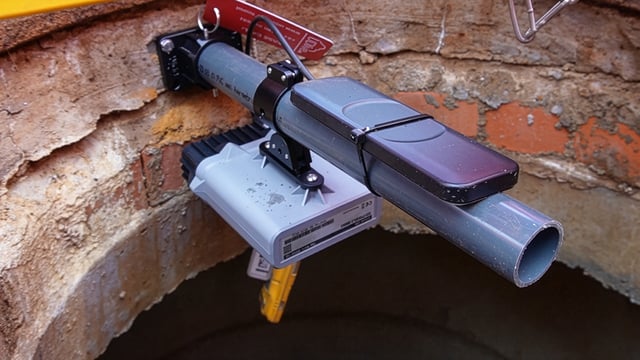
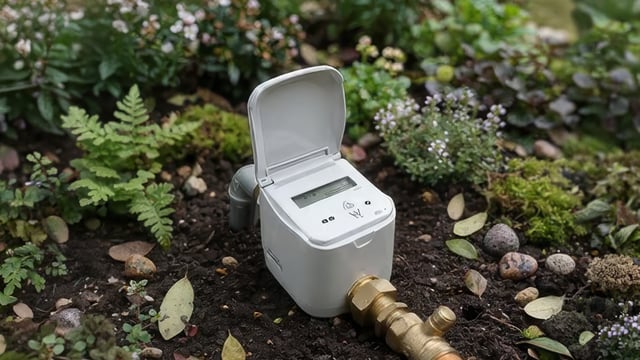
The framework awarded to Elster Metering encompasses the supply of smart water meters for non-household customers, supporting headend systems, communication networks, and overall service management and front-line support. Installation services were explicitly excluded from the procurement scope and will be handled separately.
A Meter Data Management System (MDMS), which must integrate with the AMI solution procured through this contract, was also excluded and tendered independently in July 2025, valued at approximately £5 million. The MDMS is intended to serve as the central platform for receiving, transforming, and distributing metering data across Scottish Water’s internal and external stakeholder ecosystem, including meter read provision to retailers operating in the competitive market.
Approximately 34% of the overall contract value is expected to be subcontracted by Elster Metering, reflecting the breadth of capabilities required. Scottish Water had acknowledged during the tender process that a mixed communications network approach would likely be necessary given the country’s terrain, and that the winning bidder would almost certainly need to assemble a consortium of partners to deliver the full technology stack, while maintaining a single accountable lead.
Demand Reduction as the Primary Driver
Scottish Water has framed the programme not primarily as an asset replacement exercise but as a demand management tool. The stated target is a sustainable reduction of 80 million litres per day (80 MLd) through a combination of customer-side behaviour change and network-side interventions made possible by granular, near-real-time consumption data.
The existing mechanical meter estate will be fully replaced, with rollout sequencing prioritised according to water deficit areas rather than geography or operational convenience. This risk-based approach reflects a broader imperative: Consumer Scotland projections indicate that without adaptation, Scotland could face a daily deficit of 240 million litres of water by 2050, driven by climate change and population growth concentrated in water-scarcer eastern regions.
Elster Metering and the Honeywell Connection
Elster Metering Ltd, registered in Bracknell and incorporated in 1966, operates within the Honeywell group. The company’s product portfolio spans gas, electricity, and water metering solutions, with its water metering division supplying a range of electromagnetic, ultrasonic, and mechanical meter technologies alongside advanced metering communication modules to utilities across more than 130 countries. Winning the Scottish Water contract represents one of the more significant AMI infrastructure mandates in the UK water sector in recent years.
A Busy Season for UK Smart Water Metering
The Scottish Water award lands at a moment of considerable commercial activity across UK water utilities in the AMI space. United Utilities selected Arqiva to lead a metering programme targeting more than one million customers across the North West on a framework valued at approximately £250 million, as Kurrant reported earlier this year. Southern Water separately awarded a £338 million, 20-year metering-as-a-service contract to Horizon Water Infrastructure Ltd, covering both household and non-household meters, a deal covered by Kurrant in August 2025. Scotland’s programme is more focused in scope, concentrating exclusively on the commercial segment rather than the broader household estate.
The non-household metering segment carries disproportionate strategic weight despite representing a smaller meter count than residential programmes. Across the open water market in England, a small proportion of non-household customers account for the majority of commercial consumption, making accurate, high-frequency data from this cohort particularly valuable for demand management, leak detection at larger premises, and retailer billing accuracy.
Technical Complexity and Network Design
Scotland’s geography presented the defining constraint throughout the procurement design phase. Rolling terrain, remote island communities, and dispersed rural business customers mean that no single communications technology is likely to achieve the coverage required. Scottish Water’s tender documentation signalled an expectation that the successful bidder would deliver a mixed network architecture, potentially combining licensed and unlicensed spectrum solutions to meet connectivity targets across the full customer footprint.
This multi-technology approach distinguishes the Scottish deployment from some of the more uniform network architectures being deployed in the more densely populated service areas of English utilities. Headend systems capable of managing data from meters operating across different network types will require robust integration engineering and are central to the value of the MDMS that runs parallel to this contract.