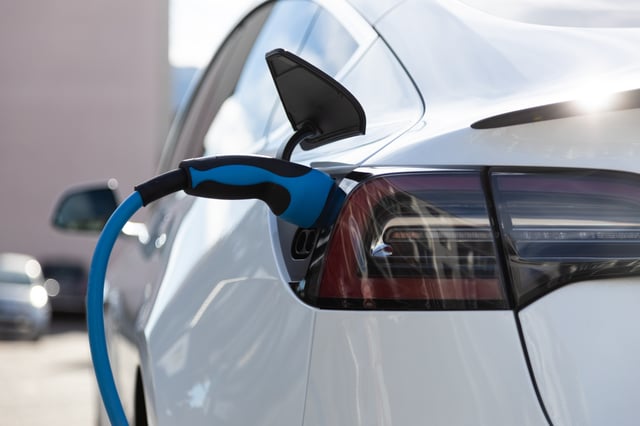
Oxfordshire County Council has awarded contracts to two charge point operators to deliver what will be the county’s largest-ever expansion of public electric vehicle charging infrastructure. Connected Kerb and Bicester-based EZ-Charge will jointly deploy more than 1,500 new public charging sockets over the next two years, more than doubling the number currently available across the county’s highways and council-managed car parks.
A Divided Mandate With a Unified Goal
The two operators have been assigned distinct but complementary roles. Connected Kerb holds responsibility for on-street charging on the highway network, as well as county council-run park and ride sites and associated car parks. EZ-Charge, which already has an established footprint across Oxfordshire through the earlier Park and Charge programme, will take on charging hubs within district and city council-owned parking facilities.
The split structure reflects a deliberate countywide coordination strategy, aligning infrastructure governance across multiple local authority tiers, from the county level down to district and city councils, under a single technical framework. Oxford City Council also recently confirmed the transfer of its on-street EV charging network management to Oxfordshire County Council, with Connected Kerb taking over day-to-day operations of bollard-style chargepoints across the city.
Reaching Residents Without Off-Street Parking
A defining feature of the programme is its focus on households that lack private driveways or off-street parking, a group that has historically faced the highest barriers to EV adoption. Site selection in the initial phase will prioritise areas with high concentrations of such residents, with specific locations to be confirmed following feasibility assessments.
The bulk of new installations will be 7kW standard chargers designed for overnight use, allowing drivers without home charging to top up at lower off-peak energy costs. A smaller number of rapid chargers at 50kW and above will be positioned at strategic locations to serve daytime users, including commuters, delivery drivers and visitors.
“We are thrilled to have won the Oxfordshire contract and look forward to bringing our tried and tested EV charging solutions and innovative smart charging tariffs to the area,” said Chris Pateman-Jones, CEO at Connected Kerb, in the county council’s June 2026 announcement. “As one of the UK’s largest and most experienced CPOs, we look forward to meeting the growing EV charging needs of Oxfordshire’s residents, visitors and commuters and providing the highest standards in EV charging and customer service.”
Community Microhubs as a Rural Access Tool
To extend coverage into villages and rural areas where neither on-street nor car park infrastructure is practical, the county council is launching a parallel community microhub initiative. Town and parish councils and non-profit organisations will be invited to host publicly accessible chargers at community venues including village halls, sports pavilions and community centres.
Six pilot sites have already been selected, with installations scheduled before the end of this year ahead of a broader application round. The model draws on precedent already set in the county: South Oxfordshire District Council previously supported the installation of EV chargers at Stanton St John village hall through a local grant scheme, demonstrating that decentralised, community-anchored infrastructure can accelerate rural uptake.
Funding Structure and Government Backing
The programme draws on the UK government’s Local EV Infrastructure (LEVI) fund, administered by the Department for Transport, alongside additional central grants and direct private investment from the two operators. The total LEVI allocation for Oxfordshire stands at £3.6 million, seeding a programme whose overall value exceeds £10 million when private capital is included.
Keir Mather, the government’s Aviation, Maritime and Decarbonisation Minister, described the funding as targeting one of the most persistent obstacles to EV uptake, noting that the investment would more than double the number of public chargers available to drivers in the area.
Building on a Longer Infrastructure History
The rollout does not start from zero. The earlier Park and Charge programme, delivered between 2021 and 2022, placed 250 EV charge points across council car parks in Oxfordshire, giving EZ-Charge in particular significant operational familiarity with the county’s infrastructure landscape.
In parallel, the county council contracted ODS to install EV cable channels across the highway network, enabling residents in homes without off-street parking to connect to home-based charging, a complementary strand of delivery that this new public network is designed to sit alongside.
Regional Context: LEVI Taking Shape Across England
Oxfordshire’s programme is one of several LEVI-backed rollouts now advancing across England. Connected Kerb secured a contract with North Northamptonshire Council in January 2026 to deliver more than 1,500 charging sockets, backed by £2.9 million in government grant funding. In December 2025, West Berkshire Council announced a similar partnership with Connected Kerb for over 600 charge points, supported by £382,000 in LEVI funding.
Taken together, these deployments signal a maturing phase for the LEVI programme, in which early pilot funding is now converting into multi-year operational contracts with defined delivery timelines and private co-investment commitments from charge point operators.