in Barcelona
 3 to 5 Nov 2026
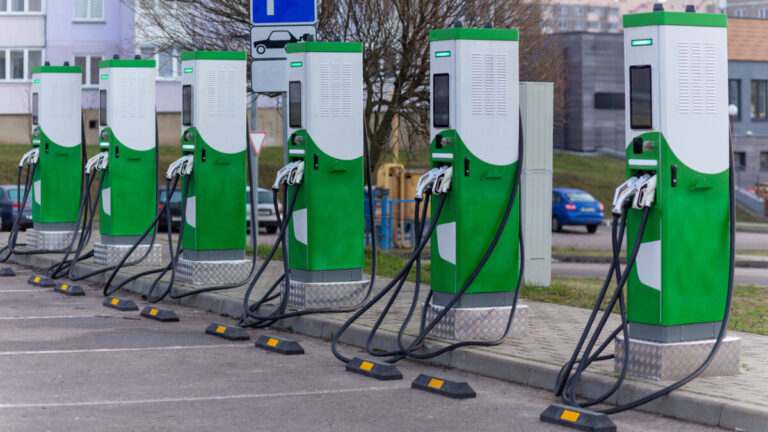
Telford & Wrekin Council has activated the most significant electric vehicle charging deployment in the borough’s history, bringing live charge points online across multiple public car parks as part of a 200-unit programme spanning 35 council-owned sites. The council structured the rollout through a combination of UK government grant funding and a zero-cost private investment commitment from charge point operator Believ, avoiding direct capital expenditure while securing full long-term operational coverage.
The Borough’s Boldest Bet on Transport Decarbonisation
The decision to act at this scale was driven by Telford & Wrekin’s internal sustainability strategy and a recognition that residents without access to private driveways have been effectively locked out of the EV transition. The council secured close to £700,000 in government funding tied to the programme, though it remains unclear from public records whether that figure reflects the full 200-charger scope or an earlier deployment phase. The council used those funds through the On-Street Residential Chargepoint Scheme (ORCS), a Department for Transport grant instrument specifically designed to serve residents without off-street parking. Government Business
Of the 200 units planned, 124 are backed by ORCS funding and 76 are fully funded by Believ, with the operator absorbing all planning, installation, operations and maintenance costs going forward.
Charger Mix Mapped to How People Actually Use Car Parks
Rather than deploying uniform hardware, the council specified a two-tier charger strategy based on visitor behaviour. Standard Plus units serve longer stays and overnight charging, while Rapid chargers are positioned for shoppers, diners and short-stay visitors. Wrekin Road car park, one of the first sites to go live, has ten charge points already operational under this mixed configuration.
The 35-site footprint covers key locations across the borough, with particular attention to destinations that draw both residents and visitors, including Ironbridge, a UNESCO World Heritage Site whose tourism economy the council is explicitly looking to support.
A Demand Curve the Borough Can No Longer Ignore
“This is an exciting milestone in our work to decarbonise transport and make sustainable travel more accessible to residents and visitors. Partnering with Believ and using government ORCS funding has allowed us to efficiently roll out a high-quality EV charging network for our residents, especially those that do not have on-street parking. Believ’s fully funded offering means we have been able to install scalable EV charging infrastructure across the council,” said Councillor Carolyn Healy, Cabinet Member for Planning, Neighbourhoods and Sustainability at Telford & Wrekin Council, in the council’s June 2026 project announcement.
The urgency behind that statement is grounded in data. Research by Midlands Connect projects a 1,812 percent increase in EV uptake across Shropshire and Telford & Wrekin by the end of 2030, with the local EV fleet expected to grow from approximately 6,332 vehicles today to over 121,000. At that rate of adoption, a borough with thin public charging coverage faces the risk of stranded residents and suppressed EV uptake, making this deployment a demand-management decision as much as an environmental one. Transport + Energy
The programme is estimated to deliver lifetime carbon savings of more than 18,000 tonnes, with the council also building in community benefit commitments as part of the contract structure.
How the Council Transferred Risk Without Losing Control
The procurement model Telford & Wrekin chose is increasingly common among English councils that want infrastructure at pace but lack capital budgets to match. Believ, the trading name of Liberty Charge Limited, installs, operates and maintains all speeds of publicly accessible charge points at zero cost to public sector partners, and powers its entire network on 100% renewable energy. LinkedIn
The operator closed a £300 million investment facility in 2025, backed by joint owners Liberty Global and Zouk Capital alongside Santander, ABN Amro, NatWest and MUFG, earmarked for the installation of at least 30,000 charge points nationally. That financial backing gives councils like Telford & Wrekin confidence in long-term network reliability, a factor that has historically weakened public trust in early-generation public charging. Liberty Global
Telford’s Deployment in a Fast-Moving Regional Picture
The Telford rollout is landing in a competitive regional moment. In the same week, CPO EZO secured a £176 million contract to deploy 250 chargers across Worcestershire, Leicestershire, Rutland and Warwickshire County Councils, awarded through the Fourth Midlands EV Infrastructure Consortium. The pace at which Midlands councils are now moving on public charging reflects both the pressure of the government’s 300,000 public chargepoint target for 2030 and the maturity of the CPO market in absorbing that demand. Evinfrastructurenews
Believ itself expanded its hardware offering in early 2025 through a strategic partnership with Wallbox, adding 60kW, 120kW, 150kW and 220kW rapid and ultra-rapid models to its deployment portfolio. The Telford network currently relies on Standard Plus and Rapid units, but the operator’s broader capability set gives the council a clear upgrade path as demand grows. Wallbox
What the Borough Has Committed to Delivering
Believ retains full operational responsibility for the network once installed, which removes ongoing maintenance exposure from Telford & Wrekin’s budget. The council’s role shifts from infrastructure owner to strategic commissioner, with Believ accountable for uptime, user experience and long-term serviceability across all 35 sites.
Whether this model delivers measurable improvements in resident charging access, visitor economy performance at Ironbridge, and verifiable carbon reductions will ultimately determine how the Telford deployment is read by other councils weighing similar decisions. For now, it stands as the borough’s clearest infrastructure commitment to the EV transition to date.