The Ayuntamiento de Santa Pola, a coastal tourist municipality of roughly 35,000 residents in Alicante, Spain, is replacing its entire public lighting stock with individually connected LED fixtures controlled over a Narrowband-IoT (NB-IoT) network, under a 15-year energy services contract worth €17.3 million awarded to a joint venture of Ferrovial Energía and Iberdrola. Telefónica Tech was selected as the connectivity and platform integrator, and in collaboration with Spanish hardware manufacturer Tellink, has deployed approximately 6,300 NB-IoT nodes across the municipality, enabling point-to-point remote control of every streetlight in the network.
A €17.3 Million Contract Structured Around a 15-Year Energy Services Model
The municipality awarded the integral public lighting management contract to the Ferrovial-Iberdrola UTE at a final value of €17,287,721.85, representing a 1.5 percent discount on the base procurement budget. The structure follows an Energy Services Company (ESC) model, in which the concessionaire finances, installs, operates, and maintains the infrastructure over the contract term, recovering costs through guaranteed energy savings. The scope covers 7,348 luminaires across the entire municipal area, including the urban core, the industrial zone, beach areas, and residential districts such as Gran Alacant and Pueblo Levantino. The contract also encompasses the energy supply itself, and maintenance vehicles will carry ECO environmental certification. The project additionally incorporates the implementation of the municipality’s pre-drafted Smart City Master Plan, which aims to create a unified operations, control, supervision, and management centre consolidating all services and existing monitoring systems into an intelligent city management framework.
NB-IoT as the Connectivity Backbone for Point-to-Point Luminaire Control
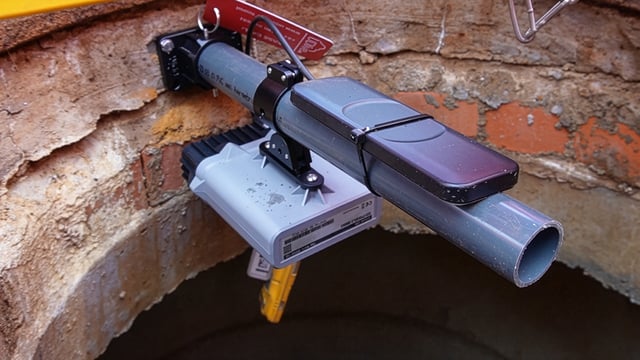
Telefónica Tech and Tellink have deployed approximately 6,300 nodes with NB-IoT connectivity to enable real-time data access and transmission from every streetlight in the network, including hard-to-reach locations, to centralised management platforms. NB-IoT operates on licensed spectrum within existing LTE infrastructure, making it well suited to large-scale, dense IoT deployments where low power consumption, reliable penetration, and long device lifespan are priorities over bandwidth. The architecture eliminates the need for additional wiring and is designed to be forward-compatible, capable of adapting to 5G as network generations evolve. Each node is assigned an individual IP address, so operators can identify, query, and command any single fixture independently without affecting the rest of the network.
Operational Capabilities: Demand-Responsive Dimming and Predictive Maintenance
Through the NB-IoT platform, Ferrovial Energía and Iberdrola Clientes are able to operate, maintain, and regulate light levels across the municipality in line with real-time conditions. The system can reduce illumination in areas with limited pedestrian or vehicle traffic and increase it during events with high public attendance, optimizing energy draw accordingly. Beyond scheduled dimming profiles, the platform supports predictive maintenance by detecting faults or impending failures before they result in outages, reducing the cost and response time of corrective interventions. The project also involves the renovation of 132 control panels to bring them into regulatory compliance and enable real-time monitoring of the full installation.
Heritage and Urban Quality Dimensions of the Program
The lighting modernisation goes beyond utility-scale energy management. The contract includes a dynamic and artistic lighting plan for the area surrounding the Castillo-Fortaleza, intended to enhance the architectural value of the fortress and activate the surrounding outdoor public space. Residential areas where existing luminaires cause light pollution from proximity to homes will see adjusted mounting heights and repositioning of light points, and pedestrian crossings in the town centre are being reinforced to improve road safety. The ambition stated by the municipality is to position Santa Pola among tourist destinations in the Valencian Community with the lowest carbon footprint and the highest lighting quality.
Vendor Positioning: A Repeating Trio Scaling Across Spanish Municipalities
The Santa Pola deployment is the latest iteration of a recurring industrial arrangement between Telefónica Tech, Ferrovial, and Tellink. The same three parties previously connected more than 10,000 NB-IoT nodes for the public lighting system in Santiago de Compostela in collaboration with Endesa X, and in March 2026 carried out a comparable 6,300-node rollout in Burriana, Valencia, through a joint venture with Endesa. Dionisio Martínez, CEO of Tellink, noted in the company’s June 2026 press release that successfully scaling thousands of smart luminaire and control panel controllers in a local authority, and managing their periodic updates, requires experience that only accumulates across multiple deployments, and that Tellink brings a portfolio of more than 100 smart lighting contracts executed to date. The Telefónica Tech smart lighting solution has received the company’s Eco Smart environmental seal, verified by Spanish accreditation body AENOR.
Market Context: Spain’s Municipal Lighting Upgrade Cycle
Spain’s smart lighting market is projected to add more than USD 790 million between 2026 and 2031, driven by municipal modernisation programmes, EU Green Deal energy efficiency mandates, and the country’s broader digital transformation agenda. An earlier Ferrovial-Telefónica-Tellink estimate identified approximately 4.6 million luminaires across Spain that are either LED without remote control or older sodium-vapour lamps, representing a substantial addressable market for IoT retrofits. Energy prices in Spain have historically ranked among the highest in Europe, creating strong economic incentives for municipalities to invest in systems that reduce electricity consumption through automated dimming, daylight response, and occupancy-based control. The procurement model used in Santa Pola, in which a single concessionaire covers installation, energy supply, and maintenance under a long-term contract with guaranteed savings, has become a reference structure for mid-sized Spanish municipalities seeking to modernise without immediate capital outlay.