in Barcelona
 3 to 5 Nov 2026
Bloomberg Philanthropies announced on June 23, 2026, at London Climate Action Week, a $45 million investment to expand Breathe Cities, a global initiative co-delivered with the Clean Air Fund and C40 Cities to improve urban air quality and protect public health. The funding adds two new members to the network and deepens technical and policy support for the existing cohort across five continents, as city officials increasingly turn to distributed sensor infrastructure and localized data to design and justify clean air interventions.
Addis Ababa and Madrid Join a Network Now Covering 88 Million Residents
Addis Ababa and Madrid will join 14 existing participating cities, bringing the total to 16 worldwide. Beyond the formal member cities, the initiative has engaged more than 60 additional cities globally through peer learning, technical exchange, and knowledge-sharing activities intended to accelerate broader adoption of clean air approaches. The full network now spans Accra, Bangkok, Bogotá, Brussels, Jakarta, Johannesburg, London, Mexico City, Milan, Nairobi, Paris, Rio de Janeiro, Sofia, and Warsaw, in addition to the two new entrants.
Breathe Cities collectively improves the air for more than 88 million people. The addition of Addis Ababa, an emerging African hub city that will host COP32 in 2027, carries particular strategic weight, as it signals an effort to anchor the initiative’s methodology in a major Global South city ahead of the world’s most prominent climate policy forum.
Building in this space?
Kurrant Ventures backs start-ups digitalising cities and utilities, and opens doors to the operators that buy from them.
- Latitudo 40
- GoodVision
- Meersens
- Cortexia
Nearly 1,200 Sensors Deployed Across 14 Cities Since the 2023 Launch
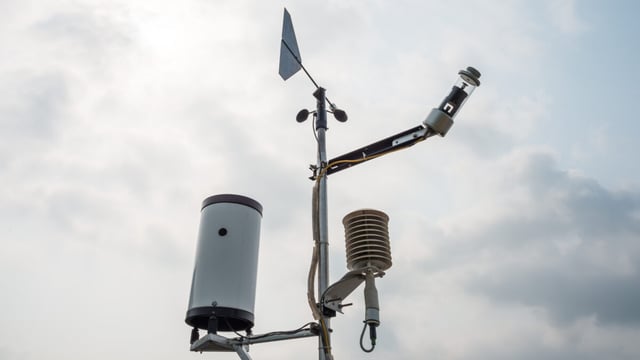
Since its launch in 2023, cities in the Breathe Cities network have deployed nearly 1,200 air quality sensors, helping local leaders and communities use real-time data to identify street-level hotspots and pollution sources where people live, work, and play. The sensor deployments range in scale and technology across cities. Clarity Movement, a key technology partner in multiple Breathe Cities projects, supplies solar-powered air quality sensors alongside cloud-based data platforms, with its hardware currently active in London, Accra, and Jakarta. Cities collect high-resolution data on pollutants including PM2.5 and NO2 using Clarity’s Node-S sensors, with some cities adding Multi-Gas or Black Carbon modules to capture additional emissions sources.
In London, the flagship node of the global network, Vodafone was selected to lead the next phase of the Breathe London program, overseeing a four-year expansion covering 146 IoT sensors. Airly supplies the low-cost IoT sensors, with installation assistance from Ontix and SRL. Vodafone’s network infrastructure serves as the communications backbone for secure data transmission. The consortium also includes Global Action Plan, Ricardo, Scotswolds Ltd, Cambridge Environmental Research Consultants, and the University of Cambridge. Imperial College London’s Environmental Research Group continues to operate 215 community-facing sensors under the Breathe London Community Programme. In Nairobi, the city launched its first network of 50 city-owned sensors in 2025, giving local government direct control over pollution data for the first time.
26 Local Policies Enacted; 10 Cities Committing to Clean Air Zones by 2030
The initiative’s output since 2023 extends well beyond sensor deployment into documented policy change. Cities have designed and implemented 26 local clean air policies. In London, data from more than 330 sensors supported policies including the world’s largest Ultra-Low Emissions Zone and traffic restrictions on more than 500 school streets, helping the city meet legal nitrogen dioxide limits for the first time, nearly 200 years earlier than experts once projected. In Jakarta, a landmark bus electrification policy is now in effect. Across the initiative, 10 cities have committed to implementing Clean Air Zones by 2030, covering areas where more than 18 million people live and work.
Breathe Cities has helped member cities reduce toxic nitrogen dioxide pollution by 14% since the initiative launched. Paris illustrates how sensor data directly informs traffic regulation: localized air quality data helped support vehicle restrictions on 300 streets and the phaseout of the city’s most polluting vehicles. Warsaw and Sofia demonstrate the heating system transition pathway: the two cities have replaced approximately 24,500 polluting household heating systems.
7,500 Electric Buses Operating Across the Network as Fleet Electrification Accelerates
The Breathe Cities model treats fleet electrification as a near-term lever alongside sensor deployment and zoning policy. More than 7,500 electric buses now operate across the network. In Bogotá, more than 1,500 electric buses serve nearly 600,000 daily journeys as part of one of the world’s largest zero-emission bus fleets. The scale of that single deployment positions Bogotá as a benchmark case for other Global South members working to decarbonize high-ridership transit corridors.
London’s fleet transition was cited explicitly by Mayor Sadiq Khan in the June 23 announcement. “In London, we’ve developed the world’s largest clean air zone, one of the biggest electric bus fleets in the world, and deployed air sensors on over 500 school streets,” said Sadiq Khan, Mayor of London and Co-Chair of C40 Cities, in the Bloomberg Philanthropies June 2026 press release. “From Bogotá to Sofia, cities across the world are adopting and expanding clean air zones inspired by the success of London’s clean air zone.”
Breathe Cities Grew Out of the Breathe London Pilot Launched in 2018
Breathe London began in 2018 as an intended one-year program, jointly run by the Greater London Authority alongside C40 Cities and primarily financed by the Children’s Investment Fund Foundation. The first phase, launched in 2021 by the Mayor of London and Bloomberg Philanthropies and delivered by Imperial College London, established a robust air quality monitoring network at hospitals, schools, cultural institutions, and other priority locations across the city, with real-time data published online.
At COP26 in 2021, Mayor Khan called for the creation of Breathe Cities to replicate London’s model globally. The resulting initiative launched in June 2023 with an initial $30 million commitment from Bloomberg Philanthropies, the Clean Air Fund, and C40 Cities. The $45 million announced on June 23 represents the second major funding round, bringing the cumulative total committed to the initiative above $75 million since inception.
WHO Compliance Gap Frames the Market Opportunity for Municipal Air Quality Programs
The scale of unmet need provides context for why the Breathe Cities model is generating replication interest beyond its 16 member cities. Almost no urban area currently meets World Health Organization air quality guidelines, and 41% of cities have pollution levels more than seven times above WHO recommendations. Globally, air pollution is associated with 7 million premature deaths annually and costs the world economy an estimated $8.1 trillion, equivalent to 6.1% of global GDP.
The initiative targets a 30% reduction in air pollution and planet-warming emissions across participating cities by 2030. Achieving that goal is estimated to prevent 55,000 premature deaths, avert around 111,000 new cases of childhood asthma, save $147 billion in avoided hospitalizations and deaths, and eliminate up to 394 megatonnes of CO2-equivalent emissions. Those projections, if substantiated, would make Breathe Cities one of the highest-impact urban health interventions currently operating at the city-government level globally.
Clarity, Vodafone, Airly, and Imperial College Represent the Current Vendor Landscape
The technology layer of Breathe Cities is delivered through a distributed set of vendors rather than a single platform. Clarity provides its Sensing-as-a-Service model, which bundles solar-powered sensors, a cloud data platform, and expert project support, currently active in London, Accra, and Jakarta. Cities access real-time data via Clarity’s dashboard, REST API, and OpenMap interface. Vodafone brings what it terms a “Network as a Sensor” approach for Breathe London, using its existing mobile network infrastructure as a hosting platform for additional sensor locations. Ricardo applies annual quality assurance and quality control checks to the data produced by the London network. The multi-vendor structure is consistent with C40’s broader approach of avoiding single-source dependencies in city infrastructure programs.