The Ayuntamiento de Madrid has moved from design to active construction of its Gemelo de Gemelos, a federated municipal digital twin intended to unify all existing urban data systems, sensors, 3D models, and operational services into a single, continuously updated virtual environment. The initiative sits within Madrid Capital Digital, the city’s 2023–2027 digital transformation strategy, which carries a multi-year investment of €1 billion. More than 150 technical and operational staff drawn from across every area of city government are now engaged in six dedicated working groups, marking the transition from pilot demonstration to city-wide implementation.
The “Twin of Twins” Model Differs From Conventional City Digital Twin Approaches
Rather than building a monolithic platform, Madrid’s architecture treats each domain-specific twin as an independent entity, built to the requirements and use cases for which it is needed. The Gemelo de Gemelos concept functions as a common infrastructure layer where those domain twins converge. The platform is designed to deploy across multiple cloud providers, making it cloud-agnostic and cloud-ready, while a GeoDataLake of geospatially tagged municipal data underpins advanced analytics. Platform capabilities will be exposed to users and to other systems through open APIs, treating the twin infrastructure as a consumable service. This federated approach allows individual municipal departments to develop and manage their own twins while contributing to a shared, transversal city picture.
Six Working Groups Are Digitising Madrid’s Physical and Operational Reality
The six active working groups are executing five parallel technical workstreams. The first involves continuous geomatics capture of the physical city using advanced surveying technology. The second applies AI-generated structured information to the resulting point clouds and imagery. The third focuses on integrating and consolidating dispersed municipal datasets, including the ability to ingest external data streams. The fourth builds out visualisation, analysis, and predictive simulation capabilities. The fifth enables evidence-based scenario configuration for policy and operational planning. Identified digital twins already in development or planned include the Madrid Nuevo Norte development zone, the Positive Energy District, the Madrid Tax Agency’s Tax Lab, urban planning BIM, and the city’s Geoportal.
The Geoportal and SueñaMadrid Platforms Provide the Territorial Data Foundation
The build relies heavily on two established spatial knowledge systems. The Geoportal serves as Madrid’s Spatial Knowledge Infrastructure, providing a solid base of geospatial data for evidence-based management, with a three-dimensional model of physical reality as a fundamental basis for the Digital Twin. The city’s participatory urban planning portal, SueñaMadrid, adds a community-sourced spatial layer to the data fabric. On the geomatics side, the authorised cartographic contract includes annual aerial orthophotographs combining aerial photography and photogrammetry, as well as optical and thermal flights in 2025 and 2027 to detect and visualise urban objects by temperature. The topographic network, which currently maintains 5,179 survey vertices across the city, will receive continuous updates to reflect ongoing urban development. That contract carries a specific budget of €5.1 million through 2028.
NTT DATA and UPM Among Partners in Prior Demonstrators and Research Collaboration
Several partners have been involved in shaping the project’s technical foundations before the current construction phase. NTT DATA contributed to early demonstrations of the Digital Twin, along with transport operator EMT Madrid and specialists from the Colegio de Ingenieros de Caminos, Canales y Puertos. On the academic side, the Escuela Técnica Superior de Ingenieros de Caminos, Canales y Puertos of the Universidad Politécnica de Madrid signed a collaboration agreement with the Ayuntamiento to develop digital twin demonstrators, including simulations of pedestrian mobility, tunnel thermoactivation, and connected vehicle environments. No specific contract award for the core twin-of-twins platform has been confirmed in public procurement records as of the time of publication.
Early Use Cases Have Already Demonstrated Operational Value
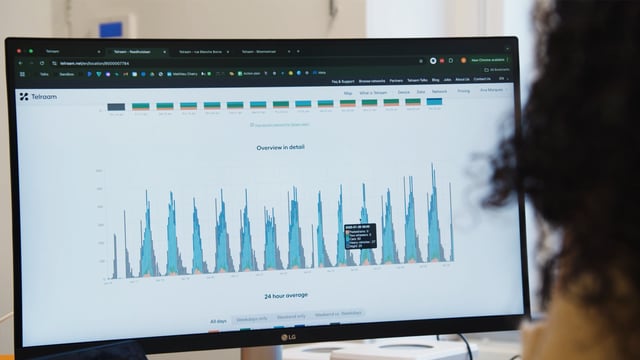
Prior demonstrators have validated several concrete operational scenarios. Use cases shown to date include analysing pedestrian and vehicle flows during large events such as the Cabalgata de Reyes, modelling traffic variables on the Puente de Bailén, managing mobility around the Paisaje de la Luz and Parque de El Retiro, and supporting planning for the Madrid Nuevo Norte urban development. These scenarios illustrate how the platform prioritises service continuity simulation and infrastructure impact assessment before physical intervention, reducing the cost and uncertainty of major operational decisions.
Madrid’s Strategy Addresses Connectivity Infrastructure in Parallel
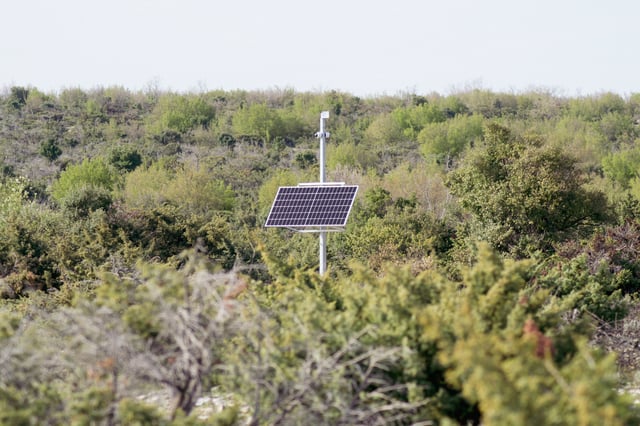
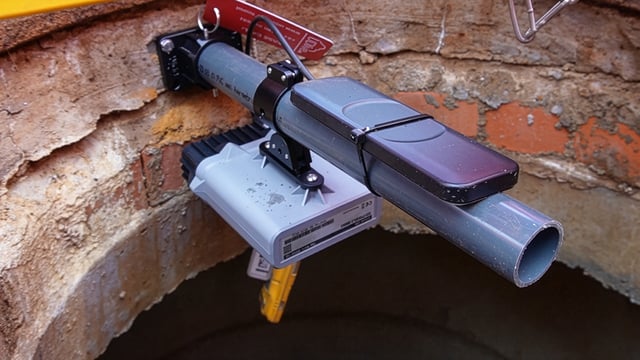
The Digital Twin build is not running in isolation. Kurrant’s coverage of Madrid’s smart city programmes has highlighted how the city’s Digital Office is simultaneously advancing IoT connectivity infrastructure, including IPv6 and 6LoWPAN protocols, to ensure that sensor networks feeding the twin can scale reliably across the municipality. This connectivity layer is a prerequisite for the real-time data ingestion the Gemelo de Gemelos requires to remain a live, operational environment rather than a static model.
Urban Digital Twins Represent a Fast-Growing Global Segment With High Stakes for European Municipalities
The global digital twin market was valued at approximately $13.6 billion in 2024, with projections suggesting growth to $428.1 billion by 2034 at a compound annual growth rate of 41.4%, driven in part by the growing use of digital twins in smart cities and urban planning. Within Europe specifically, the European digital twin market accounted for $3.6 billion in 2024, with government smart city programmes and Industry 4.0 initiatives identified as primary growth drivers. Madrid’s approach of building an interoperable, open, cloud-agnostic platform is consistent with the European Commission’s broader push for sovereign, standards-based urban data infrastructure under initiatives such as the European Green Deal and the Destination Earth programme. By anchoring the twin in existing public platforms like the Geoportal rather than purchasing a single vendor solution, the city reduces lock-in risk and preserves the ability to integrate future systems.
Scale and Cross-Departmental Integration Define the Programme’s Complexity and Ambition
The Madrid Capital Digital strategy, running from 2023 to 2027, is backed by a multi-year investment of €1 billion, with three primary objectives: delivering agile and accessible digital services; achieving data-driven, efficient and sustainable city management; and positioning Madrid as a leading digital innovation hub at the European level. The Gemelo de Gemelos is the central data integration layer that makes the second objective achievable at scale. With more than 150 staff already involved, the programme represents one of the largest cross-departmental public sector digital twin mobilisations currently underway in Southern Europe. The platform is expected to progressively connect domains including water networks, electrical infrastructure, sewerage systems, mobility, urban planning, and fiscal management as successive working group outputs are integrated