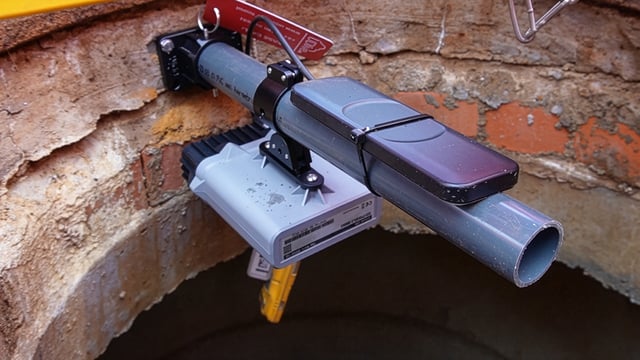
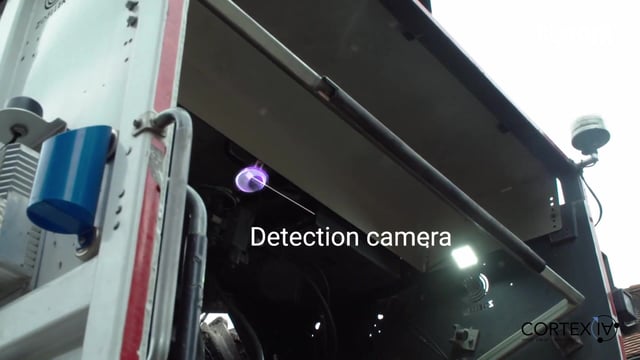
The Cyprus Ministry of Transport will introduce fixed AI-powered cameras capable of detecting drivers holding mobile phones, Transport Minister Alexis Vafeades announced on June 25, 2026, at the inaugural session of the newly constituted House of Representatives Transport Committee. The scheme will begin as a pilot, with the first stage designed to assess how the system performs and whether it produces reliable results before any enforcement begins. No vendor or capital cost has yet been disclosed for the AI pilot.
Fatality Trends That Forced the Policy Shift
Cyprus’s road safety record has worsened against a broadly improving European backdrop. The island recorded 46 road deaths per million inhabitants in 2025, a 10% increase over 2024, while EU-wide fatalities fell roughly 3% over the same period to approximately 19,400. The European Transport Safety Council found that Cyprus shed 8.9% of its road deaths over the past decade, but saw a sharp 21% spike in 2024 alone, pushing the country from 6th to 13th in the EU safety rankings. Officials previously reported that 19 people died on Cypriot roads in a single year due to inattentive driving, including incidents directly linked to mobile phone use.
How the AI Detection Model Will Work
Unlike conventional traffic cameras, the AI system is designed to detect when a driver is holding or using a mobile phone, at which point it alerts a police officer who reviews the potential offence before any penalty is issued. Once a suspicious situation is identified automatically, the system saves a video clip for manual review by an operator, and a fine is issued only after the violation is confirmed. This AI-plus-human oversight model mirrors the technical architecture adopted in comparable deployments across the UK, Greece, and Australia, where fully automated enforcement has faced regulatory resistance under data protection frameworks.
The new cameras will be permanently installed, unlike the current mobile camera systems, allowing for more targeted enforcement of dangerous driving offences. If the pilot proves successful, the government will prepare legislation for approval by the House before any wider rollout, followed by a further public awareness period to ensure motorists understand how the system operates before penalties are enforced.
Existing Enforcement Infrastructure and Contract Status
Cyprus’s current photo-enforcement network was launched in October 2021 at an installation cost of €8 million, with a five-year operating cost estimated at €35 million, operated by Conduent State and Local Solutions Inc. under a contract covering 90 fixed cameras at 30 island-wide locations and 20 mobile units. Since the system went live, more than 850,000 fines have been issued, with official forecasts suggesting the total could approach one million by the end of 2026. The existing contract runs until September 11, 2027, with an option to extend for two further years.
The current system detects three primary violation types: speeding, red-light running, and crossing the stop line, with seatbelt and helmet violations reviewed secondarily only after one of those core offences is recorded. The AI camera layer would expand detection to handheld phone use as a primary, standalone trigger, requiring software upgrades and legislative amendments that Vafeades confirmed are being prepared.
Urban Redeployment of Mobile Camera Vans
Vafeades announced a parallel operational change to the mobile enforcement fleet. Mobile camera vans will be redeployed primarily on urban roads, where the majority of serious and fatal traffic collisions occur, while police patrols on motorways will continue alongside rather than be replaced by the new technology. For motorways, the government is separately considering an average-speed system that would track vehicle speed across the full length of a commute. Vafeades told MPs that most fatal accidents occur in cities, making the urban redeployment a higher-priority intervention than expanding motorway coverage.
The Regional Deployment Landscape
Cyprus is not alone in moving along this curve. Neighboring Greece activated a €93.8 million AI traffic camera network in January 2026, with multi-violation detection capabilities covering speeding, mobile phone use, seatbelt non-compliance, and helmet violations, implemented jointly by three ministries with a projected rollout of approximately 2,500 units by end of 2026. As reported in January 2026, the Greek model relies on a unified electronic system for centralized processing, a template Cyprus may draw on as it drafts its own legislative framework.
Eight AI cameras deployed in Athens between December 2025 and January 2026 recorded nearly 29,000 violations, with a single unit on Syngrou Avenue flagging over 8,000 drivers for phone use or seatbelt non-compliance. Research published in Management Science in 2025 by the London School of Economics and the University of Wisconsin-Madison found that AI camera deployments reduce accidents even in nearby areas without cameras, offering evidence that carefully deployed AI technologies can create real, system-wide improvements.
Vendor Market for Phone-Detection AI
No vendor has been named for the Cyprus pilot, and no procurement tender has been announced. The market for this technology is led by a small number of specialists. Acusensus, an Australia-based company, has installed its Heads-Up detection solution across six Australian states, ten UK police forces, six US jurisdictions, and New Zealand, with the system capable of simultaneously detecting mobile phone use, seatbelt non-compliance, speeding, and illegal lane use. In New South Wales, the state where the first Acusensus program launched in 2019, the rate of mobile phone detections dropped by a factor of six over two years. German firm Jenoptik and Dutch operator Vitronic also offer comparable fixed and mobile AI enforcement platforms active in multiple European jurisdictions.
Limassol Traffic Congestion Shapes Broader Ministry Priorities
MPs raised chronic traffic congestion in Limassol as a parallel pressure point, with Vafeades acknowledging that the city absorbs roughly 12,000 new vehicle registrations annually. He confirmed that meetings with four Limassol mayors and two community leaders in May produced an agreed list of 60 projects for near-term implementation, ranked by traffic need and available funding. A northern Limassol bypass tender is targeted for launch by the end of 2026, though the project itself will take three to four years to complete, with interim traffic management solutions being examined in the meantime.
Project delivery delays also drew sustained committee scrutiny. ALMA MP Odysseas Michailidis announced that his movement would submit a bill on contract transparency and project timelines. Vafeades said the ministry was already appointing project directors to inspect works and report progress, and welcomed the legislative initiative.