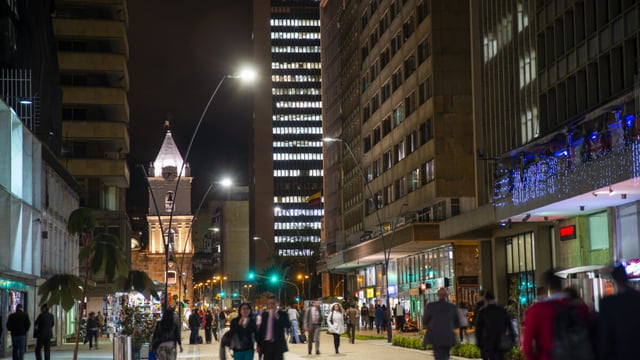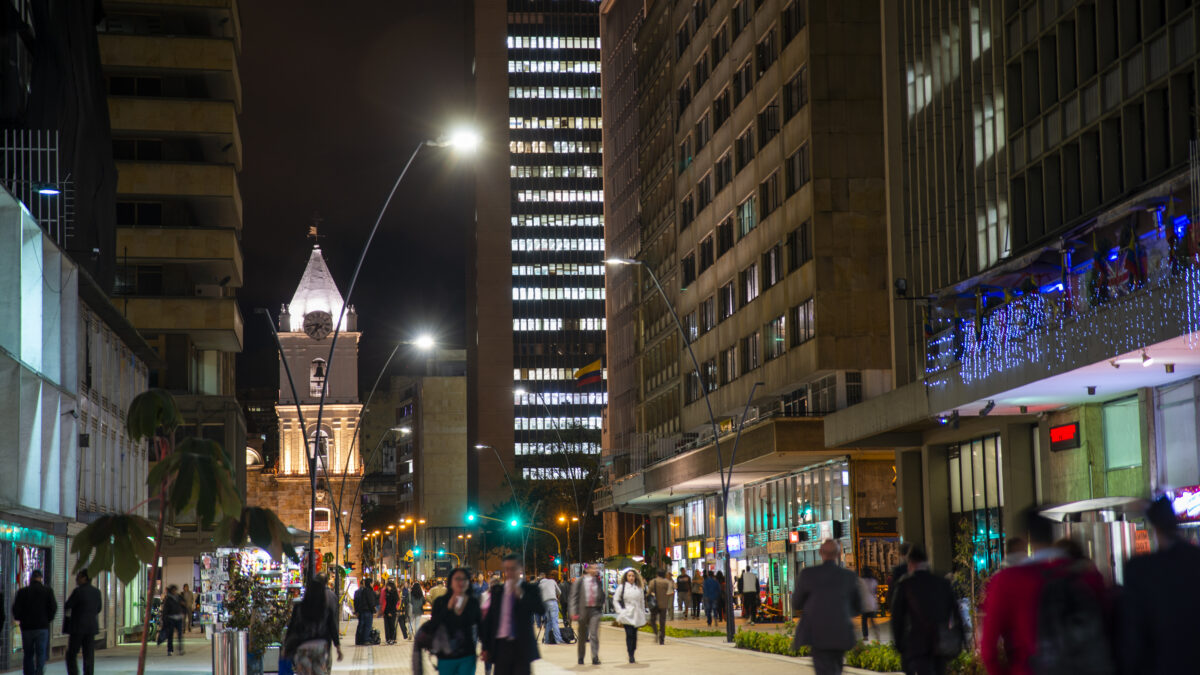
The Concejo de Bogotá, the city council of Colombia’s capital, has approved Acuerdo 724 of 2026, a “Ciudad Inteligente” (Smart City) agreement under which more than 100,000 streetlights would be converted to LED and fitted with remote telemanagement nodes. The district government presented the measure in late September 2026; it now awaits sanction by Mayor Carlos Fernando Galán, with several provisions taking effect on January 1, 2027. The upgrade is planned to take about two years and would cover about 28% of the city’s more than 361,000 luminaires. It comes as the 1997 agreement under which Enel operates Bogotá’s public lighting expires on November 30, 2026.
Poles Designed As Multi-Service Nodes
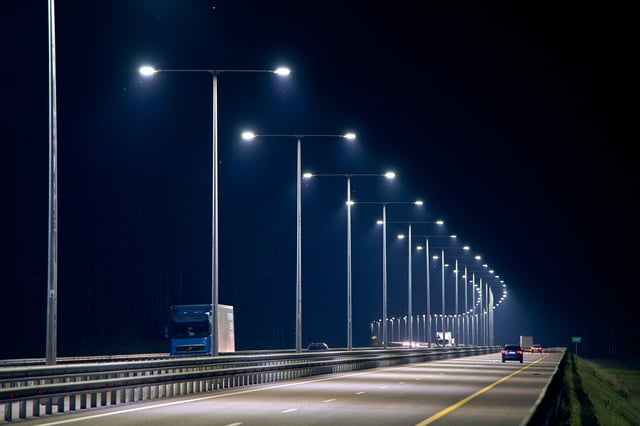
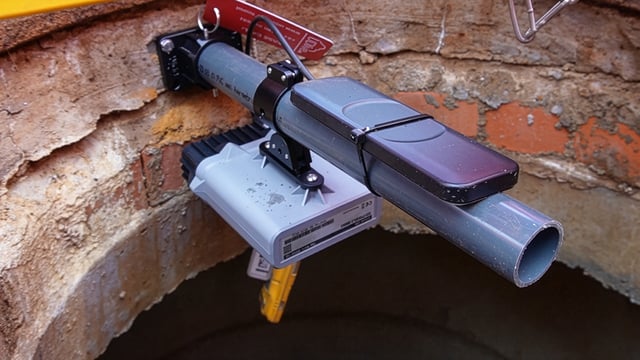
The agreement treats each modernised pole as a platform rather than a light. Alongside LED luminaires that can be dimmed and switched remotely, poles are to carry air quality microsensors for fine particulate matter, fire detection sensors and security cameras linked to the city’s C4 command, control, communications and computing centre, the district said.
Data from the air quality sensors is to feed the Secretaría Distrital de Ambiente’s monitoring network, and the poles would also carry noise sensors, according to the city’s environment coverage. Some poles would provide free public internet access for low-income households, and overhead cabling is to be reorganised and partly buried.
“A city with fewer cables, better lighting and smart management systems can help improve the experience of people who walk in Bogotá,” said Vanessa Velasco, Secretary of Habitat, in the district’s September 28, 2026 announcement (translated from Spanish).
Security Secretary César Restrepo described each pole as becoming a technological node, Pulzo reported, a framing that places the lighting renewal inside the city’s security strategy as much as its energy policy.
The district projects energy savings of 70% for LED luminaires compared with the high-pressure sodium lamps they replace. That is a manufacturer-style comparison per fitting rather than a measured citywide figure, and no baseline consumption has been published.
Delivering 100,000 telemanaged points in two years means installing roughly 135 a day, every day, a pace that will depend on who owns the poles being replaced. The agreement also leaves around 260,000 luminaires outside the first programme, and the district has not said whether they will keep conventional controls or be added in later phases.
The End Of A 29-Year Operating Arrangement
The timing is driven by contract expiry. Enel’s role rests on Convenio 766 of 1997, which ends on November 30, 2026, and the company owns about 97% of the city’s luminaires, Pulzo reported in August, citing the district.
The district has set a goal of owning at least 30% of the lighting infrastructure within ten years. It has said there is no automatic right for Enel to continue as operator and no exclusion of other bidders, and that decisions on how the system will be run in the medium and long term will follow technical studies and the necessary authorisations.
That leaves the central commercial questions open less than two months before expiry. The district has not published who will operate the network from December 1, how the 100,000-point upgrade will be procured, or what it will cost.
A Pilot At Calle 85 Tests The Security Model
The city has been piloting the concept since mid-2026. The Unidad Administrativa Especial de Servicios Públicos (UAESP), the district agency that oversees public lighting, installed smart poles at Calle 85 and Carrera 15 that detect luminaire faults automatically, raise vandalism alerts and adjust light levels to pedestrian and vehicle traffic, the district said in July.
The pilot also tests security functions. Cameras with video analytics can read licence plates, apply facial recognition and trigger alerts for pre-configured situations, and panic buttons on the poles turn nearby cameras toward an incident, Semana reported in August. The pilot was carried out with ETB, the Bogotá telecommunications company.
Maintenance pressure explains the interest in automatic fault reporting. The district handled more than 24,000 requests for damaged or stolen lighting between 2025 and mid-2026, processed about 93,000 service orders in 2026 with 86.93% completed within 120 hours, and dealt with about 10,000 theft and vandalism incidents, each damaged luminaire costing more than COP 1.3 million to replace.
How Bogotá Compares With Cali
Bogotá is not the only Colombian city moving its entire network toward remote management. In May 2026, Kurrant reported that Cali had opened a tender through its municipal utility Emcali to convert all of its more than 186,000 luminaires to LED with telemanagement.
Bogotá’s plan is smaller as a share of its network, at under 30% of points, but more ambitious in scope because it bundles cameras, environmental sensors and connectivity into the lighting upgrade.
The Questions Before January 2027
The agreement sets out what the poles should do but not who will pay for them or run them. The mayor still has to sanction the text, and the city has published neither a capital budget, a procurement model nor an operator for the post-Enel period.
Adding facial recognition and licence-plate reading to a lighting contract also changes who needs to be at the table. The procurement will have to address data ownership, retention and access for the C4 camera feeds as well as luminaire performance. The figure that will decide whether the plan is realistic is the cost per smart pole, multiplied across 100,000 points, set against a public lighting charge that the city council restructured by socioeconomic stratum in its recent tax reform, El Tiempo reported.