in Barcelona
 3 to 5 Nov 2026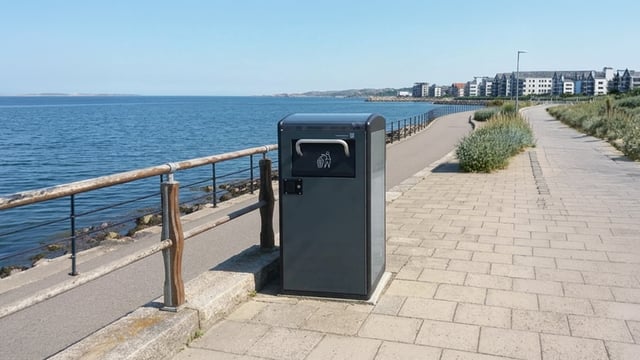
The city of Cagnes-sur-Mer, the second-largest commune in the Métropole Nice Côte d’Azur, installed its first solar-powered compacting smart bin on 7 July 2026, opening a summer trial along its Mediterranean seafront. Mayor Bryan Masson inaugurated the unit on the Promenade de la Plage, at the corner of Square Balloux, and framed it as the template for a wider fit-out of the commune’s roughly four kilometres of beach.
Each unit carries a stated cost of 7,000 euros, and the pilot mirrors a larger deployment already running in neighbouring Nice. The municipality has said it hopes to extend the model across the commune by the end of summer 2026, with additional units earmarked for the length of the Cagnes-sur-Mer beachfront once the trial concludes.
A Single Unit With Beach-Wide Ambitions
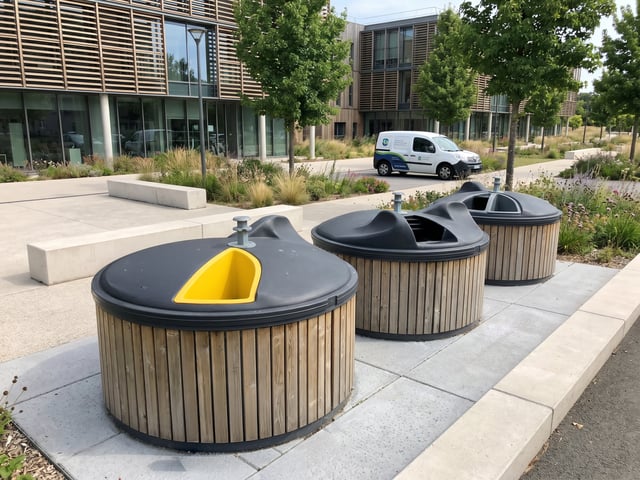
The inaugurated bin is a two-stream design. It pairs a compartment for standard plastic and mixed waste with a smaller dedicated receptacle for cigarette butts, targeting the loose litter that accumulates near bathing areas during the tourist season.
Cagnes-sur-Mer is a dense coastal town of roughly 52,000 residents that ranks, according to the Cour des comptes, as the second commune of the metropolis by population. Its seafront draws heavy summer footfall, which makes bin overflow and windblown plastic near the water a recurring operational problem for cleaning teams.
How The Bin Detects Fill Levels And Trims Collection Runs
The unit is autonomous. An integrated solar panel powers onboard sensors that measure how full the bin is, and the city says that reading is transmitted wirelessly so waste teams can adjust routes and skip bins that do not need emptying.
The core efficiency gain comes from compaction. Solar-stored energy drives a mechanism that crushes waste as it accumulates, raising effective capacity well above that of an open street basket and cutting the number of collection trips a fixed schedule would otherwise require. Fewer runs translate into lower fuel use, reduced labour hours and less vehicle traffic along the promenade.
A 7,000-Euro Price Tag And The Case For It
Cost is the headline constraint of the technology, and the mayor addressed it directly at the launch. “It should be noted that these models are expensive: 7,000 euros per unit, which represents an enormous investment,” said Bryan Masson, Mayor of Cagnes-sur-Mer, at the 7 July 2026 inauguration reported by Nice-Matin, adding that the outlay was necessary to support municipal cleaning staff.
That figure is consistent with long-standing market pricing for solar compactors. The advocacy group Zéro Déchet Touraine has documented that the City of Geneva paid between 6,500 and 7,300 euros per compacting bin as early as 2013, close to ten times the cost of a conventional street basket. The economic argument rests on offsetting that capital cost through reduced collection frequency over the unit’s service life.
A Profile That Matches Nice’s Solar Compactors
Cagnes-sur-Mer is following a path its metropolitan neighbour set in 2022, when the Métropole Nice Côte d’Azur began installing 50 connected compacting bins on the southern pavement of the Promenade des Anglais. That fleet later grew to around 70 units across the Prom, Vieux Nice and Franck Pilatte, with each bin offering up to ten times the capacity of a traditional basket and a cigarette reservoir rated for about 2,500 butts.
The Nice specification, solar compaction, a 600-litre effective capacity, real-time connectivity and a high-capacity ashtray, matches the profile of Bigbelly, the US-founded firm that leads the solar-compacting bin segment and is distributed in France through several public-sector suppliers. Neither the City of Cagnes-sur-Mer nor local reporting has named the supplier for the new unit, so the specific vendor for this trial remains unconfirmed.
Part Of A Widening French Smart-Waste Experiment
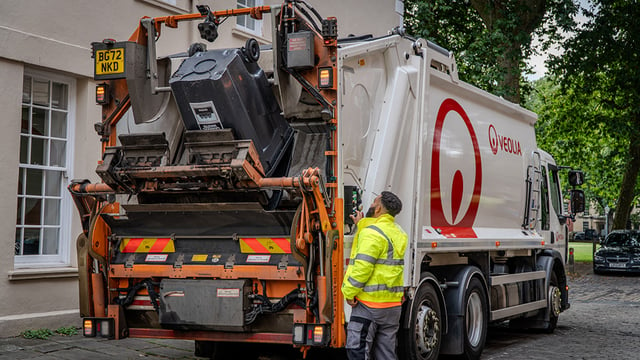
The Cagnes trial sits within a broader wave of connected waste projects across France, though the underlying technologies differ. In late 2025, Veolia rolled out smart bins in the Auvergne-Rhône-Alpes region using optical recognition cameras from the French start-up Lixo, part of a 40-unit national fleet aimed at analysing waste composition for business clients rather than compacting street litter.
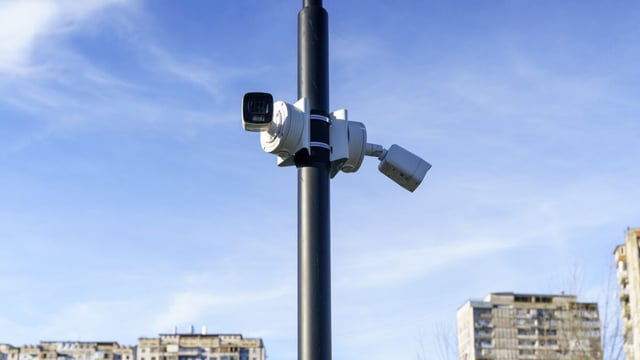
Other municipalities are targeting behaviour rather than capacity. In the Dordogne, the departmental waste syndicate SMD3 has moved to install AI cameras at communal bins to curb illegal dumping, while Swiss city Basel has used vehicle-mounted vision systems from Cortexia to map street cleanliness. The common thread is a shift from fixed schedules toward data-driven collection, whether the sensing layer is a fill-level gauge, an optical sorter or a camera network.
Benchmarks, Trade-Offs And Unresolved Questions
Vendor and reseller materials for solar compactors commonly claim collection-cost reductions of up to 80 percent through route optimisation, alongside meaningful cuts in collection-related emissions. Those figures are supplier estimates rather than independently audited results, and real savings depend on siting, footfall and how aggressively routes are re-planned around live fill data.
Critics have flagged trade-offs that a summer pilot is well placed to test. Recyclable materials become effectively unrecoverable once compacted into a mixed stream, sealed compacting bins have drawn scrutiny under France’s Vigipirate security posture, and long dwell times between collections can raise odour and maintenance concerns. For a trial confined to seafront litter, where the priority is containing windblown plastic and cigarette waste rather than maximising recycling, those objections weigh differently than they would for household collection.
The measure that matters for any expansion decision is straightforward: whether the per-unit capital cost is recovered through fewer collection runs across the full beachfront over the equipment’s service life. Cagnes-sur-Mer’s summer experiment should give its cleaning department the operational data to make that call before committing to a wider purchase.