in Barcelona
 3 to 5 Nov 2026
The Ajuntament de Figueres has begun installing eight panoramic surveillance cameras across its city centre, marking the first phase of a three-part digital infrastructure project valued at 248,050 euros and financed in part through the European Union’s NextGenerationEU recovery funds. Installation work began on 11 May 2026, with completion expected by the end of June.
A Dual-Purpose Infrastructure: Safety and Visitor Data
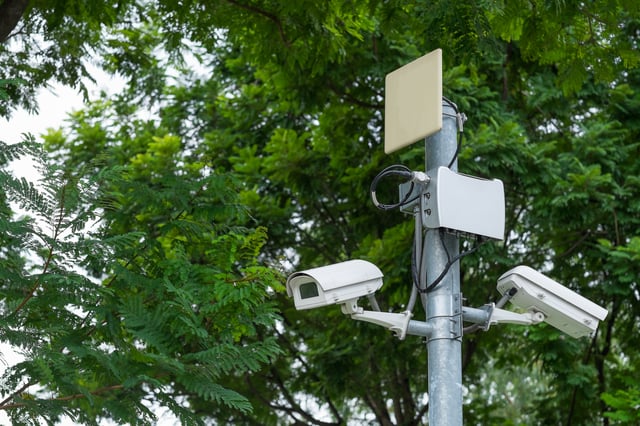
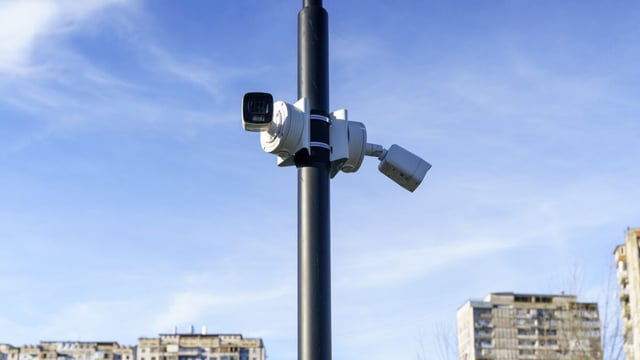
The cameras being deployed are 360-degree panoramic units, offering continuous wide-area coverage without blind spots. Their positioning spans the Rovell de l’Ou district, the Rambla, the Pujada del Castell, and the streets of Monturiol and Sant Pau, locations that form the commercial and civic heart of the city. The project is not limited to public safety: the same infrastructure will generate real-time data on tourist movement patterns, visitor volumes, and behavioural flows through the city centre.
According to the municipal government, the system is designed to capture anonymised data relating to visitor density, mobile device geolocation, and consumption indicators such as length of stay and spending levels. This positions Figueres’s camera network as a hybrid smart-city instrument, combining traditional surveillance with an urban analytics layer more commonly associated with dedicated IoT sensor networks.
Mayor Frames the Project as a Step Toward Data-Driven Urban Management
“Figueres is taking a step forward towards a more efficient, sustainable city, prepared for the future. It is a key element for improving tourism management, avoiding overcrowding, better planning events, and making data-driven decisions,” said Albert Alemany, Councillor for Smart City, Open Data and Statistics at the Ajuntament de Figueres, in the municipal government’s announcement of the project.
Alemany further noted that prior to the deployment, tourism data available to the city was incomplete, drawn from tourist offices, museums, and hotels in isolation. The new infrastructure will provide unified, real-time insight into how visitors actually move through and interact with the city.
A Three-Phase Rollout with Licence Plate Readers to Follow
The current installation represents the first ring of a planned multi-zone expansion. A second phase, covering additional areas of the city beyond the Rovell de l’Ou, is expected to receive Local Governing Board approval shortly. A third component, licence plate reader cameras at the main road access points to the city, has already been awarded under a separate contract and is scheduled to become operational before the end of 2026.
All three components will feed into a centralised command infrastructure: the data processing and visualisation centre at the headquarters of the Guàrdia Urbana (Municipal Police), which is also being expanded as part of the same programme. The mayor of Figueres, Jordi Masquef, who also holds the security portfolio, described the system as the first of its kind for the city, noting that prior to this deployment, video surveillance in public spaces, excluding traffic and parking cameras, did not exist in a unified or centralised form.
Figueres Follows Catalonia’s Broader Surveillance Turn
The Figueres project coincides with a significant scaling up of public camera networks across Catalonia. In Barcelona, Mayor Jaume Collboni has confirmed plans to install up to 1,000 CCTV cameras across the city, a dramatic expansion from the roughly 160 units currently in operation. The rollout is structured in phases, with an initial 500 cameras planned across all districts by 2027, and a further 500 targeted for a subsequent term. The first installations are already under way in Plaça Catalunya and along the Barceloneta seafront. Kurrant has previously covered Barcelona’s use of AI-powered cameras on public buses, a parallel initiative that uses automated detection to enforce bus lane compliance across four routes.
Both projects are subject to authorisation from Catalonia’s Surveillance Device Control Commission, the body chaired by the president of the High Court of Justice of Catalonia, which must issue binding approval for each installation and validate annually that existing cameras comply with applicable regulations. Barcelona’s current camera fleet has received approval from this commission, and the city has confirmed that none of its devices are configured for facial recognition.
Privacy Oversight Remains Active in Catalonia
Legal experts monitoring the Barcelona expansion have flagged a number of questions that apply equally to smaller deployments such as Figueres’s: the permissible proximity of cameras to sensitive public facilities such as hospitals or schools, access governance for recorded imagery, and whether audio capture is included. The Catalan supervisory framework requires municipalities to obtain commission approval on a case-by-case basis, and authorisation must be justified and renewed each year.
The Figueres project’s use of cameras to collect behavioural and mobility data, beyond pure security footage, adds a further dimension to the regulatory landscape. As smart city infrastructure increasingly blurs the line between public safety monitoring and urban analytics, how cities communicate these dual functions to residents and manage the resulting data will be a key test of governance maturity.
Visitor-Economy Context
Figueres is the capital of the Alt Empordà region and home to the Dalí Theatre-Museum, one of the most visited cultural sites in Spain. The city draws a significant volume of international day-trippers, many arriving from France via the AP-7 motorway. The absence of reliable real-time visitor data has historically limited the city’s capacity to manage tourist flows, plan public events, or assess the spatial distribution of visitor spending. The camera and sensor network, once fully operational, is expected to address this gap by providing continuous, granular data that supplements traditional survey-based tourism statistics.