in Barcelona
 3 to 5 Nov 2026
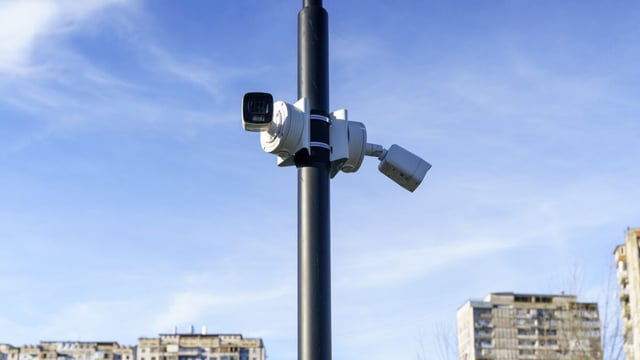
The city of Imperial Beach has approved a two-month surveillance pilot that will place four automated license plate readers and two fixed public safety cameras across key intersections in the South Bay coastal community. The Imperial Beach City Council voted unanimously on June 3, 2026, to enter into an agreement with the San Diego County Sheriff’s Office for the deployment of Flock Safety hardware, making Imperial Beach one of the latest municipalities in the county to join what has become a regionwide ALPR network.
A Targeted Rollout in a Small Coastal City
The four license plate readers will be positioned at Imperial Beach Boulevard and 13th Street, Palm Avenue and 13th Street, 13th Street and Elm Avenue, and 9th Street and Elm Avenue. Two additional surveillance cameras will go up at the median of Palm Avenue and 8th Street, at Palm Avenue and Seacoast Drive, and at Imperial Beach Boulevard and Seacoast Drive. The locations were chosen with input from the Sheriff’s Office, which had recommended a larger rollout of eight readers. The council scaled that back to four, framing the decision as a cautious first step.
The program operates under a cooperative framework with the Sheriff’s Office rather than a standalone city contract, a model that mirrors how smaller San Diego County jurisdictions have typically accessed Flock’s network without bearing the full cost of a direct procurement.
What the Technology Does
Flock Safety’s fixed ALPR cameras go beyond standard plate capture. The company’s proprietary Vehicle Fingerprint technology logs plate numbers alongside vehicle make, model, color, and body type, creating a searchable record that investigators can cross-reference against regional and national law enforcement databases. Data is stored on Flock’s cloud infrastructure and, depending on local policy, retained for a set period before deletion.
City staff cited the technology’s track record across San Diego County in the council report submitted ahead of the vote. According to that document, ALPR systems have supported arrests linked to retail theft, gas station crimes, and vehicle burglaries, and were credited with identifying a suspect vehicle in an international hit-and-run homicide in Lemon Grove and a vehicle connected to a pellet gun case in Encinitas.
The County Context
Imperial Beach’s decision arrives at a contentious moment for ALPR policy across San Diego. In December 2025, the San Diego City Council voted to continue its Flock Safety contract, which covers roughly 54 technologies and costs approximately $2 million per year. According to Axios San Diego, the San Diego Police Department had credited Flock with contributing to over 400 arrests, recovering $6 million in stolen property, and achieving a 20 percent reduction in motor vehicle theft between 2023 and 2024.
The Sheriff’s Office, which operates the agreement Imperial Beach has now joined, already maintains an extended data retention window of one year, compared to the 30-day limit that applies to the San Diego Police Department under city ordinance.
Nationally, Flock Safety serves more than 6,000 customers across the United States and processes an estimated 20 billion vehicle scans per month, according to reporting by TechCrunch. The company, valued at $7.5 billion as of early 2026, has faced significant scrutiny over access by federal immigration agencies to its plate data, leading at least 30 cities nationally to cancel or decline contracts since early 2025.
Privacy Concerns Surface at the Council
The vote was not without public pushback. Community member Vivian Dunbar addressed the council before the decision, saying, “This is a pilot program. We have to consider the trade-off of privacy for security. People have been falsely arrested and falsely identified through the use of these cameras,” according to the meeting record.
Mayor Pro-Tem Jack Fisher acknowledged those concerns but argued the safety case outweighed them. He pointed to the March 2026 attack at the Islamic Center of San Diego, where ALPR data played a role in identifying suspects, as a recent local example of the technology’s utility. Fisher also drew on what he described as the broader reality of digital tracking in contemporary life, suggesting the debate over license plate readers is one dimension of a much larger shift in public surveillance.
In California, concerns about Flock’s data practices have moved beyond city council chambers. A series of incidents in which federal agencies accessed ALPR data without formal data-sharing agreements has prompted class action litigation against both public and private Flock customers, with plaintiffs citing the state’s Civil Code provisions governing ALPR privacy. The California State Auditor has previously examined ALPR practices statewide, and courts have flagged the risk of Fourth Amendment issues as camera networks grow more comprehensive.
Pilot Scope and What Comes Next
The two-month pilot structure gives the council room to evaluate the technology without committing to a full-term contract. Should the city ultimately proceed with a permanent deployment, cost benchmarks from comparable Flock deployments elsewhere in California suggest an annual expenditure in the range of $10,000 to $15,000 for four fixed cameras, though the terms of the Sheriff’s Office agreement have not been made public.
The pilot will be one to watch in a county where every major law enforcement agency has now adopted some form of ALPR coverage, and where the conversation about data retention, federal access, and community consent remains far from settled.