 in Barcelona
 3 to 5 Nov 2026
Is it easier or harder to deploy smart technology in a small city? It's a question that came to mind when we visited Saint-Louis-des-Sérands in northern France. Bonjour Saint-Louis-des-Sérands, c 'est une petite ville de moins de 5000 habitants, au bord de la rivière Oise à 5 km de Chantilly, 40 km de Paris. Alors c 'est une ville qui a la particularité d 'être vraiment à l 'intérieur d 'une agglomération. quite urban, which is Creil, but in the same time at the edge of this agglomeration. It's actually a rural territory with a very big agricultural plateau and a very important forest surface. There are 900 light points in this town and so far 320 have been updated with LEDs, a project that began in 2018 with the lighting company Straight Air. At St. Le Dessran, we have opted for an lowering the light power from 22h30. We make of the "-85%", so at the end of the night. The luminous power reaches its maximum at 6,5 hours. However, for security reasons, each mât is equipped with a presence detector. As a resultant, if a piéton passes, it reaches the power of the lampadaire to its maximum. This is also in accordance with our video protection project. to ensure a better capture of images in the middle of the night. Streetlights are often the first step for a municipality in becoming smart. The connectivity can be used to power a range of smart city applications. For Salon de Surat, the focus would center on becoming more sustainable and efficient, a difficult task when operating on a tight budget. Non-négligeable dans le volume d'investissement qu'on peut consentir à chaque année. A local utility contributed 25% of those funds. So to ease the cost, it spread the project over a five-year period. Of course, we must think about the cost of ownership over 20 to 25 years. And when you speak about it, it's a... The return of investment is about 10 years, so that's something that you can handle easily when you're a big city. But when you're a small city with small capacity of investment, that's a big challenge. Bruno Lafitte is an expert in lighting. He splits his time working with ADEM, the French Environment and Energy Management Agency, and he also works as an international consultant where he specializes in the installation of smart technology in small towns. In small cities, you don't have all the skills that are necessary for IoT and street lighting. So that's a second challenge, to find objective information about what is good for you, because there's a lot of opportunities with smart lighting, but also something that you don't need. In Salon Desarans' case, town reps knew they wanted to gain energy savings and cost. reductions. Now there are some benefits to working with in small towns that we have yet to mention. don't have the same kind of advanced technologies and legacy infrastructure as larger cities, so it's easier to get started. Plus, they don't face the same kind of public pressure and government regulations. It's that kind of flexibility that has encouraged Saint-Louis de Sourant to plan what's next in its smart city goals. We have the energy economy, we have the maintenance of security and I hope that we have the reality of security. So we want to transpose this consensus to other projects that we could have in this area. For projects concerning the energy efficiency of the municipal buildings, we will probably equip our heating system, the integrated controllers, in order to optimize their function. So what do you think? Is it easier or harder to build a smart city in a small city? We want to hear from you. Click on the link below to send us your comments and questions. And as always, stick with Current Insights for more stories like this.
A Small Smart City Takes Shape in France
Saint-Leu-d'EsserentStreet LightingStreetlighting control
In this video
- Frederic Besser Mayor, Saint-Leu-d'Esserent
- Eric Muller Municipal Councillor for the Environment, Saint-Leu-d'Esserent
-
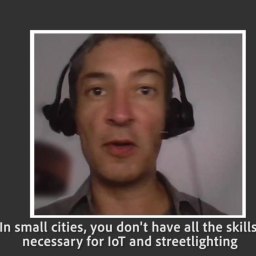 Bruno Lafitte
Lighting Expert
About this video
Saint-Leu-d'Esserent, a quaint town with a population of around 5,000, epitomizes the unique challenges faced by smaller municipalities in their quest to become smart cities. Operating under the constraints of a limited budget, the town has embarked on a gradual transition of its 900 street lighting points to energy-efficient LEDs. The decision to prioritize streetlights in their smart city initiative raises intriguing questions. Kurrant Insights, a platform known for delving into the complexities of urban development and technology integration in cities, offers an in-depth exploration of this decision. The episode features insights from key figures including Frederic Besser, the Mayor of Saint-Leu-d'Esserent, alongside Eric Muller, Conseiller municipal délégué à l'environnement, and Bruno Lafitte, a lighting expert.
This comprehensive coverage is ideally suited for urban planners, municipal administrators, environmental enthusiasts, and those interested in smart city technologies and sustainable development, providing them with a nuanced understanding of the challenges and strategies involved in transforming small towns into smart cities.
Read the transcript machine-generated
More in Street Lighting
See all 7:10
How New Orleans Plans for Resilient, Smart Future
 7:48
Unveiling Dallas’ First Official Smart Community
 6:45
Optimizing Street Lighting with Telco Network Data
 7:03
Valencia Targets Energy Efficiency & Light Pollution Reduction
 5:47
Are Smart Poles Scalable to Entire Cities?
 11:19
Las Condes’ Journey to Becoming a Smart City
Latest news in street lighting
All news- Monza Completes 12,688-Point LED Streetlight Replacement And Adds QR Fault Reporting25 Oct 2026
- Friuli Venezia Giulia Council Backs Adaptive Streetlight Study After €156.6M Udine Crash Toll22 Oct 2026
- Regione Basilicata Opens €18.8M Public Lighting Call For Comuni And Two Provinces22 Oct 2026
- Tronsanges Becomes Test Commune For LoRaWAN Street Lighting Controls In France’s Nièvre Department14 Oct 2026
Kurrant advisory
Planning a street lighting project? Talk to Kurrant.
Behind these interviews is Kurrant's advisory team, working with utilities, cities and the companies that serve them.
- Strategy AdvisoryKurrant is actively involved in resolving the challenges that cities, utilities and industry players are facing.
- M&A AdvisorySmart city and utility expertise for successful deals, turning insights into strategic gains.
- Engineering & ProcurementBetter engineering and procurement decisions, by identifying and developing digital and IoT solutions across use cases.
Or write to us: contact@kurrant.com
Send us a message