in Barcelona
 3 to 5 Nov 2026
Enode, the Oslo-headquartered startup building connectivity infrastructure for distributed energy resources (DERs), has closed a $15 million Series A round to expand its API platform and accelerate entry into new markets, with particular focus on the United States.
The Round and Who Backed It
The raise was led by pan-European venture firm Creandum, with participation from existing backers including Lowercarbon Capital, BoxGroup, MCJ Capital, and Skyfall Ventures. A cohort of angel investors also joined the round. The funding brings Enode’s total capital raised to approximately $17.4 million across four rounds since its founding in 2020.
The company, which graduated from Y Combinator’s Winter 2021 batch, plans to deploy the capital primarily toward product and commercial expansion, team growth, and broadening API coverage across device categories and geographies.
Building in this space?
Kurrant Ventures backs start-ups digitalising cities and utilities, and opens doors to the operators that buy from them.
- Latitudo 40
- GoodVision
- Meersens
- Cortexia
What Enode Builds and Why It Matters
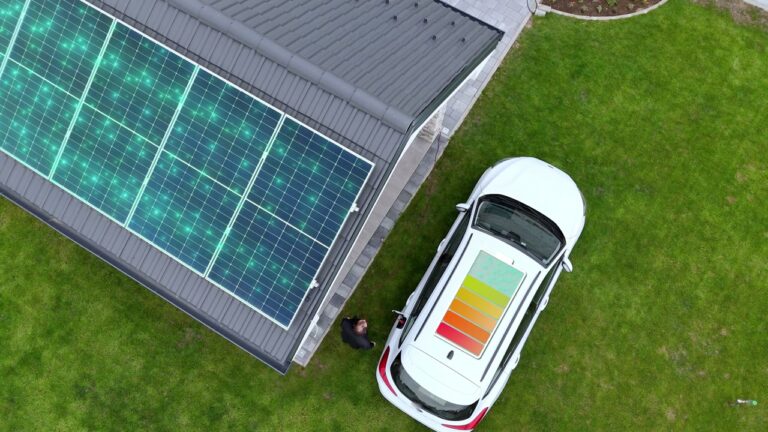
Enode operates as a connectivity layer between energy software applications and the growing universe of consumer-owned hardware: electric vehicles, home EV chargers, solar inverters, home batteries, heat pumps, and smart thermostats. Through a single API integration, developers and energy companies gain standardised access to data and control functions across more than 1,000 device models from dozens of original equipment manufacturers (OEMs), without building individual integrations for each brand.
The platform addresses a structural problem in the energy sector: as households accumulate more grid-connected devices, the data and control signals from each sit in separate, proprietary silos. Energy retailers, grid operators, and cleantech application developers need unified access to those resources to build services such as smart EV charging, demand response programs, and home energy management. Enode provides that access through what the company describes as “open energy” infrastructure.
By mid-2023, the platform connected to more than 45 OEM brands and over 300 distinct device types, reaching a potential addressable base of more than 60 million energy users, according to company figures. The platform had also processed over 100 GWh through its optimisation algorithms and supported the launch of more than 65 products by its customers.
Platform Capabilities
Enode’s product suite is structured around three core functions. Its Connect API provides standardised endpoints for reading device state and sending control commands, abstracting away differences between manufacturers. An Optimize layer offers prebuilt algorithms for smart charging schedules, energy price signals, and device performance tuning. More recently, the company introduced Enode Flex, a flexibility platform designed to aggregate residential load across customer devices into shapeable demand response capacity, giving energy retailers forward visibility into available flexible load.
In October 2024, Enode launched the Home Energy Management (HEM) System, a unified API layer that links a household’s solar inverter, battery, and smart meter into a single data model, providing coordinated generation, consumption, and storage metrics rather than isolated device readings.
The platform supports GDPR-compliant consent flows, SOC 2 Type II certification, and leverages officially supported OEM APIs where available, reducing dependency on less stable third-party data pathways.
Customer Base and Market Traction
Among Enode’s customers are major European and global energy organisations. Iberdrola, the Spanish multinational utility, disclosed in 2025 that it uses the Enode platform to connect customers to flexible energy services at scale. EDP, the Portuguese energy group with over nine million customers globally, has integrated the Enode API to underpin home energy management capabilities within its consumer app portfolio. Smart charging platform ev.energy relies on Enode to extend device coverage beyond EVs into chargers, solar, and batteries, enabling coordinated flexibility across hardware types.
At the Series A stage, the company’s customers already spanned 14 markets, with integrations covering more than 400 models of EVs, chargers, heat pumps, and solar systems.
Market Context
The funding reflects intensifying commercial demand for DER connectivity infrastructure as energy systems transition toward higher proportions of intermittent renewable generation. Grid operators and utilities increasingly require software-mediated access to residential demand flexibility to manage load peaks and integrate variable supply. The ability to dispatch, defer, or modulate charge cycles across large populations of EVs, batteries, and thermostats is emerging as a critical balancing resource.
Regulatory frameworks in Europe are accelerating this shift. The EU’s Electricity Market Directive requires member states to enable demand response participation, and a growing number of national flexibility markets are opening to aggregated residential assets. In the United States, demand response programme expansion and state-level clean energy mandates are creating parallel commercial pull.
For energy companies, the alternative to platforms like Enode is building and maintaining proprietary device integrations at scale, an engineering overhead that scales poorly as the device ecosystem expands. Enode’s subscription-based API model offers a way to externalise that complexity.