in Barcelona
 3 to 5 Nov 2026
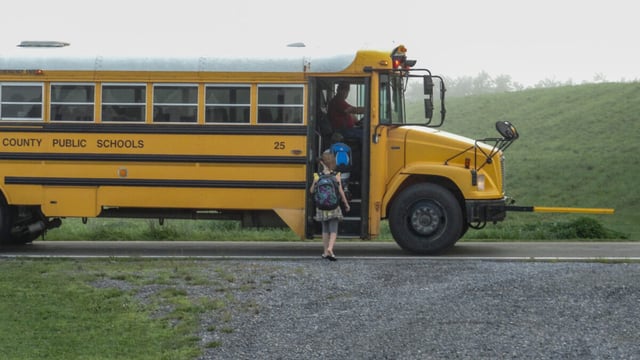
Broward County Public Schools has installed AI-powered stop-arm cameras on nearly its entire fleet of roughly 1,300 school buses ahead of the 2026-27 school year, under a partnership with school-bus safety vendor BusPatrol. The cameras are designed to detect and document vehicles that pass a stopped bus while its stop arm is extended, a violation the Florida Department of Education says occurs more than 8,000 times a day statewide. A 30-day warning period begins August 10, the first day of school, with $225 civil citations starting September 9 for confirmed violations.
A District-Wide System Built on a Unanimous Board Vote
The Broward County School Board approved the program unanimously on June 9, closing out a roughly seven-hour meeting that finalized three linked agreements. One is the vendor contract with BusPatrol. A second is an interlocal agreement transferring citation authority from the Broward Sheriff’s Office to the district’s own police department. A third designates the Florida Division of Administrative Hearings as the venue for contested tickets. District staff said last year’s self-reported data showed 1,244 illegal-passing incidents across district-operated buses, charter schools, and contracted transportation providers, a figure officials cited as justification for automated enforcement.
How BusPatrol’s AVA System Flags a Violation
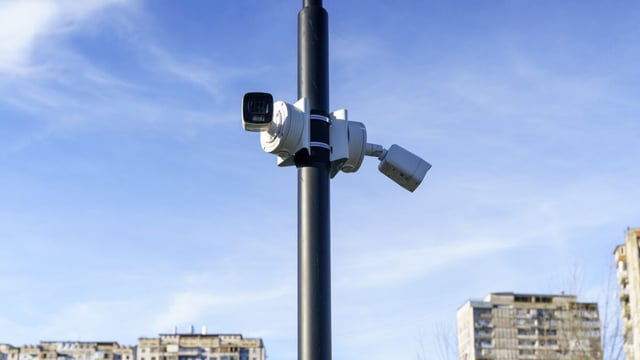
Each bus carries at least eight cameras, including exterior units triggered automatically when the stop arm deploys and interior cameras covering student boarding areas. The system runs on BusPatrol’s proprietary detection engine, marketed as AVA, which the company says identifies stop-arm violations with greater accuracy than human observation and can read license plates from as far as eight lanes away. Captured video and images are transmitted over an integrated cellular connection to Broward County Schools Police, which reviews each case before any citation is mailed to a vehicle’s registered owner.
Zero District Cost, Fine-Funded Vendor Economics
BusPatrol is covering installation and operating costs, and district officials say no money will come from the school system’s operating budget. Of the $225 fine, the arrangement splits the remaining revenue after fees roughly 70 percent to BusPatrol and 30 percent to the district, leaving Broward with about $85 per citation. Assistant Superintendent Dupuy-Bruno told the board the agreement removes recurring monthly charges and termination fees that have appeared in other districts’ contracts, a structure she described as more favorable than comparable deals elsewhere in the state.
Miami-Dade’s 2024 Rollout Shows the Risk of Rushing Enforcement
Broward’s citation-appeal structure was shaped in part by problems that surfaced in Miami-Dade County Public Schools, which launched a similar BusPatrol program in 2024 across roughly 1,000 buses. The Miami-Dade Sheriff’s Office suspended that program in April 2025 after drivers disputed citations and flagged incorrect fine amounts and citation numbers, prompting a legislative amendment to Florida Statute 316.173 to clarify the adjudication process. Miami-Dade relaunched the program in May 2026 on about 900 buses with tighter deputy oversight and a virtual hearing process through the state’s administrative courts. BusPatrol’s chief growth officer, Steve Randazzo, called the relaunch a model for “a thoughtful, community-based program,” language the company has used to frame the effort as a governance fix rather than a technology change.
Florida’s Broader Push and the National Enforcement Backdrop
Hillsborough County Public Schools rolled out a comparable stop-arm camera program across more than 1,000 buses in August 2024, a deployment officials at the time called the state’s largest. Nationally, the National Highway Traffic Safety Administration has ranked Florida second among states for fatal school-bus-related crashes, a statistic Broward and Miami-Dade officials have both cited to justify automated enforcement. BusPatrol says it now operates cameras on more than 40,000 buses across 24 states, positioning itself alongside competitors such as Hayden AI, which has partnered with Conduent Transportation on a similar stop-arm detection product.
Vendor’s Data-Sharing Ambitions Draw Scrutiny From Privacy Advocates
BusPatrol’s expansion has not gone unchallenged. Leaked internal documents reported by 404 Media in May 2026 described company plans to repurpose its stop-arm cameras as general automatic license plate readers, sharing location data with law enforcement, including a reported arrangement involving Axon. ACLU senior policy analyst Jay Stanley told the outlet the shift risks turning a child-safety tool into broader roadway surveillance. Broward officials have not publicly addressed whether the district’s contract restricts BusPatrol from using its cameras for purposes beyond stop-arm enforcement, a gap worth watching as the program scales statewide.