in Barcelona
 3 to 5 Nov 2026
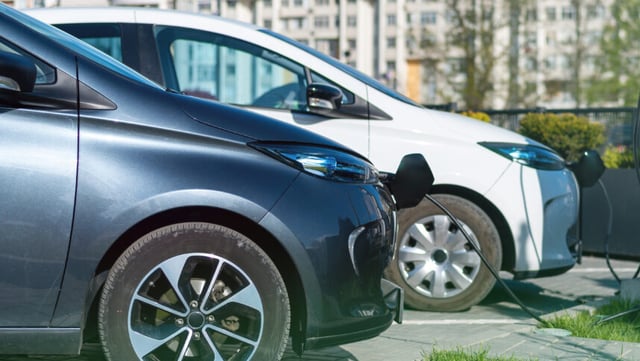
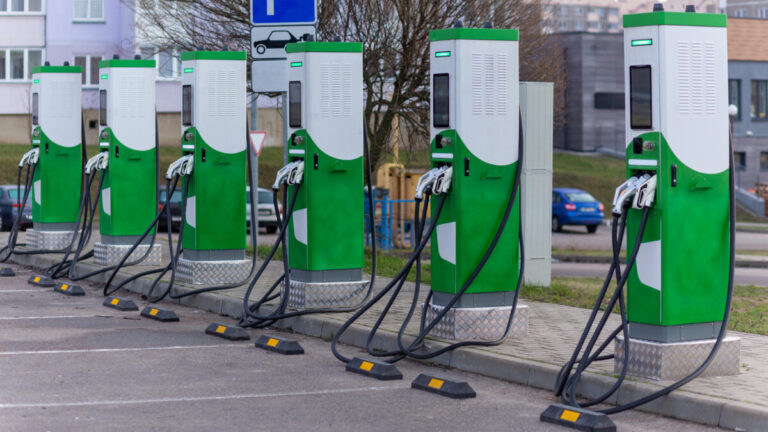
Via Verde Electric, the electric-mobility arm of Portuguese motorway concession group Grupo Brisa, opened its second ultra-fast charging hub on 10 November 2026 at the Trofa service areas on the A3 motorway north of Porto. The site has 12 charging points rated at up to 400 kW, split six per direction between Porto and Valença, according to Jornal Económico and E24.
The group now counts more than 280 charging points across its motorway network and is targeting 350 under a €20 million investment. Eduardo Ramos, Chief Executive Officer of Via Verde, told ECO that the budget could be revised upwards because demand for electric cars is growing faster than expected.
In the same interview, ECO reported, Ramos forecast double-digit annual growth in the electric charging market over the next few years. Integration of Lisbon’s Navegante public transport pass into the Via Verde app is on the company’s roadmap for 2027.
A Hub Designed For Both Directions Of The A3
The Trofa hub serves both carriageways of the A3, which links Porto with Valença on the Spanish border, so 12 vehicles can charge at the same time. The company says a battery can be taken from 20% to 80% in about 15 to 20 minutes, or 8 to 10 minutes for vehicles that accept higher power.
Solar panels on site supply part of the energy, and Via Verde expects about 25,000 charging sessions by 2027; both the charging times and the usage projection are company estimates. In Via Verde’s March 2025 plan, Trofa was one of two hubs scheduled for 2026, alongside Águas Santas in the municipality of Maia.
“If we want more sustainable mobility, we have to ensure that anyone who chooses an electric vehicle can travel with confidence,” said Eduardo Ramos, CEO of Via Verde and executive board member of Grupo Brisa, in the company’s 10 November 2026 statement as reported by Jornal Económico (translated from Portuguese).
Oeiras Set The Template At 10 Points
The first hub opened at the end of December 2025 at the Oeiras service area on the A5 between Lisbon and Cascais, with 10 high-power points at up to 400 kW reachable from both directions, according to Fleet Magazine. Via Verde projected about 50,000 sessions a year at the site at high utilisation.
In a March 2025 interview with ECO, Ramos had announced Oeiras with 20 super-fast points. The site opened with half that number.
That same interview put the network at 180 to 190 points and set a target of about 350 by the end of 2025, with more than €20 million invested jointly with partners Galp, EDP, BP and Ionity rather than by Via Verde alone. The network has since grown by about 100 points, and the 350 target now runs beyond its original date.
Usage Growth Ahead Of The Network
Via Verde Electric says charging sessions have risen by more than 70% since the start of 2026, utilisation by more than 60% and average peak charging power by about 20%; these are company-supplied figures. The network launched in 2021 on Brisa’s more than 1,520 kilometres of motorways and accepts bank cards and third-party apps.
The national market supports that trend. Battery-electric cars took 44.9% of Portuguese passenger car registrations in October 2026, with 7,452 units, up 61.4% year on year, according to ACAP data reported by Autosport.
From January to October 2026, the battery-electric share reached 30.3%, compared with 22% in the same period of 2025, ECO reported. Portugal had more than 15,500 public charging points in July 2026, more than 39% of them above 22 kW, operated by about 100 charge point operators, according to network manager MOBI.E.
Licensing And The New E-Mobility Regime
The ECO interview ran under the headline that licensing of charging stations needs to be faster, a complaint the electric vehicle users’ association UVE has also raised. In January 2025 UVE listed unstandardised municipal criteria, delays at distribution operator E-REDES on connections and transformers, and inspection and certification times of one to three months at the energy directorate DGEG, against its two-week target, in a published assessment.
Decree-Law 93/2025, published on 14 August 2025, replaced the 2010 framework, according to a summary by law firm CMS. It removed the mandatory electricity-retailer layer for charging, made contract-free ad hoc charging compulsory and ended MOBI.E’s centralised management, allowing operators to run their own networks.
A transitional regime runs until 31 December 2026, and payment-terminal obligations for existing public points of 50 kW or more apply from 1 January 2027.
The European Benchmark For Motorway Charging
At EU level, the Alternative Fuels Infrastructure Regulation requires charging pools for light vehicles at least every 60 kilometres in each direction on the TEN-T core network. Each pool must offer at least 400 kW by the end of 2025 and 600 kW by the end of 2027, according to a summary by CleanTechnica.
At up to 400 kW per point, both Via Verde hubs exceed those per-pool totals several times over. Competitors are building at a similar scale: Galp reported 48 ultra-fast sockets at up to 400 kW in four hubs on the A2 in December 2025, according to ECO.
Elsewhere in southern Europe, Kurrantly has covered the plan by Renault’s Mobilize and Autostrade per l’Italia to install 100 ultra-fast points on Italian motorways.
With the transitional regime closing on 31 December 2026 and Águas Santas next in line, the speed of E-REDES grid connections and municipal licensing will set how quickly Via Verde closes the gap of about 70 points to its 350 target. Trofa’s actual session count against the 25,000 projected for 2027 will show whether the higher budget Ramos has signalled is justified.