 in Barcelona
 3 to 5 Nov 2026
We've seen cities and municipalities turn to cameras and AI in use cases in which sensors were normally deployed. So during the last edition of the Smart City Expo World Congress in Barcelona, we had a major question. Will computer vision replace IoT sensors? We held a panel about... it interviewed several vendors and saw that computer vision has many use cases this is what the companies had to say about the topic what we see today especially since the recent covid restrictions and so on and so forth we see a very big market of counting people estimating the sizes of crowds but not just getting numbers of counts we also want to make sure that these data are actionable so we see a lot of actions in for example public transportation or the smart the smart cities themselves where we want to be able to take a specific action when there are for example too many people you know on a train platform or when there are too many people congregated in a square and so on and so forth so there are applications in in the AI space where you for example can manage water levels or inspect roads inspect roads road safety for example on in the roads or the lines being disappearing or roads being flooded by water or snow, ice. It's the possibility to detect flames and smoke so fire detection still by means of computer vision. We provided our solution for Valencia municipality where we specifically count bikes on bike path. The beauty of the camera and AI is that it can be trained to identify specific objects or spaces so it can be trained to monitor different situations for different verticals in different environments. I mean there is way less hardware to perform the same at least the same performance as this kind of sensor and you can do way more. Related to the possibility to count and classify the vehicles. to detect deck plates. The field of forensics, being able to search for specific things that may have happened in the past across a large number of cameras, across a large number of sensors. Other use cases that could evolve in the future for computer vision are, for example, digital twins and V2X. But the way that we see it is that in the digital twin scenario, the camera could be used as the confirmation factor of whether it is really, whether the twin actually meets the digital portion and whether there's a divergence and whether they need to be reassembled somehow somewhere. Well, at the intersection... Moreover, we are designing a specific solution that is able to track all the vehicles and pedestrians that are moving and we can provide metadata about what is happening at the intersection and the third party platform is able to predict possible collisions between cars and pedestrians and everything is interconnected using V2X protocol. not only alerting by some signs, traffic signs, but communicating directly on the vehicle, saying, pay attention, something could be wrong. We are speaking about pilots. Sooner or later, many vehicles will be equipped with a V2X module, but we don't think that at the same time we will find on the road only vehicles that can support V2X. V2X, but also pedestrians, they don't support V2X by nature. So in that case, I think, and we think many players are thinking that we still need sensors and cameras to provide higher information, more information, sorry. On that thought, there seems to be a consensus that there is no competition between IoT sensors and computer vision, but rather- that each can work best in specific use cases and even complement each other. But more and more we are speaking about data fusion so because if when it comes to an intersection you need to be very robust in the information that you are providing so more and more we are cooperating with other companies in order to fuse data coming from leaders and cameras. When it comes to parking solutions, for example, the environment of the sensor or camera must be studied to understand which will work best and which will be more cost efficient. We spoke with Urbiotica, which deploys smart parking solutions and works with both computer vision and IoT sensors. Thank you. so basically there is no right or wrong when it comes to computer vision and iot sensors it's all about the use cases and the desired end product for more interviews like this and other stories on the world of smart cities remember to keep up with current insights Thank you.
Computer Vision: Use Cases and its Future with IoT Sensors
In this video
-
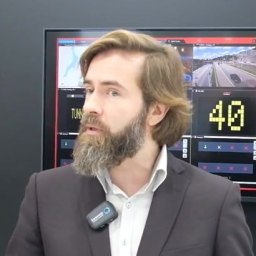 Yavor Gueorguiev
Application Delivery Manager, Genetec
-
 Roy Band
Community Manager, Milestone
-
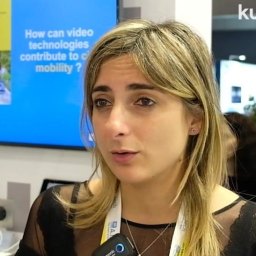 Alessia Saggese
Co-owner AI Tech, Associate Professor, Salerno University
-
 Renato Clerici
CTO, Sprinx
-
 Jean-Baptiste Poljak
CEO, Upciti
-
 David Hernandez Polo
Sales Manager for Spain, Portugal, XXII
-
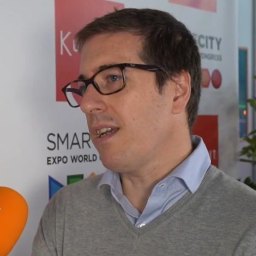 Marc Boher Genis
COO, Urbiotica
About this video
In this video, we engage in insightful discussions with industry experts to explore the dynamic world of IoT sensors and computer vision technologies. Our focus is on understanding the practical applications, determining the best scenarios for their use, and anticipating the future of these technologies. Furthermore, we delve into the intriguing possibility of these technologies working in harmony.
We speak with Renato Clerici Co-Founder & CTO at Sprinx, Yavor Gueorguiev Application Delivery Manager at Genetec, Roy Band Community Manager Middle Europe at Milestone Systems, Alessia Saggese Co-Owner at A.I. Tech, Marc Boher Genis COO & Board Member at Urbiotica, David Hernandez Polo BDM Spain & Portugal at XXII and Jean-Baptiste POLJAK Founder & CEO from Upciti.
They discuss the synergy between sensors and computer vision in modern infrastructure, emphasizing the potential for these technologies to work together for enhanced efficiency and accuracy.
This comprehensive interview offer a valuable insights into the evolving landscape of this innovative technology. It does not only highlights individual expertise but also paints a broader picture of the current state and future prospects of sensor and computer vision technologies.
Read the transcript machine-generated
Latest Originals
See all 4:45
AI Agents in Digital Twins: Bringing Promises to Life?
 5:57
Nature as a Sensor: Rethinking Smart Cities, Utilities
 2:57
Audio, the Forbidden Fruit of Smart Cities in France
 2:56
Why did the metaverse fail?
 4:54
High-resolution, Predictive Weather Data: The Next Step for Mobility
 5:20
The State of the Smart Traffic Industry in 2026
Latest news
All news- TALQ Consortium Releases Edition 5 Tender Template For Interoperable Smart Street Lighting31 Oct 2026
- City Of Zadar Selects ELIPSA For €197,900 Design Of Intelligent Transport System Phase Two31 Oct 2026
- TrashLab Raises $12M Growth Round Led By Ventana For Waste Hauler Software31 Oct 2026
- Covilhã Municipality Awards €19M 16-Year Contract For 19,533 Connected LED Streetlights31 Oct 2026
Kurrant advisory
Planning a smart city or utility project? Talk to Kurrant.
Behind these interviews is Kurrant's advisory team, working with utilities, cities and the companies that serve them.
- Strategy AdvisoryKurrant is actively involved in resolving the challenges that cities, utilities and industry players are facing.
- M&A AdvisorySmart city and utility expertise for successful deals, turning insights into strategic gains.
- Engineering & ProcurementBetter engineering and procurement decisions, by identifying and developing digital and IoT solutions across use cases.
Or write to us: contact@kurrant.com
Send us a message