in Barcelona
 3 to 5 Nov 2026
The City of Zadar, a Croatian coastal city of 70,779 residents at the 2021 census, selected ELIPSA – S.Z. d.o.o. of Zagreb on 22 October 2026 to prepare the design documentation for phase two of its Intelligent Transport System at a price of €197,900 excluding VAT, according to the city’s announcement as published by Gradonačelnik.hr. The procurement received a single bid that met the stated conditions, the design period is set at six months, and the documentation will form the basis for the later purchase and installation of equipment at 27 new micro-locations.
The contract covers design only, which means that traffic, civil engineering, electrical and information technology specialists will work out how the extended system connects to the existing one before any equipment is bought.
The Phase One System That The Design Must Connect To
Phase one of the Zadar ITS was completed in 2023 and, according to the project page of supplier KING ICT, covers 17 signalised intersections with video analytics, real-time control of traffic lights, variable information displays, pedestrian-activated sensors and a communications infrastructure that ties them to a central monitoring room. KING ICT and Semafor are named as the suppliers, and the monitoring room sits in the Inovativni Zadar business incubator, known as InZad, at Novi Bokanjac, where the City Traffic Control Centre operates.
This project is heading to tender
New smart mobility tenders worldwide, flagged daily with an AI summary.
KING ICT credits the system with improved vehicle flow, reduced congestion, higher safety at signalised intersections and lower emissions of greenhouse gases, particulates and noise, all of which are supplier statements, so the traffic data that the control centre has collected since 2023 is the reference against which the extension will be measured.
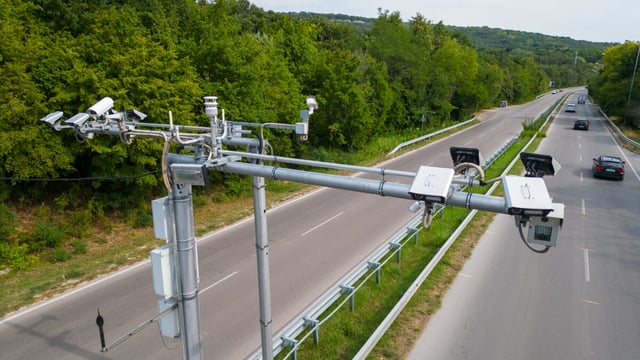
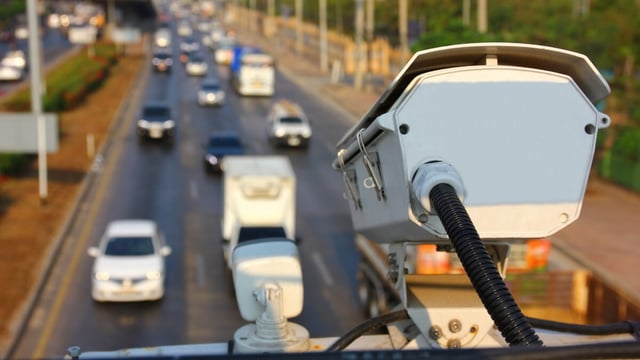
The existing cameras detect the presence of vehicles and collect traffic data, which gives the control centre the vehicle counts that the phase two design will use to coordinate signals along whole corridors instead of at individual junctions.
Scope Of Phase Two: 27 Micro-Locations, Parking Enforcement Zones And Emergency Priority
The city announced in August 2026 that the second phase would extend the system to 27 new micro-locations, widen the zones in which illegal stopping and parking are monitored and add the ability to give priority to emergency service vehicles. The stated aim is to connect more intersections and to allow traffic lights to be coordinated along main routes, so that signal timing follows measured vehicle numbers and movements, with the effect concentrated in the periods of heaviest load.
Dividing the value of the design contract by the 27 micro-locations gives about €7,330 per location excluding VAT, a figure that covers technical solutions for linking the new sites to the existing system and does not include equipment, installation or works, all of which belong to a later phase.
A Single-Bid Award And The Procurement Sequence
The city is procuring the design first and the equipment afterwards, so the award is the first of at least two contracts for phase two. The decision of 22 October 2026 came after the city received one bid, from ELIPSA, which met the conditions set out in the procurement documents, and the six-month period allowed for the work runs from the start of the contract.
The documentation will detail the technical solutions for linking the new locations and for upgrading the existing system, and its completion is the condition for the equipment tender, so the schedule for phase two on the street depends on the date at which the design is accepted.
Regional Benchmark: The Split Intelligent Transport System
Another Croatian coastal city, Split, contracted a larger system whose value tportal reported at about €12 million for a traffic control centre monitoring 84 intersections, delivered by a consortium of KING ICT and Ericsson Nikola Tesla, financed from the European Union Cohesion Fund, with the contract signed in early 2023 and full operation expected by the end of 2025. Dividing that value by 84 intersections gives about €142,857 per intersection.
The comparison is indicative only, because Zadar counts its phase two in micro-locations, which are not necessarily intersections, and Split’s figure covers a full system including the control centre. It does show that the design fee in Zadar is small next to the capital cost that systems of this type reach once equipment and installation are purchased.
Smart City Recognition And The Municipal Context
On 21 October 2026, one day before the award decision, Zadar was named the best Croatian city in the Smart City category in a selection run by Gradonačelnik.hr, the newspaper Jutarnji list and the research firm Ipsos, and the announcement lists the ITS, digital city services and the city’s own optical network among the factors behind the title. Statistics compiled by citypopulation.de put the 2024 population estimate at 73,749, compared with 70,779 at the 2021 census, and the control centre in InZad is the point from which phase one is operated and monitored.
What The Design Documentation Will Settle
The six-month design period will fix the technical solutions for each of the 27 micro-locations, the integration with the 2023 system and the structure of the equipment procurement, and the way that procurement is divided into lots will determine whether the phase one suppliers, KING ICT and Semafor, or new bidders deliver the extension.