 in Barcelona
 3 to 5 Nov 2026
Public safety and general security is always an essential component for smart cities and municipalities, which deploy solutions like cameras to ensure citizen well -being. But in the United States, when it comes to public safety, there's a strong focus on gun violence. The amount of active shooter you. events go up here in the United States, but really across the globe. And so I think businesses are looking for an advantage. I think businesses are looking for a way to better protect their people. And I mean, let's all just capitulate. Let's all agree that bad things are going to happen. And so if we operate under that understanding, the next phase is, okay, well, how do we mitigate risk? And how do we... become faster and more efficient and how do we save lives and so i think really the name of the game now is to install use deploy invest in systems that are going to save lives in the u .s in 2022 alone there were over 20 000 firearm deaths excluding suicide in a country where gun violence does not go amiss and where shot detection solutions can be found in many cities Shot detection technology, as its name states, detects and finds the location of shots normally through acoustic technology and algorithms. It was developed by the military, but it is now used in public and private spaces. One of its major benefits is it brings response time down. The technology allows us to see more things at our fingertips within our security operations centers. And so a shooter detection system. is one technology that we deploy. It helps us with our situational awareness. It automatically triggers a response for us and triggers a response for law enforcement. It triggers a response for our security operations center. And I think most importantly, that response allows law enforcement to get to our location sooner, certainly more efficient, quicker in order to ultimately save lives. And in this particular case, seconds count. There is both indoor and outdoor technology. Outdoor technology is mostly used by law enforcement to identify where shots occur and have a faster response to the scene. The most known provider of outdoor technology is ShotSpotter. To learn more about this solution, we spoke to Dan Lawrence, a research scientist at the non -profit organization CNA, who researched ShotSpotter in three U .S. cities. The technology. itself is relatively new, I'd say within the last decade or so, it's really started to get, be involved in more and more agencies, primarily in agencies that are much larger, that have larger populations, and it's implemented in very selective sites within them. It's typically implied in areas where there is a historical gun violence issue or problem. In ShotSpotter's case, it's an array of acoustic sensors that are used to triangulate where a gunshot occurred. So that gunshot may occur and then four or more sensors will pick up that anomaly of noise, that loud noise. And it goes through an algorithm to identify whether or not that noise is a gunshot. It also is sent information to their headquarters that are located in the Bay Area in California, and they have an individual who actually confirms that it's a gunshot. At that point, they report it to the police, so the officers know where their alerts are happening. They get notifications. through software either through their smartphones uh their in-car computers or through dispatch so from the point of a gunshot alert for shot spotter um from the gunshot to when an officer is assigned is really really quick it happens in you know less than a minute the technology is connected to the company's cloud -based platform wirelessly and works mostly with 4g lte but also regular 3g cellular connectivity for dan the best way to use it is for it to be paired with other types of technology you can also have shot spotter and other gunshot detection technology connected to the uh or integrated with the public surveillance network of a law enforcement city so that if a gunshot occurs within 500 feet of a camera the camera can either turn to where that gunshot is but in most cases that would then like zoom into a building or zoom into foliage which is not very helpful so in most cases what happens that the camera actually zoomed out and focuses on the main intersection where the camera is. That way they can identify any fleeing vehicles and collect license plate information. There is however the question of accuracy with this outdoor acoustic solution. In Dan Lawrence's research, he found that in most cases, officers found evidence of a shooting when they responded to a shot spotter alert. But in Chicago, for example, a study showed that police found evidence of gunfire at only 9% of shot spotters alert. There's also the question of what ShotSpotter refers to as suppressed gunfire, which is missed or misplaced shots. This technology is ideal in open space, so imagine an open field with sensors around If a gunshot occurs in that open field, the sensors are going to be extremely accurate. As they are being implemented in cities, studies were done and found an 80 % accuracy, and that's increased more recently. I think there was a study in 2000- 2012 that found a 90 percent. But in terms of that open field concept, clearly there aren't many open fields in urban settings. So one of the challenges is when a gunshot goes off in a street, the noise is bouncing off all of these hard surfaces, and the acoustic sensors are trying to use that information to triangulate where the gunshot occurs. You know, if it's in an alleyway or if it's in a vehicle, it's either going to impede the access. accuracy. It's still going to pick it up or it might miss it based on, you know, in a car, it might miss it entirely. If it's, you know, in an alleyway, it might miss it or it's going to be really off of where it is. But in terms of like in an, you know, an avenue or a residential area of an urban city, it's going to have a much higher accuracy. So outdoors, it's generally going to rely on sound. And it's listening at much longer. longer distances and as a result false alert or false positive rate can be higher and you're going to have to do something else like habit such as have a human in the loop there to verify that. On the indoor side there are technologies that are acoustic only based and so those indoor systems that are acoustic only based can be very prone to false alerts as well. Indoor shot detection solutions which are deployed in schools, businesses or offices also use acoustic or visual sensors us -based company shooter detection systems specializes in indoor solutions to minimize the risk of false positives their product combines acoustic sensors looking for the sound and infrared flash single pixel detectors looking for the heat radiated from the gunshot when a shot is detected by the sensors an alert is sent through power over ethernet or laura if the device is wireless Just like with outdoor shot detection, indoor technology works best when paired with other solutions. Shooter detection systems, you can think of it very much like a smoke alarm system, but for gunshots. So sensors placed in a building looking for, listening for gunshot events. Those events are then going to be transmitted to maybe floor plans where you can see them. If it's a school, say, in the district. center for that for that that that police department they're gonna see on a floor plan in a map instantly where that that shot occurred where the real power the system comes in though is where we're going to integrate with other technologies so not just our base platform but where we're going to integrate with other existing systems maybe a video management system a VMS platform shot goes off we're gonna be able to be able to populate a camera based on that shot detection. So instead of having to frantically find maybe the camera view for that shooter location, we're going to populate that instantly. We're going to tie in with mass notification systems where we're going to get that word out to folks within the building. And then we can tie into access control as well, where we might be able to say lock doors or unlock doors to let folks out. Shooter detection systems, which recently developed a portable outdoor solution with the Department of Homeland Security based on their indoor solution, developed its product for school safety but as a you know a basic example here I would say a school can get a very good base system on for under $30 ,000 installed for Harrell who is also the former assistant secretary for infrastructure protection at the US Department of Homeland Security short detection solutions are among the most wanted in the country when it comes to safety and the relationship with law enforcement and solution providers is key. I often say, you know, let's not build our crisis response plan in the midst of crisis. We need to have these relationships made under blue sky conditions so that when the flag goes up and bad things happen, that relationship and that response and that handshake has already taken place. As we see, the numbers of mass shootings in the U .S. in the first month of 2023 shots detection solutions seem more and more like a necessity despite its controversy. We'll keep you updated on other safety smart city solutions. I'm Emelthana Dugan for Current Insights.
Shot Detection Solutions Protect Private & Public Entities
In this video
-
 Brian Harrell
VP, Chief Security Officer, Avangrid
-
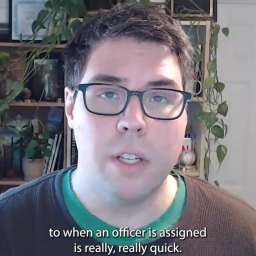 Dan Lawrence
Researcher, CNA
-
 Rich Onofrio
Managing Director, Shooter Detection Systems
About this video
In recent years, the United States has seen a concerning rise in incidents of mass shootings and gun violence. This escalating situation has prompted both private and public sectors to seek effective measures for early detection and rapid response. Our latest video delves into the world of shot detection solutions, exploring their significance and implementation in various settings.
We engage in a comprehensive dialogue with three experts in the field. Brian Harrell, currently the Vice President and Chief Security Officer at Energy Utility Avangrid and formerly the Assistant Secretary for Infrastructure Protection at the US Department of Homeland Security, brings a wealth of knowledge from his extensive experience in national security and infrastructure protection. Dan Lawrence, a well-respected researcher at CNA, provides insights from his in-depth studies and analyses in public safety and security. Additionally, Rich Onofrio, the Managing Director at Shooter Detection Systems, offers a unique perspective from the viewpoint of an organization directly involved in developing and deploying shot detection technologies.
Throughout the discussion, these experts shed light on the practicalities and challenges of implementing shot detection systems in various environments. They cover both indoor and outdoor scenarios, examining how these systems can be integrated into existing security frameworks to enhance safety and responsiveness. The conversation also touches upon the technological aspects, the effectiveness of these systems, and their impact on public safety.
This video is a must-watch for anyone interested in understanding the current state of smart shot detection technology and its role in mitigating the risks associated with gun violence. It offers a balanced and informative overview, suitable for both professionals in the field and the general public keen on staying informed about advancements in public safety measures.
Read the transcript machine-generated
Latest Originals
See all 4:45
AI Agents in Digital Twins: Bringing Promises to Life?
 5:57
Nature as a Sensor: Rethinking Smart Cities, Utilities
 2:57
Audio, the Forbidden Fruit of Smart Cities in France
 2:56
Why did the metaverse fail?
 4:54
High-resolution, Predictive Weather Data: The Next Step for Mobility
 5:20
The State of the Smart Traffic Industry in 2026
Latest news
All news- Bryan Texas Utilities To Replace 50,000 Smart Meters Over Five Years29 Oct 2026
- UK National Parks Launch Wildfire Resilience Programme In Cairngorms29 Oct 2026
- Ameresco Completes $5.9M Water Metering Upgrade Covering 8,000 Meters In Mustang, Oklahoma29 Oct 2026
- Victoria Adds 11 AI Bushfire Cameras To Seven-Unit Plantation Network In A$3.8M Programme29 Oct 2026
Kurrant advisory
Planning a smart city or utility project? Talk to Kurrant.
Behind these interviews is Kurrant's advisory team, working with utilities, cities and the companies that serve them.
- Strategy AdvisoryKurrant is actively involved in resolving the challenges that cities, utilities and industry players are facing.
- M&A AdvisorySmart city and utility expertise for successful deals, turning insights into strategic gains.
- Engineering & ProcurementBetter engineering and procurement decisions, by identifying and developing digital and IoT solutions across use cases.
Or write to us: contact@kurrant.com
Send us a message