 in Barcelona
 3 to 5 Nov 2026
New York City has a trash problem. If you've been noticing more trash spilling out of the baskets on each corner lately or rolling on the streets like tumbleweed, even more than usual, you're not alone. In June, the city cut $106 million for the sanitation department's budget, reducing pickup from public litter baskets by 60%. Now is more than ever. It's outrageous. You know, a lot of rats come in, a lot of them. It was a direct response to COVID -19 as the city struggles to balance its books. This at a time when the amount of trash reaches new highs as more people stay home. With all these challenges, we still found a way to get to a budget that again focuses on your health, your safety. I don't think you can really say we're doing that well with public health because when you have garbage everywhere, it's also a public health issue. New York City has struggled with the size of its trash for years. The city produces... up to 26,000 tons of solid waste each day. That's enough to fill more than 2,500 garbage trucks. And now that the city has reduced pickup from litter baskets like the one seen here, the trash has nowhere to go but the street. So it's now the time to invest in more bins like this. This is a look at one of the thousands of Big Belly Smart Waste Stations in the Big Apple. They're like robots on the street, solar powered and sensor- Once the level reaches the sensors, you emit the signal and start compacting the garbage down. The system is connected to the cloud and will feed its data directly into the clean management console. The Big Bellys are collecting data, reporting that to the cloud, and the cloud is then determining what that data means for that station. It does all this with wireless connectivity that's been integrated into the bin. Instead of having six bags sitting here... which can cause all sorts of problems and issues, it would tell us, I'm full, we come, we service it, we place it next to the Big Valley, New York City Sanitation comes and picks the bags up. And at a cost of around $4,000 a piece, it's also interesting to look at the breakdown of how these units are funded. You should know that Times Square... It generates more than 15 ,000 pounds or roughly 900 bags of garbage a day, more than any other neighborhood in the city. In 2013, former mayor Michael Bloomberg, in partnership with the local non -profit, the Times Square Alliance, deployed 30 Big Belly stations in Times Square. So this pilot program would not have happened without the grant from the Alcoa Foundation. That allowed us to take the chance and to do this pilot program. to see with these 30 cans whether we can see a change in behavior. The city has reportedly seen the benefits. 40% of public waste is properly recycled and 50% less time is spent collecting the bins. You know, before Big Belly, you basically have a piece of metal with a hole in the top, maybe a bag in it, and millions of people running around and just dropping bits in it or near it or close to it. And then you have... whether it's a city or a business improvement district, you know, coming around at random to service that can, that spot. It's prone to inefficiencies, it's prone to overflows, it's prone to litter blowing around. You'll still find those traditional trash cans throughout Manhattan, but the number of big bellies are rising. In 2017, New York City's Mayor Bill de Blasio deployed 300 compactors in the city's largest rat-infested areas. A key pillar in the mayor's $32 million rat mitigation project funded by the Department of Health. And they didn't go unnoticed. Can you show me what a $7,000 trash can looks like? I don't know, I guess it looks just like a trash can. That's me, a general assignment reporter at the time for a local TV station, digging into what was then seen as an obscene price for a trash can. You'd think for $7,000 the trash can could go get the trash. Today, the R .A .T. initiative has been scaled back due to COVID, but the Big Belly stations remain, and locals are thankful. So it really has elevated our level of how we deal with the trash throughout the district. Today, there are around 2,500 Big Belly stations deployed throughout New York City. Most recently, Long Island City and Queens adopted the solution in its park after seeing a sharp rise in people and trash amid relaxed COVID -19 restrictions. restrictions. Once again, a neighborhood nonprofit funds and manages the initiative similar to the way the bins are managed in New York City's Financial District and Times Square. It's not one system working harmoniously. In New York, you might have the Alliance for downtown New York, the Business Improvement District. If you went 30 blocks north, it's the Garment District Alliance. If you're in Chinatown, you might see stations owned by of Health and and so New York is kind of an interesting space in that there are so many different stakeholders in New York City it's more of a area by area block by block or 20 block by 20 block use case you know for the Alliance for downtown it's hey in our business improvement district can we keep bags off the street and have a cleaner environment and could we be doing fewer collections so we optimize for that space that they they operate and with the Department of Health for example they might say we just want to prevent rats we just want to know there's no overflows happening and so you you'll see a different set up over there sanitation removes all the trash we don't take any garbage and take it away we service this as if this was like the can a garbage can which it is it's just a smart garbage can so once the trash once it fills up we just place it on the corner and sanitation comes and they pick up the bags it's an interesting dynamic typically technology like this is purchased by a city most of the time such appointments happen through tenders initiated by the governments or the minus municipalities themselves and date their deal with the manufacturers just big belly or an official reseller however there are some perks to this setup the neighborhoods can customize the bins to fit their needs they can also add advertisements or public service announcements we mounted a hand sanitizer to the side because now it's a place so we have 20 locations throughout the district that i don't know you can clean your hands after colbert we started thinking about these things Now, some locals have criticized Big Belly. They say they had to get hands-on with their trash in a way that's different from traditional cans. Newer bins now include a foot pedal to address that. In addition to cleanliness, it just makes it easier. If you have something in your hands, you had to do it with your elbow. Now you can step on it with your foot. You don't have to touch anything. You can throw your garbage out. Big Belly says it's now enhancing its units to provide 4G and even 5G connectivity. But that might not be the selling point. some are looking for. When we don't have that, we're not looking to do that. Other cities like Chicago have reportedly weighed removing the bins altogether. It's broken and it's even worse down there. There have been complaints about freezing locks, bulky software and undependable compactors. We can't dictate how people litter. They're going to litter, but we can dictate how we clean it. But Romano says the city needs to make a better effort to empty and clean them until these bins are tossed. in the trash. But still, there's no denying Big Belly's power in the smart compactor market, which actually includes only a few competitors. E-Cube and South Korea is among them. The company has deployed 4 ,500 smart bins in Baltimore, among the largest in the world. If you have questions on this story, be sure to hit the link below. We'll do our best to get your answers. For more coverage on Smartway, stay with Current Insights.
NYC Budget Cuts Could Mean More Smart Compactors
New YorkSmart Waste CollectionWaste
In this video
-
 Jeff Satwicz
VP of Product Strategy & Innovation, BigBelly
- Ron Wolfgang SVP of Operations, Downtown Alliance of New York
-
 Tim Tompkins
President, Times Square Alliance
-
 Nick Jenner
Regional Sales Director East, BigBelly
-
 Pierre Dubuisson
Junior Consultant, Kurrant
About this video
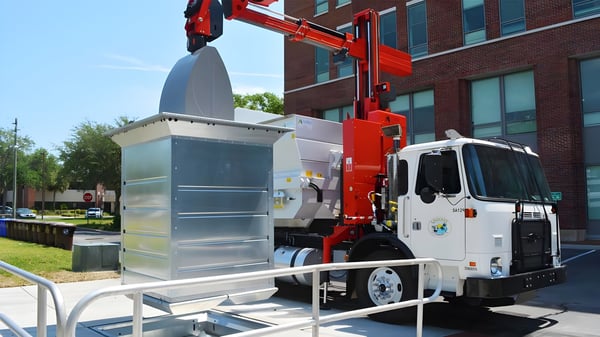
A severe trash and rodent issue is escalating in New York City, primarily due to Mayor Bill de Blasio's decision to cut the Sanitation Department's budget by $106 million. This has led to noticeable problems in waste management across the city. In response, some neighborhoods, such as Long Island City in Queens, are adopting innovative solutions to tackle this growing challenge. They have started investing in BigBelly smart bins, a modern approach to managing waste and keeping areas clean.
We speak with Jeff Satwicz and Nick Jenner from BigBelly to know more about this initiative. They have not only introduced these advanced bins but also developed a unique financial model to support their implementation. This documentary-style coverage is particularly relevant for utilities, urban planners, environmentalists, and those interested in smart city technologies and municipal management. It provides insight into the challenges cities face with sanitation issues and showcases smart and innovative solutions being employed to address them.
Read the transcript machine-generated
More in Waste
See all 7:30
Facing Mandatory Residential Biowaste Separation with Smart Solutions
 7:23
How Reykjavik Optimizes Litter Bin Waste Collection, Location
 6:51
IFAT ’22: Circular Economy Shines Light on Smart Waste
 2:08
Mark Dancy on the effectiveness of a pay-as-you-throw program
 8:06
Can Pay-As-You-Throw with Access Control Reduce Waste?
 6:12
U.S. Cities Invest in Underground Waste Solutions
Latest news in waste
All news- Seoul’s Eunpyeong District Pilots Photo-Based Bulky Waste App Across 220,000 Annual Requests22 Oct 2026
- Kingston University Leads £3.6M National Waste And Recycling Robotics Adoption Hub20 Oct 2026
- Dortmund Installs 92 Sensor-Equipped Big Belly Bins In 14 Parks And Zoo For €367,00019 Oct 2026
- Iraq’s National Investment Commission Announces Smart Waste Collection Scheme For Karbala8 Oct 2026
Kurrant advisory
Planning a waste project? Talk to Kurrant.
Behind these interviews is Kurrant's advisory team, working with utilities, cities and the companies that serve them.
- Strategy AdvisoryKurrant is actively involved in resolving the challenges that cities, utilities and industry players are facing.
- M&A AdvisorySmart city and utility expertise for successful deals, turning insights into strategic gains.
- Engineering & ProcurementBetter engineering and procurement decisions, by identifying and developing digital and IoT solutions across use cases.
Or write to us: contact@kurrant.com
Send us a message