in Barcelona
 3 to 5 Nov 2026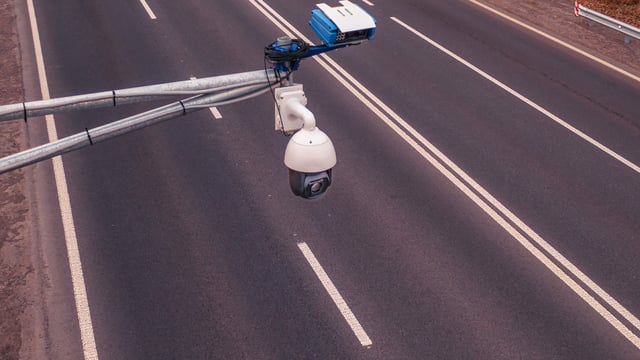
National Highways, the government-owned company responsible for England’s motorways and major A-roads, has installed a camera that uses automated video analytics to detect illegal U-turns on the A30 Hayle Bypass in west Cornwall, where 10 collisions attributed to U-turns since 2014 have killed one person, seriously injured six and left 13 with slight injuries.
The installation, announced on 14 September 2026 through the Vision Zero South West road safety partnership, was carried out with Devon & Cornwall Police and Cornwall Council, and the partners describe it as the first camera in the UK deployed specifically to identify U-turn manoeuvres, a claim that has not been independently verified.
A Prohibition In Force Since 2021 Has Not Removed The Risk
National Highways banned U-turns on the bypass in 2021, and in a 2025 update on the scheme the partnership said the safety study behind the ban had identified eight U-turn collisions on the route since 2014.
The figure now stands at 10, which suggests, although none of the partners has stated it directly, that further U-turn collisions have occurred on the stretch after the prohibition and its signage were put in place.
The behaviour predates the ban by several years: a Cornwall Fire & Rescue Service incident notice from May 2017 warned approaching motorists that drivers were turning around in the carriageway while traffic queued behind a three-vehicle collision on the bypass.
Enforcement has so far leaned on Op Snap, the Devon & Cornwall Police portal established in 2019 that accepts dashcam and other video footage from the public, and the partners say some reported near misses on the bypass have resulted in prosecution through that route.
Monitoring Comes First, While The Enforcement Pathway Stays Undefined
The most consequential detail in the announcement is the way National Highways frames the purpose of the device, which places observation ahead of penalties.
“We’re employing the camera primarily to monitor traffic movements and manoeuvres,” said Oliver Dash, Senior Road Safety Engineer at National Highways, in the Vision Zero South West announcement of September 2026.
Dash said the resulting data would be made available to Vision Zero South West partners and that the agency hoped the monitoring would deter drivers, a description that stops short of setting out any automated penalty process.
Adrian Leisk, Head of Road Safety at Devon & Cornwall Police, took a firmer position in the same announcement, saying the force would take action against anyone caught making an illegal U-turn because a small minority of drivers continued to ignore the ban despite prominent signage.
None of the partners has published the manufacturer of the camera, the procurement route, the installation or operating cost, or any measure of detection accuracy, and those details were also absent from coverage by BBC News and GB News.
The Camera Extends Several Years Of National Highways Image-Analysis Trials
The Hayle unit follows National Highways trials that applied automated image analysis to driver behaviour, beginning in 2021 with a fixed camera on the M4 in Berkshire.
Over six months that first trial detected nearly 7,000 seatbelt offences and more than 25,000 instances of drivers holding mobile phones, according to a Clyde & Co analysis of the programme, which was later extended to vehicle- and trailer-mounted units operating with 10 police forces until March 2025.
Vision Zero South West already uses camera systems of this kind against seatbelt and handheld phone offences in Devon and Cornwall, GB News reported, so the Hayle deployment adds a new manoeuvre category to an existing regional programme rather than introducing the approach to the peninsula.
Supplier opacity is not new for the agency: when National Highways announced automated litter-detection cameras for lay-bys in south-east England in 2023, it and its council partner declined to name the company behind them, The Daily Telegraph reported.
Evidential Rules Will Determine What The Footage Can Support
In Great Britain, section 20 of the Road Traffic Offenders Act 1988 makes evidence from prescribed enforcement devices admissible only where the device is of a type approved by the Secretary of State, and the Home Office type-approval handbook is framed around speedmeters, traffic light cameras and prohibited lane cameras.
The partners have not said whether the Hayle camera holds type approval, relies on a different evidential basis, or is intended to support prosecutions only when combined with other material such as public Op Snap submissions.
That distinction matters for any highway authority weighing similar equipment, because a device that generates intelligence for targeted patrols carries a different cost-benefit case from one whose output can feed a notice of intended prosecution.
Regional Casualty Targets Set The Benchmark For Success
Cornwall Council’s Cabinet unanimously approved a refreshed Road Safety Strategy in May 2026, and Cllr Dan Rogerson, the council’s portfolio holder for transport, said in the announcement that the strategy’s goal is to eliminate deaths on Cornwall’s roads by 2050.
Vision Zero South West, a partnership of 17 organisations, has set a tighter regional ambition of halving deaths and serious injuries by 2030 and reaching zero by 2040, according to its website, leaving the county and the partnership working to end dates a decade apart.
Measured against those targets, a single-site camera addressing 10 collisions over roughly 12 years is a narrow intervention whose wider value depends on whether the manoeuvre data it collects is ever published.
The deterrence claim can only be tested if the partners release U-turn counts from before and after installation, and until National Highways confirms whether a camera-flagged manoeuvre can lead to a penalty on its own, authorities evaluating comparable systems should treat Hayle as a monitoring pilot with an untested enforcement case.