in Barcelona
 3 to 5 Nov 2026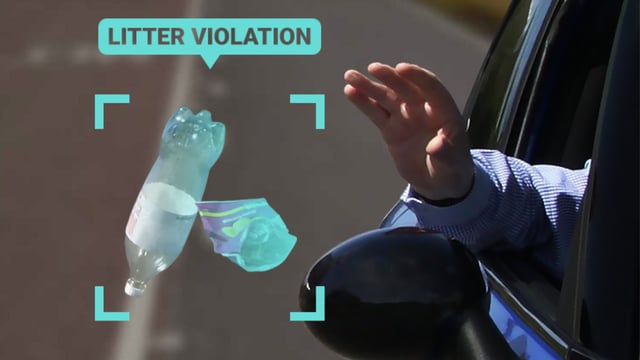
Transport Scotland and its South East Scotland trunk road operating company, BEAR Scotland, announced on 14 September 2026 a six-month pilot of LitterCam roadside detection cameras on the A720 Edinburgh City Bypass and the A1, after BEAR Scotland collected 3,018 bags of litter weighing more than 15 tonnes from the bypass alone over the previous 12 months.
A Transport Scotland data privacy notice sets the trial window at 14 September 2026 to 31 March 2027 on motorways and special roads in the Trunk Road South East Unit, describing the project as a research exercise to establish the frequency of littering from vehicles and the locations and times at which it peaks.
A Measurement Exercise Running Ahead Of Keeper Liability Rules
Some coverage has framed the cameras around fines, but a Transport Scotland spokesperson told The Scotsman that the equipment is being used solely to measure prevalence, and that regulations allowing registered keepers to be fined have not yet been enacted, with consultation expected this month and possible commencement in April depending on the parliamentary timetable.
The privacy notice states that the trial will not be used to identify individuals or vehicles and that no enforcement or regulatory action will follow from any recorded incident, with all findings used only in aggregated and anonymised form.
“This trial uses the latest technology to record incidents of littering,” said Tommy Deans, South East Network Manager at BEAR Scotland, in the company’s September 2026 press release. Deans also argued that the staff time and risk involved in clearing litter from high-speed roads could be redirected into work that keeps the strategic network safe and reliable if drivers and passengers took their rubbish home.
How Footage Moves From Roadside Camera To Human Reviewer
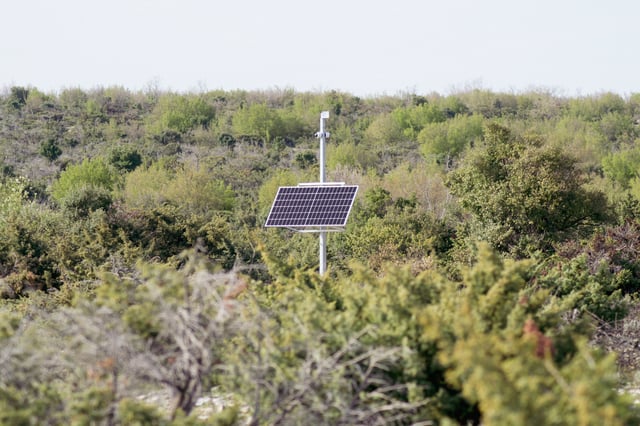
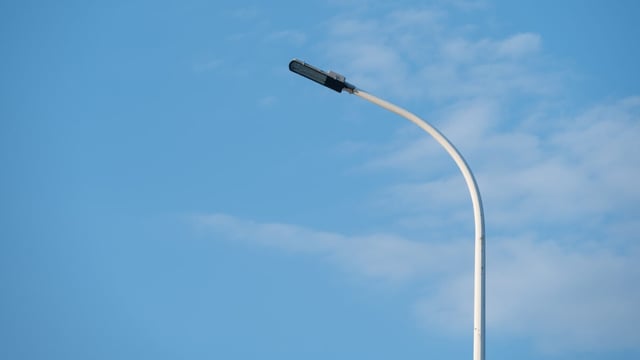
According to the notice, the fixed CCTV cameras analyse imagery in real time and do not retain it by default; when the software flags what appears to be litter leaving a vehicle, it keeps a clip running from 15 seconds before to 15 seconds after the event, while all other imagery is deleted immediately.
The cameras are positioned to capture only the rear of vehicles, are not designed to record drivers, passengers or vehicle interiors, and process no biometric data, although registration plates may be captured incidentally alongside the date, time and general location of each event.
Retained clips are transferred to a UK-hosted cloud environment certified to ISO 27001 and encrypted at rest and in transit, every detection is checked by authorised staff before it counts, LitterCam Limited does not routinely access footage without explicit authorisation, and all retained imagery must be deleted within seven days of the trial ending.
Neither BEAR Scotland nor Transport Scotland has published the number of camera units, their exact positions on either route, or the detection accuracy thresholds used to trigger clip retention.
The Operating Cost Of Clearing High-Speed Verges
BEAR Scotland collects litter on several Scottish motorways and on key South East dual carriageways including the A720 and the A1 Expressway, while local authorities remain responsible for all other routes.
A recent clean-up on the A1 near Dunbar required lane closures so that ten workers could gather 122 bags of litter in a single day, although The Scotsman described the stretch as roughly a mile long while Deadline News reported it as 3 km.
The Scotsman reported the pilot’s cost as £15,000, with Transport Scotland expecting it to be offset by lower litter-picking costs on routes where clearance can require road closures, though no supporting calculation has been published.
Keep Scotland Beautiful, the lead delivery partner on roadside litter under the Scottish Government’s National Litter and Flytipping Strategy, cited survey data indicating that 90% of people regard roadside litter as a problem.
The Edinburgh pilot follows earlier testing on an 18-mile section of the M74 between Glasgow and Larkhall in South Lanarkshire about four years ago, the results of which do not appear to have been published.
A Vendor With A Council Track Record And An Unaudited Headline Figure
LitterCam is based in Wakefield and has taken part in trials with authorities in London, Manchester, Scotland, the Netherlands and Saudi Arabia, with East Riding of Yorkshire Council reporting that a Loughborough deployment produced 28 fines of £150 and a 40% reduction in verge litter.
LitterCam chief executive Andrew Kemp said in the BEAR Scotland release that previous projects had achieved a 40% reduction in verge litter, a vendor-supplied figure for which no independent audit, baseline methodology or survey period has been made public.
Maidstone Borough Council in Kent became the first local authority to pilot the system in 2021, with Kemp saying at the time that the software could connect to almost any online-enabled CCTV network without new cameras and would be cost-neutral for councils.
Kurrantly News previously covered East Riding of Yorkshire Council’s LitterCam pilot, where the council issued warning letters rather than penalties while gathering behavioural data against an annual litter clean-up bill of £4.36 million.
Keeper Liability Is Legislated But Not Yet Switched On
Section 18 of the Circular Economy (Scotland) Act 2024 inserts a new section 88C into the Environmental Protection Act 1990, allowing an authorised officer of a litter authority to impose a civil penalty charge on a vehicle’s keeper where satisfied on the balance of probabilities that littering occurred from that vehicle, with the registered keeper presumed liable unless the contrary is proved.
A notice must be issued within three months of the incident, and the Scottish Ministers will set penalty amounts, discounts and surcharges through regulations.
The Scottish Government’s 2019 consultation said the change was needed because existing law requires the individual who dropped the litter to be identified, and that it would align Scotland with the regime introduced in England and Wales under the Anti-social Behaviour, Crime and Policing Act 2014.
Law firm DWF has noted that businesses registered as keepers could become liable for littering by their drivers, which places fleet operators among the parties with a direct interest in how the upcoming regulations are drafted.
What The Pilot Data Will Need To Prove
One of the trial’s stated objectives is to test whether camera-based detection can deliver proportionate and reliable evidence to inform future environmental, operational and policy decisions.
The number to watch when Transport Scotland reports is not a percentage reduction in verge litter but the share of automated detections that human reviewers reject, because that ratio will determine the staffing cost per confirmed incident once the same rear-facing footage is asked to meet a civil evidential standard rather than feed an anonymised dataset.
Sources
- BEAR Scotland press release, 14 September 2026
- Transport Scotland LitterCam trial data privacy notice
- The Scotsman
- Edinburgh Evening News
- The Edinburgh Reporter / Deadline News
- Circular Economy (Scotland) Act 2024, section 18
- Scottish Government circular economy consultation, 2019
- East Riding of Yorkshire Council
- Hertfordshire Mercury on Maidstone pilot
- DWF analysis of the Circular Economy Bill
- Kurrantly News: East Riding LitterCam pilot