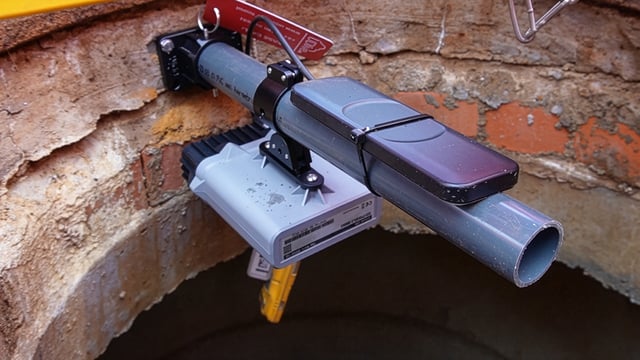
Kirtland Air Force Base has installed 14 wildfire detection N5 Sensors across over 1,000 acres, setting a new standard in wildfire management. These advanced sensors should detect fires within a five-mile radius, capturing smoke and heat indicators at the moment of ignition. Developed with artificial intelligence and machine learning, the N5 sensors can discern between distant wildfire smoke and new ignition sources, offering unmatched sensitivity and accuracy.
Engineered to communicate over both cellular and long-range radio frequencies, the N5 system ensures that alerts are sent instantly, even from remote or low-connectivity areas, to platforms like IPAWS and Waze. This capability significantly enhances early response, providing critical minutes to fire teams. At around $1,000 per sensor, the deployment fortifies Kirtland’s proactive fire management, supported by the USDA Forest Service’s Air Tanker Base. Together, these systems offer comprehensive wildfire detection and suppression for Kirtland and beyond, making it a model for Department of Defense and wildfire-prone regions nationwide.