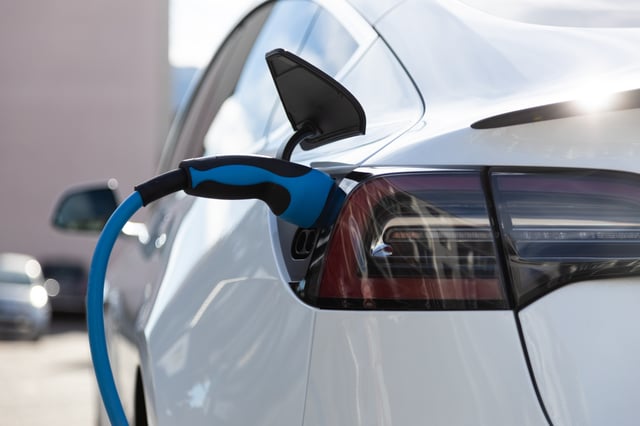
The Brussels-Capital Region has selected Engie Vianeo, the electric mobility division of French energy group Engie, to deploy 835 public charging stations across all 19 municipalities of the Belgian capital. The contract will deliver 1,640 individual charge points over the next two years, with power levels between 7.4 kW and 11 kW suited to daily urban charging needs.
Lamppost Integration and Data-Driven Placement
Of the total deployment, 805 stations will each feature two charge points, while 30 will be single-outlet units integrated directly into existing street lighting infrastructure. The lamppost-mounted chargers represent a notable design choice for a dense urban environment where kerb space and visual clutter are persistent constraints.
Station locations were determined through a collaboration between the Vrije Universiteit Brussel (VUB) and Bruxelles Environnement, the regional public administration responsible for environmental policy. The placement methodology aimed to align the network with actual mobility patterns of residents across the full geographic spread of the region, rather than concentrating chargers in high-traffic commercial areas alone.
Engie Vianeo’s Growing Belgian Footprint
The Brussels contract extends Engie Vianeo’s presence into the last of Belgium’s three regions. In 2022, the operator secured a concession in Flanders covering the provinces of Antwerp, Limburg and West Flanders, with a scope of 2,800 stations and 5,600 charge points. The company has also won contracts in Wallonia, where it recently inaugurated two 300 kW ultra-fast chargers in Coo providing four charge points for long-distance drivers.
Engie Vianeo’s Belgian network now exceeds 6,000 charge points, part of a broader European footprint of more than 10,000. Earlier in 2024, the operator partnered with BICS to embed IoT connectivity into its charging infrastructure, enabling remote maintenance and real-time operational analytics across its expanding network. The company’s stated target is to reach 25,000 charge points across Europe by 2030, including 1,000 dedicated to heavy-duty vehicles.
Brussels’ Broader Push Toward 22,000 Charge Points
The Engie Vianeo award sits within a larger regional electrification programme. Under the Electrify.brussels initiative, the Brussels-Capital Region has committed to deploying 22,000 publicly accessible charge points by 2035. Of these, 11,000 are to be installed on public roads under the coordination of Sibelga, the regional grid operator, through its ChargyClick programme. A further 11,000 are planned for semi-public locations by other operators.
As of mid-March 2026, the region reported approximately 10,731 publicly accessible charge points already operational. Other operators active in the Brussels market include TotalEnergies, which installed 452 charge points in the region in 2024 and in early 2026 launched a joint investment platform with Tikehau Capital to accelerate public charging rollouts across Belgium and the Netherlands. EnergyVision, selected by Sibelga for the ChargyClick programme, installed more than 1,230 charge points in 2023.
The competitive landscape in Brussels reflects a wider trend in Benelux EV charging markets, where above-average adoption rates and proactive city governments are drawing substantial infrastructure investment from both energy incumbents and financial partners.
Regulatory Drivers and Urban Transition Timeline
Brussels’ charging ambitions are underpinned by tightening emissions regulations. The region’s low-emission zone, introduced in 2018, is scheduled to ban diesel vehicles by 2030 and petrol and LPG vehicles by 2035. As of 2025, all Brussels public authority fleet purchases must be zero-emission. These deadlines are accelerating demand for accessible public charging, particularly for residents without private parking, which is a large share of the population in a capital defined by dense apartment living.
The region has also mandated minimum charging infrastructure ratios for commercial car parks, with requirements escalating through 2030 and 2035. The regional government has projected that the additional electricity demand from full fleet electrification would increase distribution network load by roughly 20% by 2035, a figure that Sibelga has indicated is within its planned investment capacity.
Brussels’ broader smart city ambitions, including its city-wide smart street lighting system managed in partnership with Engie, provide additional infrastructure synergies for the integration of EV charging into public lighting assets.