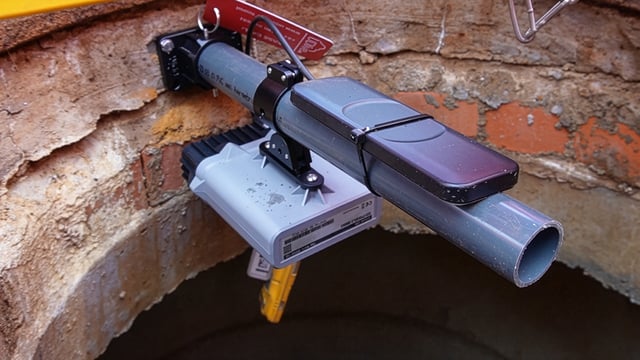
From France and Spain to Tanzania, Turkey, Mozambique and the United States. Flooding is becoming a growing global threat. This year was no exception. Extreme rainfall and urban flooding are increasingly impacting cities around the world, putting both people and critical infrastructure at risk. If you think about the consequences of flooding, there are multiple, but I believe the main one remains the human side of it. Thousands of people die every year from flooding, which is more than any natural disaster. The second one, obviously, is the financial impact. And you might think about the direct cost, obviously. So you have the damaged building, the bridges, the roads, the crops, but it goes much further and you have the loss of productivity as well. And the potential disruption to critical infrastructure such as power plants. Flooding itself is not new, but in urban environments, human activity is increasingly making the problem worse. And that's where smart technology is beginning to play a role. On the environmental side, climate change has brought more intense and unpredictable rainfall, with some EU countries experiencing up to 35% more rainfall in the 21st century compared to historical averages. But aging infrastructure is also a major factor. So one of the issues we have is that the water system, typically the rainwater collection pipes, the manholes, the drains, they were designed decades ago. In the US, an average water infrastructure is about 45-50 years old, which means that they were not built to handle today's volume. On top of that, you have your urbanization, which means more hard surface and the rainwater runs off faster instead of actually filtering into the soil. And that results in a larger gap between what the infrastructure can do and is actually being asked to do. This means that flooding on many occasions could be prevented. But most cities still rely on manual water level checks done as little as once a month, leaving authorities with limited real time visibility and a costly reactive approach. To close the gap, cities and utilities are increasingly turning to smart flood technology. These solutions generally fall into two categories warning responsive solutions and prevention solutions. Warning systems use sensors deployed in rivers, streets, water networks to monitor rising water levels in real time and trigger alerts, often combined with short term weather forecasting. Technologies include ultrasonic and radar sensors, cameras, and satellite imagery depending on the environment. The goal is to give authorities time to respond, whether by closing roads, lowering reservoir levels or dispatching emergency crews. On the prevention side, utilities are focusing heavily on monitoring drains and manholes. Fill level sensors can detect blockages before they cause flooding, allowing cities to shift from fixed inspection schedules to maintenance only when needed. Shifting from fixed inspection schedules to dynamic, sensor-triggered maintenance generates significant operational savings, which makes the business case much easier to justify. In Marseille, for example, IoT sensors from GreenCityZen are helping reduce the need for tens of thousands of manual gutter inspections annually. Cities are also investing in larger-scale flood intelligence systems. New York recently allocated $7.2 million for a network of 500 solar-powered ultrasonic flood sensors, while projects in Europe are exploring AI-powered digital twins for flood prediction and early warning. There have been projects in Dresden and Germany, and the EU launched an ‘Advanced Local Digital Twins using AI for Early Warning’ programme in early 2026. When it comes to digital twins for flooding, it's a bit different because every city has its own context, its own network, its own typology, and that makes it very hard to replicate and to scale. Going forward, the key question is, will digital twins for flooding move from experimental lab into real life operation? Become more scalable and more replicable? That's a challenge, but for the players who can solve it, it's also a significant opportunity because as of today, the market is largely intact. Beyond immediate response and maintenance optimization, these systems are also generating long-term data that could reshape urban planning itself. By understanding which streets flood first, which drains overflow, and how water moves through a city during extreme rainfall events, planners can make better infrastructure decisions, from upgrading drainage systems to investing in permeable surfaces and green infrastructure. It’s a slower-moving use case than early warning or maintenance optimization, but arguably the one with the largest long-term impact. Floods may never be fully preventable. But with real-time monitoring, predictive systems, and decades of infrastructure data, cities can shift from reacting to floods to anticipating them.
The Smart Tech Monitoring, Preventing Flooding
Flooding is becoming a growing global threat. Extreme rainfall and urban flooding are increasingly putting both people and critical infrastructure at risk.
In this episode, we speak with Pierre Dubuisson, Business Strategy Manager and Water Expert at Kurrant, about why urban flooding is becoming more frequent, the smart technologies cities are deploying to predict and prevent it, and where the flood-tech market is headed.
View transcript auto-generated







Similar Picks

📰 Latest News

🎬 Kurrant Originals
🎥 Recent Event Coverage


Featured Case Studies
Real client work behind the news. Strategy, M&A and engineering projects we've delivered for cities and utilities.

Stay in the Loop
Get smart cities and utilities insights delivered your way. Choose your channel
Join our WhatsApp Channel