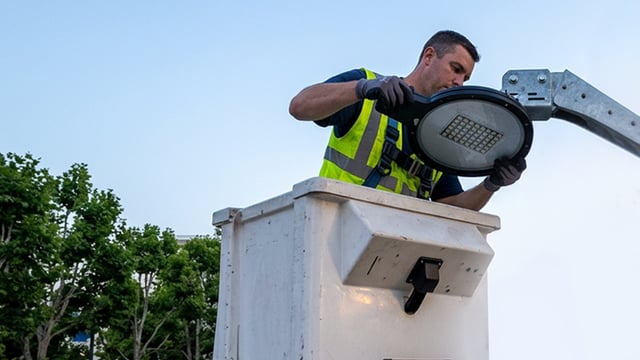
The Ajuntament de Burriana has completed a full-scale overhaul of its public lighting network, replacing 6,536 luminaires across the municipality with LED units equipped with individual point-to-point remote management. The project is structured as a 15-year concession contract valued at EUR 9.8 million, awarded to a joint venture formed by Ferrovial Energía and Endesa, with Telefónica Tech serving as the technology integrator.
A Decade-Long Contract Reshapes the Municipality’s Lighting Grid
The contract was formally adjudicated in May 2025 and physical installation works began in the same month, with completion targeted before the end of summer 2025. The scope covers the full municipal territory, including the urban core, industrial zones, beaches, and residential areas such as La Serratella and Santa Bàrbara.
Control infrastructure spans 75 command centres distributed throughout the term, each upgraded with renewed electrical protection systems and energy data analytics equipment. The upgrade brings Burriana’s installations into compliance with current electrical standards while enabling centralised, real-time visibility over the entire network.
NB-IoT Nodes Enable Individual Fixture Control
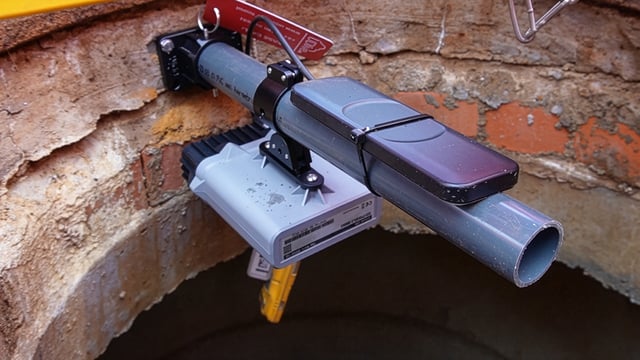
The connectivity backbone relies on Narrowband IoT (NB-IoT), a low-power wide-area standard suited to large-scale sensor deployments in environments where signal penetration can be challenging. Telefónica Tech deployed more than 6,300 nodes manufactured by its partner Tellink, equipping each streetlight with the capacity to transmit operational data to a centralised monitoring platform.
The Tellink TSmart-ZD4i controller model was selected for the deployment. Each node communicates luminaire status, energy consumption readings, and fault signals to the platform continuously, enabling remote switching, intensity adjustment, and predictive maintenance without on-site intervention.
“Our smart street lighting solution consists of connecting the different lighting points with NB-IoT technology to facilitate efficient and sustainable remote management. With this solution, utilities can reduce energy consumption in cities and, with it, local councils’ electricity costs, achieving, among other things, savings in maintenance by being able to predict possible faults or breakdowns,” said Dario Cesena, Director of IoT at Telefónica Tech, in the company’s March 2026 press release.
Energy Savings and Faster Fault Response as Primary Drivers
The municipality has published an estimated energy saving of 43.5% relative to the previous system, a figure attributed to the combined effect of LED technology and adaptive intensity management. The point-to-point architecture means lighting levels can be modulated zone by zone, dimmed in low-traffic periods, or raised for special events, without affecting the wider network.
From an operational standpoint, the key shift is in fault detection. Under the previous infrastructure, outages or failures were typically reported by residents or identified during manual inspections. The new system flags anomalies in real time and allows maintenance crews to prioritise interventions before complaints arise. Mario Trullen, the municipality’s councillor for Public Works, stated that the upgraded command centres are now equipped with a more robust, reliable, and energy-efficient electrical system designed to meet current and future requirements in energy management, and that the new remote management platform allows for significantly faster responses to any incident.
Heritage Illumination and Festive Lighting Included in Scope
Beyond efficiency, the contract covers the architectural lighting of several civic landmarks. The bell tower and facade of the Basílica de El Salvador are to receive dedicated illumination, and the town hall facade will be fitted with an RGBW dynamic lighting system capable of programmed colour scenes for commemorative or festive occasions. Columns in the Jardín del Beso public garden are also part of the renewal.
The agreement also assigns responsibility for seasonal festive installations, including Christmas and Fallas lighting, to the joint venture. This scope is unusual in municipal lighting contracts and reflects a move towards consolidated service delivery under a single long-term operator.
Same Consortium, Growing Spanish Footprint
The Ferrovial-Endesa joint venture and Telefónica Tech have pursued a consistent model across Spanish municipalities. Kurrant previously reported on a comparable deployment in Santiago de Compostela, where the same consortium installed more than 10,000 NB-IoT nodes on the Galician capital’s streetlight network. The Burriana rollout applies the same technical stack at a smaller municipal scale, suggesting the model is being productised for mid-sized Spanish towns rather than large cities alone.
This pattern is consistent with broader trends in Spanish municipal lighting modernisation, where long-term energy service contracts combining LED replacement with connected management software have become an increasingly standard procurement format. Kurrant’s coverage of Valencia’s smart street lighting strategy illustrates how the Valencian region has developed one of Spain’s more active pipelines for this type of project, with Burriana now adding to that footprint as a municipality of around 35,000 residents in the Plana Baixa comarca.