Two Seoul districts completed or broke ground on smart pole deployments in May 2026, combining CCTV surveillance, LED emergency alert systems, and public Wi-Fi into unified street infrastructure designed to reduce crime blind spots and improve pedestrian safety in poorly lit residential corridors.
Gwanak Completes Multi-Function Pole Installation Near Busy Market
Gwanak-gu recently finished installing 20 smart safety streetlights around the Hyundai Market intersection along Euncheon-ro in the Seonghyeon-dong and Jungang-dong neighbourhoods of southern Seoul. The area had long suffered from deteriorating lighting infrastructure, leaving pedestrians, particularly those travelling at night, without adequate illumination.
The project was executed under the “Safety Streetlight Plus Support Program,” organised by the Milal Welfare Foundation and co-financed by Korea Hydro and Nuclear Power (KHNP), a KEPCO subsidiary that generates roughly 31 percent of South Korea’s electricity and channels a portion of its social contribution budget into community infrastructure programmes. Gwanak-gu secured programme funding for two consecutive years, enabling a phased rollout: poles near Sillim Station were installed in the previous cycle, and the Hyundai Market intersection followed in 2026.
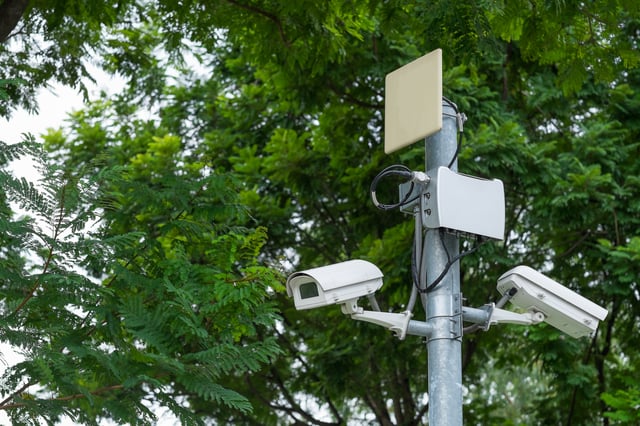
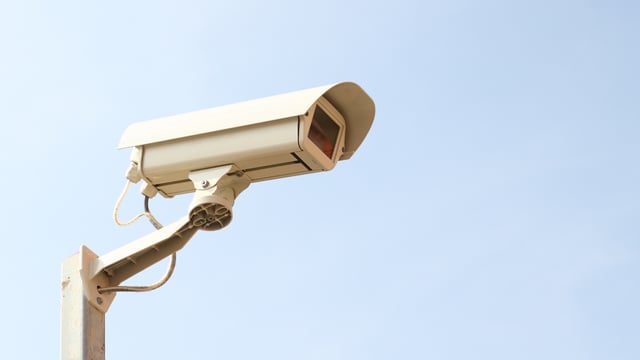
Each pole functions as a compact urban command node. Equipment integrated into every unit includes high-resolution CCTV cameras, LED emergency call bells, public Wi-Fi access points, and digital display panels for district government announcements. The cameras feed directly into the Gwanak-gu integrated control centre, which monitors emergency situations in real time. Emergency bells allow pedestrians in distress to trigger an immediate alert to that centre without requiring a phone.
“We will do our best to realize a ‘safe smart city Gwanak’ so that residents can walk the streets at night with peace of mind,” a Gwanak-gu district official said, according to the district’s May 2026 announcement.
Guro Plans Five Pole Variants Across Gaebong Neighbourhood
Guro-gu, a western Seoul district bordering Yeongdeungpo and Geumcheon, is taking a more structured approach. The district won a competitive grant from the Ministry of Science and ICT (MSIT) through its Smart Village Development Project programme, which funds technology-driven community improvements in selected residential areas across South Korea. The programme has become one of the ministry’s primary vehicles for distributing smart city investment to localised, non-central districts.
The Guro-gu project will place 36 poles across the Gaebong 2-dong and 3-dong neighbourhoods, with a combined budget of approximately 1.31 billion Korean won, of which 919 million won comes from central government grants. Construction is set to begin in June 2026, with completion targeted before the end of the year.
Rather than a single standardised unit, Guro-gu defined five functional categories of pole to match different urban conditions. Streetlight smart poles will occupy major intersections, while CCTV-focused poles are designated for residential alleys where lighting is present but camera coverage is sparse. Additional variants target illegal parking deterrence, traffic safety in pedestrian-vulnerable zones such as school routes and steep slopes, and information provision in visual blind spots.
The district is also integrating an AI-driven video analysis layer into the system. Described in the project documentation as an enhancement for on-site response, the AI component is expected to flag incidents such as illegal waste dumping and to assist enforcement in traffic-sensitive zones automatically, rather than relying entirely on operator-initiated monitoring.
Smart Villages and the National Funding Landscape
The MSIT Smart Village programme sits alongside a broader suite of Korean government grants backing smart city technology at the district level. The Ministry of Land, Infrastructure and Transport oversees the larger smart city policy envelope, but MSIT operates its own competitive streams — including the Smart Village Challenge — targeted at smaller-scale, community-integrated deployments. National smart city investment from central ministries grew from 9.3 billion won in 2019 to over 117 billion won by 2022, reflecting sustained political commitment to the sector.
The multi-function smart pole format that both Gwanak-gu and Guro-gu are adopting is consistent with a broader consolidation trend in Korean urban infrastructure: collapsing what were previously separate columns for lighting, surveillance, communications, and public information into a single structure. The approach reduces permitting complexity, lowers long-term maintenance costs, and provides a physical integration point for future sensor additions, whether environmental monitors or IoT connectivity nodes.