Hunter Water, the state-owned utility serving more than 600,000 people across the Lower Hunter region of New South Wales, will begin installing 2,000 connected water meters in the third quarter of 2026 under an expanded Digital Metering Pilot Program built to reduce water losses and give households near real-time insight into their consumption.
The trial extends a long-running relationship with metering vendor Itron (NASDAQ: ITRI), whose Intelis wSource NB-IoT ultrasonic meters and Temetra data platform will anchor the deployment. Hunter Water is positioning the pilot as a test of how digital metering can shape its future service model rather than a one-off equipment swap.
A Pilot Hunter Water Has Been Scaling Since 2025
The Itron meters join a trial the utility first opened in January 2025, when it began installing roughly 500 meters supplied by Australian metering provider Intellihub to test ultrasonic measurement, pulse loggers and communications options under local conditions.
Hunter Water has since widened the two-year program to around 5,000 homes across 200 suburbs, plus about 100 commercial properties fitted with digital water loggers, with field installation handled by Service Stream.
The 2,000 NB-IoT units now confirmed with Itron are therefore one strand of a deliberately multi-vendor program. That structure explains why the announcement describes Hunter Water as deploying a variety of meters rather than committing to a single device early in the trial.
Building on a Decade of Water Loss Reduction
The utility comes to the pilot from a position of strength on leakage. Over the past nine years it has cut water leaks across its network by 33 percent through a structured water loss reduction program.
That progress frames the central question behind the trial: what additional value granular, near real-time data can deliver once the easier losses have already been recovered. Hunter Water is treating digital meters as the next layer of a strategy focused on cutting non-revenue water and responding to leaks faster.
The network itself is substantial. Hunter Water manages water supply across roughly 6,671 square kilometres covering Newcastle, Lake Macquarie, Maitland, Cessnock, Port Stephens, Dungog and parts of Singleton, with average daily demand reported at around 188 megalitres.
How the NB-IoT and Temetra Setup Works
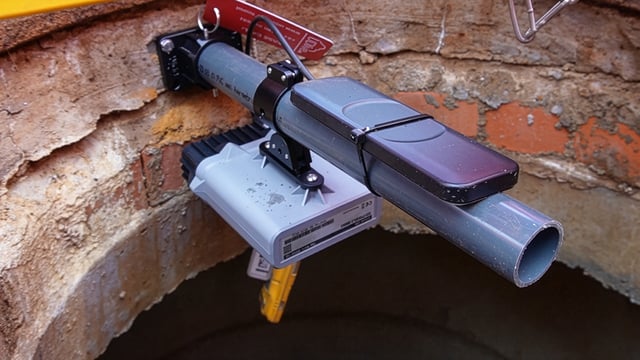
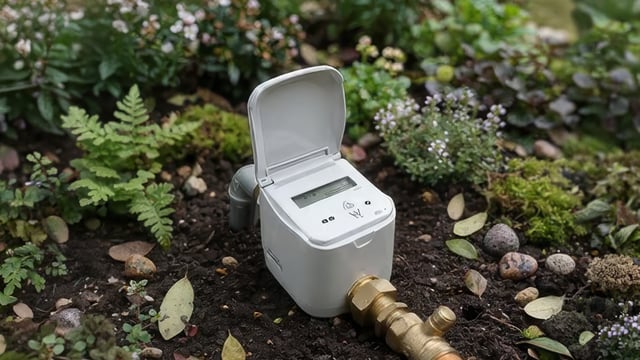
The 2,000 units are Itron Intelis wSource meters that read flow ultrasonically, with no moving mechanical parts, and report over narrowband IoT cellular connectivity. Itron has previously stated that the wSource line carries an automated meter reading backup so consumption data is preserved if the cellular link drops.
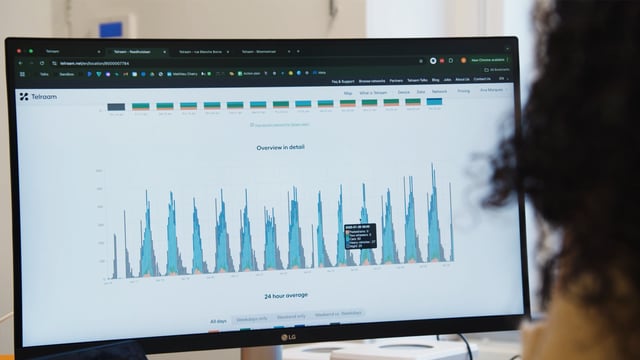
Data from the new meters will feed into Temetra, Itron’s cloud-based platform that consolidates reads from multiple meter makes and commodity types into a single system. Hunter Water has run Temetra for more than five years, so the pilot adds new device types to an existing data backbone rather than introducing a new platform.
Crucially, the utility will manage the incoming digital meters alongside its current mechanical fleet inside that one environment, allowing a gradual transition without abandoning historical billing data.
“Digital water meters provide more timely and detailed insight into water consumption,” said Matt Hingston, Executive Manager, Customer Services at Hunter Water, in Itron’s May 2026 press release.
Australia’s Broader Pivot to Connected Water Networks
The pilot lands amid a clear national move toward cellular water metering. Victoria’s South East Water has contracted TPG Telecom to install one million NB-IoT meters across a 27,000 kilometre pipe network, while Melbourne’s Yarra Valley Water has been rolling out close to a million NB-IoT devices spanning meters, pressure sensors and sewer monitors.
The same Itron metering family is being adopted outside Australia, including by Tuscan utility Publiacqua, which is fitting Intelis wSource units to reduce non-revenue water and improve billing accuracy.
Against those rollouts, which run from the hundreds of thousands into the millions of meters, Hunter Water’s effort stays firmly in trial territory even at a combined scale of several thousand devices. That is consistent with a program built to validate technology, customer engagement and operational workflows across multiple suppliers before any network-wide commitment.