Eddy Grid, a Utrecht-based startup that automates the trading and optimization of renewable energy assets, has closed a €7.5 million financing round, its largest to date. Founded in 2023, the company surpassed 500 MW of assets under management, and reached cash-flow-positive status, an uncommon position for a startup of its age.
From Seed to Market Leader in Two Years
The round was funded almost entirely by existing backers Graduate Ventures and Volve Capital, a structure that reflects sustained investor conviction rather than a market-wide fundraising push. The transaction also included close to €1 million in secondary sales for current shareholders. The new valuation stands at more than 20 times where the company was priced just two years ago.
Eddy Grid previously raised a €1.5 million seed round in early 2024, when it had a team of 16 and was still building out its core platform. By early 2026, headcount had reached 60, with plans for continued hiring across commercial and engineering functions.
What Eddy Grid Actually Does
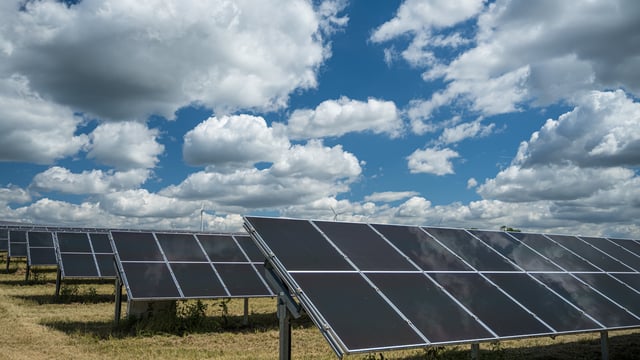
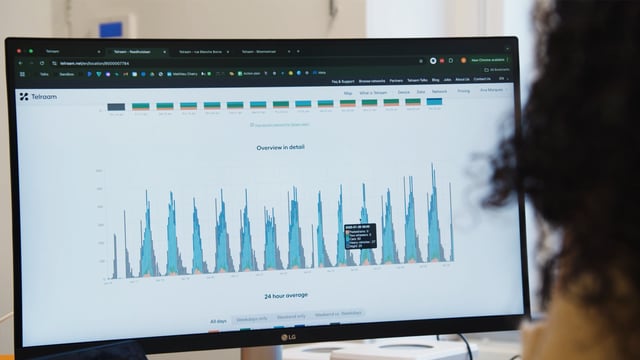
The company builds algorithms that help owners of solar farms, wind turbines, and battery storage systems extract more value from their assets through real-time participation in electricity markets. Rather than selling power at fixed or suboptimal rates, operators use Eddy Grid’s platform to time their market activity to capture higher prices, effectively turning intermittent generation into a more financially competitive asset class.
The platform also plays a role in grid congestion management, a structural problem across European electricity networks. By coordinating distributed battery storage assets to absorb and discharge energy at the right moments, the system can relieve local grid bottlenecks without the need for new infrastructure investment.
Scale and Positioning
With more than 500 MW under management, Eddy Grid now describes itself as the largest independent energy optimizer in the Netherlands. Its customer base currently generates more electricity collectively than the city of Utrecht consumes annually, a benchmark the company uses to illustrate the scale of assets it coordinates.
The company is active in the Netherlands and Belgium, and is preparing to enter Germany, its first market outside the Benelux region. Germany represents a significantly larger addressable market, with one of Europe’s most complex and congested grid environments.
“The optimisation of energy assets is becoming increasingly complex at a rapid pace, especially now that solar, wind, and batteries are increasingly being combined behind a single connection. It is precisely in this complexity that our strength lies. The fact that we are growing rapidly and are cash flow-positive proves that our approach works. With this round, we are strengthening our position as market leader and accelerating the move towards a sustainable energy grid in Europe,” said Sam Rohn, CEO and co-founder of Eddy Grid, in the company’s May 2026 press release.
Market Conditions Driving Demand
Europe’s accelerating build-out of solar and wind capacity has made asset optimization a growing priority. As more generation assets are stacked behind a single grid connection, operators face increasingly complex decisions about when to charge batteries, when to sell, and how to participate in balancing markets. Manual approaches or basic energy management systems are poorly suited to that level of complexity.
Independent optimization platforms that sit between asset owners and market mechanisms are emerging as a distinct segment of the energy software market. Eddy Grid’s growth trajectory places it among the more visible players in that category across northwestern Europe.
Capital Allocation and Outlook
The company has indicated the €7.5 million will primarily be used to reinforce its balance sheet and support the expanding customer base, rather than fund a large-scale product pivot. With 1,000% revenue growth projected for 2026, the operational focus appears to be on scaling commercial capacity and executing the Germany entry without disrupting what has so far been a capital-efficient growth model.