Syria’s Ministry of Energy signed an agreement with Riyadh-based Saudi Meters Company (SMC) on June 14, 2026, to supply and install five million smart water meters across the country, the state news agency SANA reported. The deal, signed in Damascus in the presence of Energy Minister Mohammad al-Bashir, marks one of the most significant utility digitalization commitments made by Syria’s transitional government since it formed a consolidated energy and water ministry in March 2025.
A Newly Unified Ministry Takes Its First Major Digital Step
Syria’s Ministry of Energy was established on 29 March 2025 through a merger of the former ministries of electricity, oil and mineral resources, and water resources. The consolidation placed responsibility for drinking water infrastructure under a single ministry led by al-Bashir, who had served as Syria’s caretaker prime minister following the fall of the Assad government in December 2024. The smart meter contract is the first large-scale metering initiative attributed to the unified ministry, which also oversees the General Establishment for Drinking Water and Sanitation created by presidential decree in April 2026.
The agreement was signed on the final day of the 24th Buildex International Construction Exhibition at the Damascus Fairgrounds, which ran June 10–14 and drew 710 companies and 1,400 brands from 51 countries. Buildex, organized by the Arab Group for Exhibitions and Conferences, has become a key procurement venue as Syria accelerates post-conflict reconstruction contracting.
Five Million Meters as a Demand-Side Anchor for Reconstruction
At five million units, the procurement represents a deployment scale comparable to mid-tier national AMI rollouts in countries with functioning grid infrastructure. Non-revenue water (NRW) globally amounts to roughly 346 million cubic meters per day, with the total cost of lost water estimated at $50 billion annually. Syria’s context is considerably more acute. Before 2010, 98 percent of urban Syrians and 92 percent of rural residents had reliable access to safe water. More than a decade of conflict reduced the country’s drinking water supply by up to 40 percent, and only 50 percent of water and sanitation systems now function properly.
One reconstruction framework has estimated the investment required to repair irrigation and drinking water networks and reduce leakage from 45 percent to below 20 percent at $500 million by 2030. A metering layer capable of generating consumption data at the subscriber level is a prerequisite for any serious loss-reduction program, since it enables utilities to separate physical leaks from unmetered or fraudulent consumption.
Speaking at the signing, al-Bashir said the project “represents a clear step toward digital transformation in public services through the establishment of an accurate database that will help improve planning, optimize operations and guide maintenance efforts,” according to SANA.
SMC’s Technology Platform and Regional Manufacturing Base
SMC was founded in 1981 as the first water meter producer in the Gulf region and operates as a member of Abunayyan Holding Company, a Saudi conglomerate active in water, power, oil and gas applications across the Middle East. The company manufactures from the Second Industrial City in Riyadh.
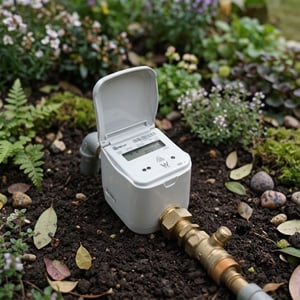
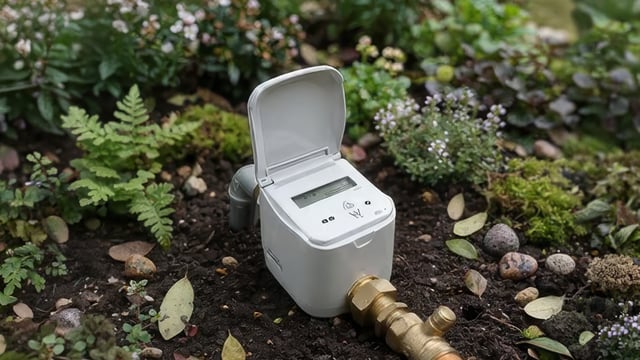
In 2017, SMC signed a licensing and manufacturing agreement with Diehl Metering of Germany to produce Hydrus-platform smart water meters locally in Saudi Arabia, targeting a production capacity of 500,000 smart water solutions per year. The Hydrus is an ultrasonic, solid-state meter platform with no moving parts, designed for integration with Advanced Metering Infrastructure (AMI) and Automatic Meter Reading (AMR) networks. The meter supports AMI and AMR reading at any frequency, carries a designed battery life of up to 20 years, and is positioned as a low-maintenance endpoint for large-scale utility deployments.
SMC’s current product portfolio spans smart water meters and the associated AMI infrastructure for remote real-time water usage data collection and management. The company has not publicly confirmed which specific meter model will be supplied under the Syria agreement, and financial terms were not disclosed by either party.
Institutional Context: Parallel International Financing
The bilateral agreement with SMC runs alongside a growing multilateral financing effort in Syria’s water sector. In April 2026, the World Bank approved $150 million under the Syria Emergency Water Security and Resilient Services Project to restore bulk water supply and wastewater infrastructure in priority conflict-affected areas, rehabilitate treatment and transmission systems in Idlib, Homs and Hama, and support sanitation improvements in Damascus. The World Bank has noted that more than half of Syria’s water supply infrastructure and around 70 percent of wastewater treatment plants were severely damaged by conflict, and that per-capita water availability has fallen below 700 cubic meters per year, well under internationally recognized scarcity thresholds.
A complementary World Bank-backed program slated to run from 2026 to 2031 targets the rehabilitation of the Ain Zarqa water system in Idlib, the Upper Orontes project in Homs and Hama, and the Adra wastewater treatment plant in rural Damascus, and includes modernized network monitoring systems. The SMC smart meter contract fits within this broader framework by addressing the subscriber-side data gap that physical infrastructure rehabilitation alone cannot resolve.
The World Bank’s October 2025 Syria Physical Damage and Reconstruction Assessment estimated total reconstruction costs at $216 billion following more than thirteen years of conflict, with infrastructure accounting for 48 percent of direct physical damages at approximately $52 billion. Water digitalization initiatives such as the SMC deployment are accordingly framed as components of a longer-term fiscal stabilization strategy for utilities, not standalone infrastructure investments.
Demand Data as a Prerequisite for Viable Water Utilities
Syria’s utility sector lacks the consumer-level consumption data needed to move from crisis-mode service delivery toward commercially viable operations. The Syrian government unveiled a 2026 budget of approximately $10.5 billion, roughly five times the 2024 level, and established an infrastructure support fund with a minimum commitment of $3 billion. Within that framework, creating a metered subscriber database is a foundational step toward cost-recovery tariff design, which international development lenders typically require before supporting larger utility sector financing.
Syria’s water resources management has historically emphasized supply-side investments such as dam construction, with demand-side measures including metering, tariff adjustment, and NRW reduction receiving comparatively less emphasis. The shift implied by a five-million-meter deployment signals a reorientation toward demand management at a moment when the transitional government is seeking to establish fiscally sustainable public services across all utility sectors.