Syane, the public energy and digital authority for the Haute-Savoie department in the Auvergne-Rhône-Alpes region of France, is partnering with its long-standing fiber concessionaire Altitude Infra Haute-Savoie to extend their shared infrastructure strategy beyond broadband into low-bandwidth IoT connectivity, targeting full departmental coverage. The move builds on an active pilot program launched in 2024 that has already deployed antenna infrastructure across five municipalities, with a business model under development to scale across Haute-Savoie’s 246 communes. The initiative is framed by Syane as the logical successor to the fiber rollout, positioning the department as an intelligent, sovereign, and connected territory.
A Decade of Fiber Investment Provides The Platform For IoT Expansion
Since 2013, Syane has been deploying the public fiber optic network across Haute-Savoie, establishing the foundational infrastructure on which a low-bandwidth sensor layer can now be built. The fiber program targets 320,000 premises across the department, with Altitude Infrastructure Haute-Savoie serving as the network operator under a public service delegation. That delegation, first awarded in October 2015 and structured over 22 years, has given Altitude Infra deep operational familiarity with the department’s geography and public-sector relationships, making it the natural partner for the IoT infrastructure layer.
In November 2025, Syane and Altitude Infra Haute-Savoie completed a major remediation program on the public fiber network, addressing defects traced to faulty connection work by commercial operators and their subcontractors. Altitude Infra led a full infrastructure overhaul covering cable replacement, optical enclosure repairs, continuity checks, optical measurements, and network audits. The program, funded entirely from Altitude Infra’s own capital at a cost of 3.6 million euros and covering 34 communes, drove the fault rate down from 0.67 percent in April 2023 to 0.28 percent by March 2025. That operational baseline strengthens the case for extending the same partnership into IoT infrastructure.
The Expé-IoT Pilot Defines Use Cases And Tests Deployability
Syane launched the Expé-IoT program in 2024 as an ambitious experiment to support the modernization of public services through connected objects, targeting concrete IoT applications across water and wastewater management, public building monitoring, cold chain surveillance, and air quality. The program is structured as a collective effort, with local public bodies co-designing the experimentation rather than receiving a pre-packaged commercial solution.
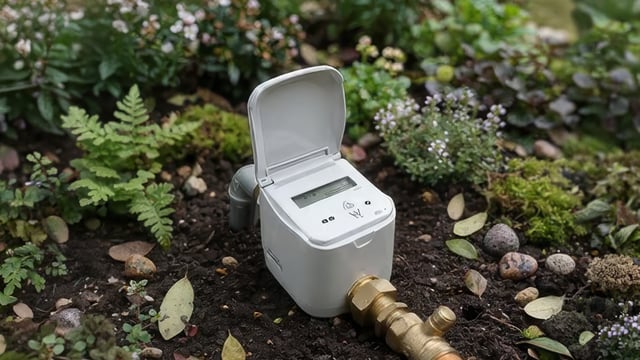
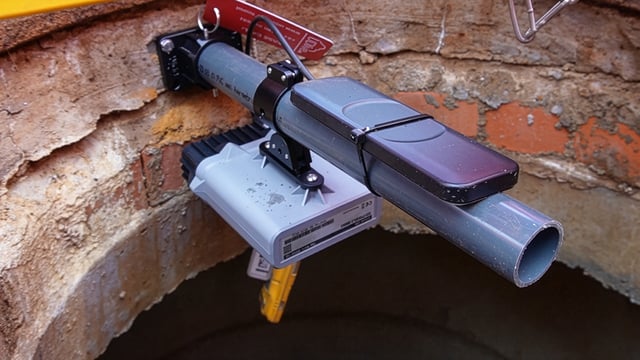
Five pilot sites have been equipped with IoT antennas, distributed across the municipalities of Rumilly (three antennas), Saint-Jeoire (two), Abondance (two), Lovagny (two), and Menthonnex-sous-Clermont (two), with sensor deployments in varying stages of completion. In Rumilly, water sensors are active while cold chain sensors are in installation. In Abondance, sensors tied to a district heating network managed by Syane’s heating subsidiary are operational and transmitting data. At Lovagny, sensors are fully installed and delivering data.
Participating partner bodies in the first phase include the communes of Lovagny, Saint-Jeoire, Abondance, and Menthonnex-sous-Clermont, along with the Syndicat Rocailles Bellecombe, the Fier et Usses intercommunality, Rumilly Terre de Savoie, and the CCPEVA intercommunal community. The breadth of participants reflects a deliberate strategy of testing IoT infrastructure across contrasting territorial profiles, from valley municipalities to alpine communes.
Low-Bandwidth Networks Fill The Gap Left By Fiber And Cellular
The IoT network being developed by Syane and Altitude Infra is specifically designed to address connectivity requirements that neither FTTH broadband nor commercial mobile networks are suited for. Low-bandwidth, low-power wide-area network (LPWAN) technologies, of which LoRaWAN is the dominant standard in the French public sector, allow sensors to transmit small packets of data over long distances at minimal energy cost, enabling battery-operated devices to function for years without maintenance. Technologies of this type allow sensors to connect across varied contexts including water and air quality monitoring, meter reading, and energy monitoring, with device battery life potentially exceeding ten years.
Syane had identified IoT, connected objects, and intelligent territory concepts as essential but complex, costly, and entangled with questions of data sovereignty and public data governance, motivating it to experiment with these technologies for its own operational needs and those of its member communities. The department’s mountainous topography, where coverage of deep valleys and scattered hamlets is difficult for commercial mobile operators to justify economically, adds practical urgency to a publicly owned IoT infrastructure layer.
French Energy Syndicates Are Establishing A Playbook For Departmental IoT
Haute-Savoie’s approach reflects a broader national pattern in which energy and digital public syndicates are positioning themselves as the natural owners of shared IoT infrastructure. In the Somme, the syndicat mixte committed in June 2025 to a full departmental rollout of its connected objects network after a pilot phase, with at least 50 new LoRa gateways planned for 2026 toward a medium-term objective of 450 gateways covering the entire department. In Nord-Pas-de-Calais, La Fibre Numérique 5962 has deployed an independent public low-bandwidth LoRa network designed to serve all territories and use cases across the region, with gateway installations on high points providing base coverage, positioned explicitly as an infrastructure that is public, sovereign, and shared.
The Vendée offers a direct precedent. Vendée Numérique, the grouping formed by the department and the SyDEV energy syndicate, entered the operational phase of its Vendée Territoire Connecté initiative with backing from the Banque des Territoires, with a departmental LoRaWAN IoT network forming the first of three central components. That model, combining a public energy syndicate, an established infrastructure concessionaire, and external public financing, closely mirrors Syane’s trajectory with Altitude Infra.
At the standards level, the ecosystem underpinning these investments continues to mature. The LoRa Alliance has published a technical roadmap covering 2026 to 2028, aimed at significantly simplifying the integration and lifecycle management of connected objects at scale, with application integration, interoperability, and cybersecurity named as the central priorities. The roadmap supports the argument that syndicates investing now in public LoRaWAN infrastructure are building on a stable and actively governed technical standard.
Sovereignty And Shared Data Governance As Non-Negotiable Design Conditions
A recurring theme in Syane’s public documentation on IoT is the insistence on data sovereignty. Rather than relying on commercial IoT platforms operated by private operators, the syndicate’s experimentation is explicitly designed to ensure that public data collected from sensors remains under public control. The FNCCR, the national federation of concession networks and regulated services to which energy syndicates like Syane are affiliated, recently joined the LoRa Alliance as an institutional member, gaining access to the latest LoRaWAN developments and the ability to participate in shaping the open global standard. That institutional involvement signals growing alignment between French public infrastructure governance and the international IoT standards community.
Syane directly deploys 290,000 fiber optic connections in Haute-Savoie, with a further 90,000 deployed by Altitude Infra Haute-Savoie, giving the public entity direct leverage over the infrastructure on which the IoT overlay will eventually operate. Applying the same ownership logic to the IoT layer insulates municipalities from dependence on commercial sensor network operators who may reprice, consolidate, or discontinue service.
Pilot Results Will Drive The Business Plan For Full Departmental Rollout
The Expé-IoT program remains in progress. Early technical and operational feedback will feed into a business plan under development, which will set out the conditions for a larger-scale deployment that would make IoT a functional tool across the department in support of a smarter, more energy-efficient, and more responsive territory.
The pace of the rollout, the financing structure, the number of gateways to be installed, and the specific technology standards to be adopted across the department have not been publicly specified at this stage. Syane has historically used the public service delegation model for infrastructure deployment, and the existing DSP relationship with Altitude Infra is the most probable vehicle for scaling IoT infrastructure, though this has not been formally confirmed in public filings or announcements reviewed for this article.