Ameresco, a Framingham, Massachusetts-based energy infrastructure solutions provider, has signed Advanced Metering Infrastructure contracts with the Texas cities of Baytown and Shenandoah, representing a combined investment of more than $5 million in smart water metering technology. The two Greater Houston-area projects, announced June 23, 2026, will replace aging mechanical and AMR-era meters with solid-state, networked devices capable of near real-time consumption data, automated leak alerts, and full integration with each city’s utility billing platform. The contracts extend Ameresco’s increasingly dense footprint across Texas municipalities seeking to modernize water systems without large upfront capital outlays.
Baytown’s $3.4 Million Phased Residential Rollout
Baytown City Council unanimously approved a $3.4 million contract in late May 2026 to replace residential water meters throughout the city of approximately 85,000 residents in Harris County. The project will eliminate manual meter reading and replace units that have exceeded their useful service life, a condition under which mechanical meters routinely under-register consumption and undermine billing accuracy. Installation is expected to begin in mid-to-late summer 2026 and run for 10 to 12 months, with Ameresco project manager Chad Nobles overseeing field deployment.
The new meters will deliver hourly consumption data and will surface proactive leak alerts accessible through a customer-facing web and mobile portal. Sub-meter GPS coordinates are being collected for all residential accounts as part of pre-deployment preparation, supporting integration with the city’s existing utility billing software. The system will give Baytown’s utility operations real-time distribution insight to accelerate response to citizen inquiries and support long-term capital planning for water infrastructure.
Shenandoah Transitions From End-Of-Life AMR To Full AMI
Shenandoah, a Montgomery County suburb of roughly 4,000 residents north of The Woodlands, entered the contract after its existing Automatic Meter Reading system reached the end of its operational life. Unlike AMI, AMR systems support only one-way communication from meter to utility, limiting the data granularity and remote interaction capabilities cities now expect. Ameresco conducted a vendor-neutral technology evaluation with city staff before recommending a turnkey AMI solution as the appropriate replacement architecture.
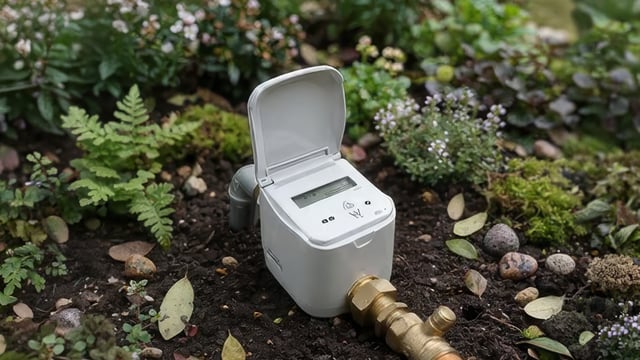
The Shenandoah scope involves the replacement or retrofit of more than 1,700 water meters with solid-state units equipped with AMI endpoints. Solid-state meters have no moving mechanical parts, which removes a primary source of accuracy degradation over time. Each device transmits consumption data through a networked gateway to meter data management software, where records feed directly into billing workflows. Residents will gain access to a customer portal providing consumption history and configurable usage alerts.
Technical Architecture: Solid-State Meters, Billing Integration, And Long-Term Support
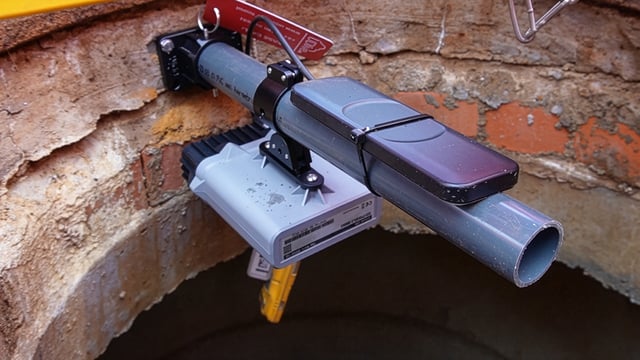
Both deployments share a consistent technical approach. The core hardware consists of solid-state water meters, which offer higher accuracy and longer operational lifespans than mechanical alternatives, paired with low-power radio endpoints that transmit meter reads at regular intervals to fixed-base gateways. Those gateways forward encrypted data to meter data management software, which Ameresco integrates directly with each city’s billing platform as part of the turnkey contract scope.
Each contract also includes system software configuration, data integration services, and long-term operational support commitments, which are structured to maintain read-success rates and system performance over the full lifecycle of the investment. This managed-service layer reflects an industry shift identified across the U.S. AMI market, where utilities increasingly require outcome-based contracts rather than hardware delivery alone. Ameresco’s model does not require cities to select a specific meter manufacturer upfront, positioning the company as a technology-agnostic integrator rather than a single-vendor reseller.
Ameresco’s Expanding Texas AMI Portfolio
The Baytown and Shenandoah awards continue a pattern of municipal AMI wins for Ameresco across Texas that has accelerated over the past two years. In March 2025, Ameresco announced a contract with the City of Hurst valued at over $9 million for a system-wide residential and commercial meter replacement program. Earlier in 2025, the company completed a water infrastructure modernization project for the City of Cleveland, Texas, estimated to generate more than $2.5 million in positive cash flow for Cleveland over a 15-year term. Prior to that, Ameresco executed AMI replacements in Mesquite, Texas, covering 42,000 meters, and in Richmond, Texas, where Second Sight Systems serves as installation subcontractor.
Operational Rationale For Municipalities Of Varying Scale
The Baytown and Shenandoah contracts illustrate how AMI economics apply across a wide range of utility sizes. Baytown, with its tens of thousands of residential connections, can deploy at sufficient scale to generate meaningful reductions in manual meter reading labor, truck rolls, and re-read costs. Shenandoah, with fewer than 2,000 meters, captures a different set of benefits: AMI’s two-way communication enables utilities to detect continuous flow anomalies that often go undetected for weeks under monthly-read AMR or manual systems. For small utilities, even a single large unreported leak can generate billing disputes and water loss that erodes trust in the utility.
Both cities gain billing system integration that eliminates reconciliation between meter data and billing records, reducing dispute rates and improving collections predictability. For local governments that operate water utilities as enterprise funds, that revenue assurance supports bond ratings and long-term capital planning capacity.