Spain’s Council of Ministers approved Royal Decree 450/2026 establishing the regulatory framework under which the country’s entire road and urban transport network must transition to AI-enabled Intelligent Transport Systems (ITS). The decree, published in the Official State Gazette (BOE), mandates real-time mobility data sharing through National Access Points and creates the legal conditions for replacing fixed-cycle traffic signals with sensor-driven, AI-managed infrastructure across Spanish cities and highways.
Why Fixed-Cycle Signals Are No Longer Adequate
The overwhelming majority of traffic signals currently operating in Spain run on preset timing cycles programmed well in advance, cycling through red and green phases identically at 3:00 a.m. and at 3:00 p.m., regardless of actual road conditions. This architecture cannot accommodate the density and variety of modern road users, nor can it communicate with connected vehicles, public transport operators, or emergency services.
Royal Decree 450/2026 directly targets this structural gap. It replaces the earlier Royal Decree 662/2012, which had transposed the original ITS directive, and introduces binding obligations on public administrations to make real-time mobility data, covering incidents, roadworks, weather conditions, and congestion, openly available and interoperable. The Dirección General de Tráfico (DGT) has characterized the shift as evolutionary rather than a sudden nationwide overhaul, with priority given to intersections with the highest accident rates and chronic saturation.
National Access Points as the Data Infrastructure Backbone
The decree structures data exchange through three categories of National Access Points: one covering traffic and mobility, one for multimodal transport, and one for secure truck parking areas. These nodes are intended to serve as the connective tissue through which vehicle-generated data, road operator data, and municipal traffic management systems can communicate seamlessly.
This architecture is aligned with the European Commission’s broader goal of ensuring that a connected vehicle traveling across France, Germany, or Spain receives consistent, interoperable ITS service data. The European Climate, Infrastructure and Environment Executive Agency (CINEA) has committed over €750 million in EU funding for ITS deployment since 2014, triggering a total investment of €1.8 billion across member states for ITS and cooperative ITS (C-ITS) services. The decree explicitly requires that data flows through these points remain open to both public authorities and connected vehicles, and that personal data be processed only to the extent strictly necessary for transport services, in conformance with EU and national data protection law.
V2X Communication as the Protocol Layer for Connected Infrastructure
At the technical core of the new framework lies Vehicle-to-Everything (V2X) communication, the bidirectional wireless protocol through which equipped vehicles exchange data with roadside units, traffic management centers, and other vehicles. Under this protocol, a vehicle’s dashboard can receive advance notification of congestion, roadworks, or black ice before the driver has any visual confirmation.
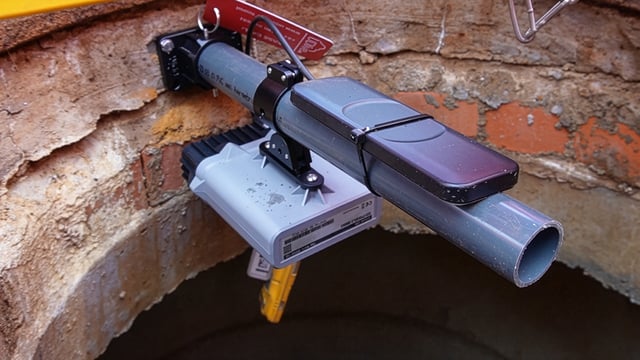
V2X enables traffic signals to do something fixed-cycle systems cannot: act on information about what is approaching rather than what has already arrived. Sensors embedded in or adjacent to the signal head, including high-precision radar, LiDAR, and computer vision cameras, continuously feed data about vehicle types, pedestrian presence, cyclist movement, and flow rates into AI inference engines, which then adjust signal phase durations in real time. The decree formalizes the infrastructure conditions under which this closed-loop system becomes mandatory across Spanish road administrations.
Madrid’s AI Signal Deployments Provide an Operational Baseline
Before the decree’s passage, the Madrid City Council‘s Directorate General for Traffic Management and Surveillance had already deployed computer vision-based signal control at multiple sites, providing a documented performance dataset that the decree’s rollout can reference. The initiative integrates pedestrians and cyclists as dynamic inputs to signal logic rather than as edge cases handled by push-buttons.
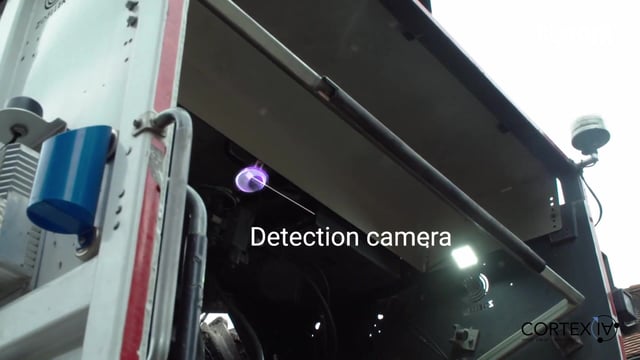
At Plaza de Grecia, adjacent to Atletico de Madrid’s Estadio Metropolitano, two AI cameras extend the pedestrian green phase from the standard 25 seconds to 80 seconds when the system detects a crowd, preventing the pedestrian surges common on match and concert days from creating vehicle bottlenecks in the surrounding roundabout. On Calle Princesa, a 360-degree vision camera monitors pedestrian crossing volume and holds the red phase for vehicles until pavements have fully cleared, a function that specifically benefits people with reduced mobility. On the road from El Pardo to Fuencarral, cameras detect approaching cyclists approximately 20 seconds before they reach the intersection and trigger the green phase automatically, eliminating the requirement to press a button. The system has also been applied to the ongoing A-5 highway undergrounding works, where license-plate recognition allows emergency vehicles and Calle 30 vehicles to be granted priority access.
Zaragoza’s SAFETRA Pilot Demonstrates Predictive Pedestrian Intent Detection
In November 2025, the CIRCE Technology Center and the City Council of Zaragoza launched SAFETRA, a signal control system that moves beyond presence detection to pedestrian intent prediction. Running on an NVIDIA Jetson edge device and integrating the NVIDIA DeepStream SDK for continuous 24-hour video processing with low power consumption, SAFETRA uses computer vision models and deep learning to infer whether a pedestrian standing at a crossing is about to cross, and adjusts the signal phase accordingly before movement begins. The system is built on the NVIDIA Metropolis platform and is being piloted within Zaragoza’s Smart Mobility Strategy.
CIRCE is also exploring integration with NVIDIA’s Blueprint for video search and summarization and the Cosmos Reason vision-language model, which could enable the system to interpret complex intersection scenarios, crowd dynamics, atypical behavior, unusual vehicle configurations, through natural language-grounded reasoning. “With SAFETRA we are taking a qualitative leap towards safer and more efficient mobility,” said Andrés Llombart, Director General at CIRCE, in the City Council of Zaragoza’s November 2025 announcement. “The collaboration with the City Council of Zaragoza demonstrates the potential of technology when it is put at the service of society.”
Málaga as a C-ITS and V2X Test Environment
Málaga has functioned as Spain’s primary outdoor testbed for cooperative vehicle-to-infrastructure communications. The DEKRA Test Track in Málaga, a 51,000 square meter private facility with roundabouts, intersections, and signalized crossings, has hosted C-V2X demonstrations involving organizations including Ericsson, Nokia, Continental, Stellantis, Vodafone, and Huawei. The facility supports open-road testing of eCall emergency call systems, predictive collision alerts at intersections, and speed optimization scenarios that allow connected vehicles to maintain a green wave, reducing both fuel consumption and travel time. The site’s private 4G/5G network infrastructure enables evaluation of both direct short-range V2X communications and network-based C-V2X scenarios under controlled conditions.
Barcelona and the Analytics Layer for Predictive Mobility
Barcelona‘s approach is oriented toward predictive analytics at the network level rather than individual intersection optimization. The city’s traffic management center integrates IoT sensor data with AI models capable of anticipating congestion up to 30 minutes in advance. Implementation partners include Aimsun, ETRA, Cetaqua, and the Barcelona Supercomputing Center (BSC) for advanced traffic modelling. Barcelona has also announced a separate initiative targeting a 20% reduction in overall congestion through sensor-based real-time adjustment of signals at 200 key intersections, as previously reported by Kurrantly News.
Market Scale and European Compliance Pressures
The global adaptive traffic control system market was valued at approximately $7 billion in 2025, according to The Insight Partners, and is projected to reach $23 billion by 2030, a compound annual growth rate of roughly 19.7%. Europe’s deployment pace is increasingly shaped by regulatory compliance calendars rather than purely by procurement cycles, given that Directive 2023/2661 imposes explicit mandates on member states to make real-time travel and traffic data digitally available and interoperable, including speed limits, traffic circulation plans, and roadworks data along the TEN-T network.
Spain’s entry into this framework, albeit delayed, aligns with a broader European shift. The European Commission’s Connecting Europe Facility (CEF) has supported ITS deployment across the TEN-T network since 2014, while Horizon Europe funding streams continue to back research into cooperative and automated mobility, digital twin infrastructure, and AI-assisted intersection management. The DGT has indicated that deployment under Royal Decree 450/2026 will proceed in phases, prioritizing high-risk corridors and intersections in cities recognized for advanced smart mobility programs before extending to secondary road networks.
Cybersecurity and Data Governance as Enabling Conditions
The decree imposes explicit constraints on the collection and use of personal data, limiting processing to what is strictly necessary for the provision of ITS services and requiring conformance with the General Data Protection Regulation. National Access Points are to be secured as critical nodes, a requirement that reflects growing awareness across European transport authorities that centralizing mobility data creates attack surface that did not exist under decentralized, fixed-cycle signal architectures. The experience of Amsterdam, which discontinued a smart traffic signal program after the Dutch Data Protection Authority raised concerns over privacy and cybersecurity risks, underscores that technology deployment and regulatory compliance must progress in parallel for ITS programs to sustain public legitimacy.