A $2 million veto in Florida’s latest state budget is a small line in a $117.6 billion document, but it illustrates a funding pattern playing out across the water and smart cities sector nationally. State and local matching dollars for advanced metering infrastructure (AMI) and resilience projects are proving far more volatile than the underlying capital plans they are meant to support, even as overall demand for the technology keeps climbing.
Gov. Ron DeSantis signed Florida’s FY2026-27 budget on June 29, 2026, vetoing nearly $810 million in line items statewide, including the state’s final funding match for a Hillsborough County water metering project and a separate flood mitigation effort in South Tampa. Neither project disappears as a result. Both illustrate a structural reality utilities and municipalities increasingly have to plan around: state legislative earmarks function as discretionary, year-to-year political decisions, not dependable capital sources.
A $2 Million Veto Exposes The Gap Between State Earmarks And Capital Plans
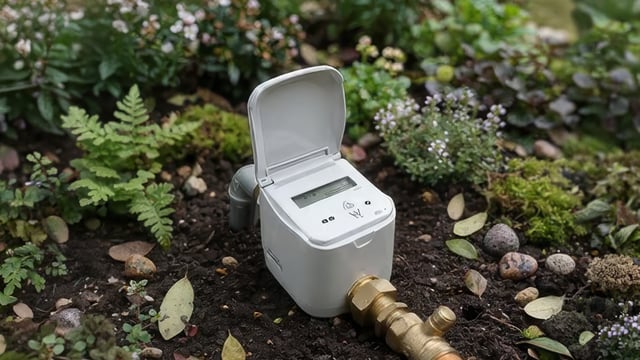
The vetoed item, requested by Sen. Danny Burgess and Rep. Michael Owen, would have funded the final match on a $30 million AMI rollout for Hillsborough County’s water utility, according to Florida Politics. A January 2026 legislative preview from the same outlet reported that local government had already committed $28 million to the project before the state request was even filed.
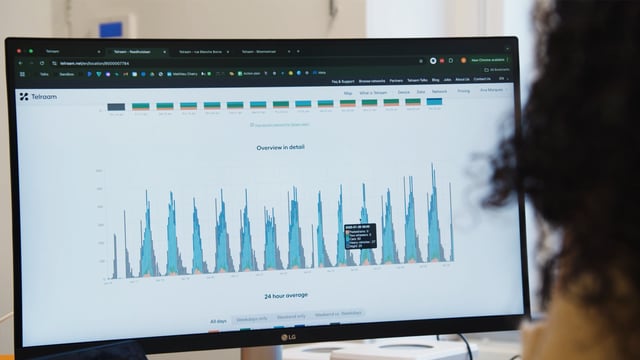
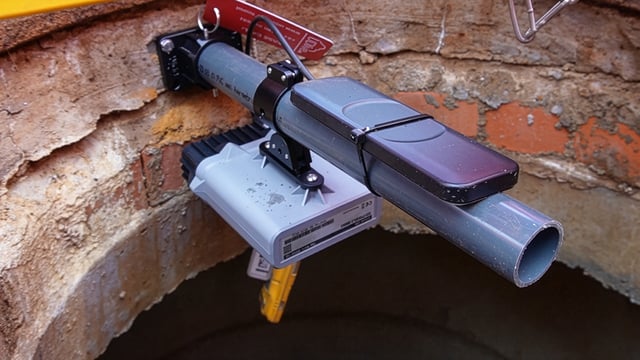
That ratio matters for the trend. The county was never depending on Tallahassee for the bulk of the capital; it was counting on the state for roughly 7% of the total, intended to upgrade meters for about 15,000 residential accounts with real-time usage data and leak detection. The project’s existing technical foundation, a public LoRaWAN network that Hillsborough County Public Utilities has run since 2021 in partnership with connectivity provider Senet, remains intact regardless of the funding outcome.
National Demand For Smart Metering Keeps Climbing Regardless Of Local Setbacks
Industry data shows little sign that individual funding setbacks are slowing aggregate demand. The United States water meter market is projected to grow from 25.09 million units in 2025 to 26.16 million units in 2026 and on to 31.57 million units by 2031, with the AMI segment of that market forecast to expand faster than the category overall.
Notably, Mordor Intelligence’s analysis specifically flags Florida as one of several states building tightening conservation and water-loss reporting mandates that increasingly reference data-accuracy standards only AMI technology can meet. That regulatory pressure exists independent of any single legislature’s annual appropriations decisions, suggesting compliance requirements, not state earmarks, may become the more durable demand driver for metering upgrades in the state.
Federal And Bond Financing Increasingly Backstop What State Earmarks Used To Cover
The funding gap left by a vetoed state line item is less consequential than it would have been a decade ago, because the financing toolkit available to utilities has broadened considerably. The federal Infrastructure Investment and Jobs Act allocates roughly $50 billion to water infrastructure nationally, with funding explicitly covering AMI and cybersecurity expenditures rather than just pipe replacement, per Mordor Intelligence’s research.
Utilities are also increasingly using ESG-linked municipal bonds, which the same research identifies as a meaningful contributor to smart metering project financing in metro areas with active green-bond programs. For smaller or budget-constrained systems, vendor-financed “Metering-as-a-Service” subscription contracts are converting what used to be large upfront capital outlays into predictable operating expenses, a shift that reduces dependence on any single funding source, including state matches.
State Capital Earmarks Function As Discretionary, Not Guaranteed, Funding
Florida’s 2026 budget cycle is a useful illustration of why state earmarks carry inherent execution risk. Beyond the Hillsborough cuts, DeSantis vetoed funding tied to 621 member-sponsored local projects that the watchdog group Florida TaxWatch had separately flagged as candidates for elimination, worth roughly $830 million combined, according to Florida Politics.
House Democratic Leader Fentrice Driskell said her caucus’s initial review found Democratic-sponsored requests were vetoed at roughly twice the rate of Republican ones, a claim reported by WUSF. At the signing event, DeSantis described his standard for which projects survive in blunt terms. “I want to fund things that we have to have,” DeSantis said, Governor of Florida, at the June 29, 2026 budget-signing press conference in Tampa, as reported by Florida Politics.
That framing, applied annually and at the discretion of a single office, is precisely why infrastructure project financing built around state earmarks carries political risk that bond financing or rate-based revenue generally does not.
Local Governments Already Carry Most Of The Capital Burden In These Projects
The Hillsborough AMI funding split is not an outlier. A separate Hillsborough veto eliminated $1.5 million requested by Sen. Darryl Rouson and Rep. Karen Gonzalez Pittman for the South Howard Avenue flood relief project in South Tampa, a stormwater initiative whose current estimated cost runs between $98 million and $100 million, according to Tampa Bay Business and Wealth.
In that case, the state’s contribution represented roughly 1.5% of total project cost, with the bulk financed through City of Tampa stormwater fees, bond proceeds and other resiliency funding tracked on the project’s official site. Across both the metering and flood projects, the pattern is consistent: state legislative earmarks tend to sit as a thin top layer on capital stacks that are overwhelmingly locally or federally financed, meaning a veto compresses scope or timeline more often than it kills a project outright.
Vendor And Private Capital Flows Move Independently Of State Budget Cycles
Capital continues to move into the AMI vendor ecosystem on a separate track from state appropriations. Sensus International, the metering business Xylem spun off to German investment group AURELIUS in May 2026, generated approximately $250 million in revenue in 2024, reflecting continued private-market valuation of metering assets even amid public-sector funding volatility.
Itron’s 2025 acquisition of Elpis Squared and Badger Meter’s continued expansion through its BlueEdge platform, both tracked by Kurrant’s industry coverage, point to vendor consolidation and product investment proceeding on a timeline set by market demand and contract wins rather than any single state’s budget calendar. Large-scale deployments such as Puerto Rico’s 1.6 million-connection AMI rollout with Badger Meter and San Antonio Water System’s completed 604,000-meter ConnectH2O program show utility-driven capital plans advancing at a scale that dwarfs any individual state earmark dispute.
What This Means For Utility And City Capital Planning
For utilities and municipal finance teams, the practical lesson is to treat state legislative matches as upside rather than baseline funding when sequencing multi-year AMI or resilience capital plans. Building a project’s critical path around a discretionary appropriation that must survive an annual gubernatorial veto pen introduces a risk variable that bond markets, rate revenue and federal formula grants generally do not carry.
The financing tools now available, including IIJA water infrastructure grants, WaterSMART performance grants, ESG-linked bonds and vendor subscription contracts, give project sponsors more ways to backfill a lost state match than existed even five years ago. Utilities that diversify funding sources for AMI and flood resilience work are better positioned to absorb a line-item veto as a timeline adjustment rather than a project-ending event.