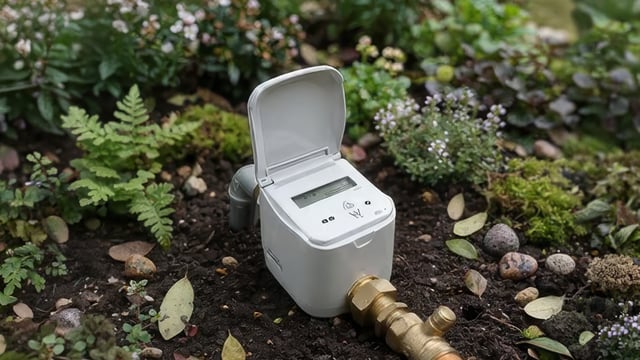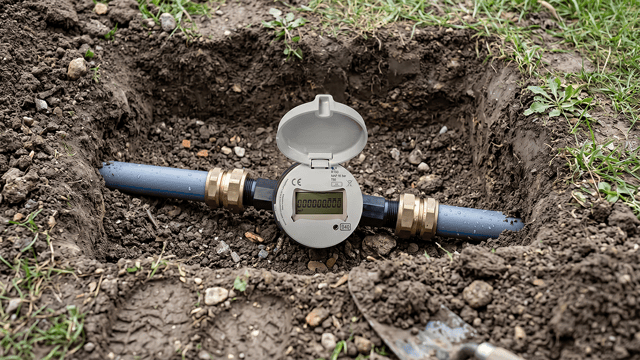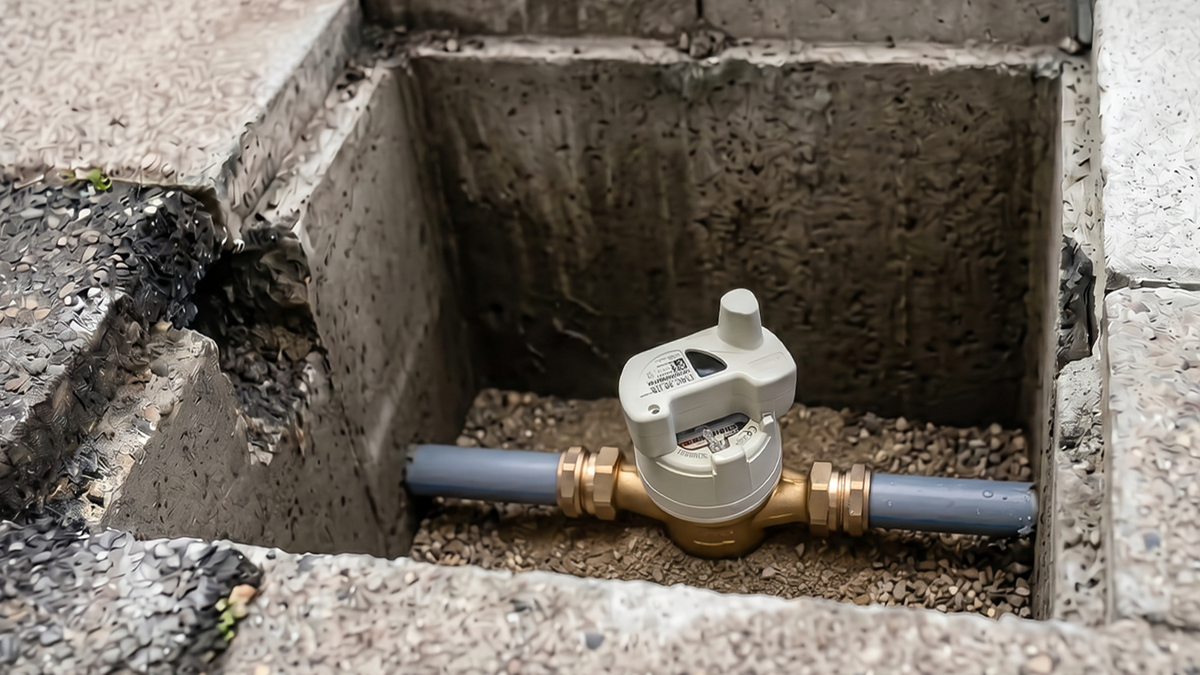
Pays de Montbéliard Agglomération (PMA) and its concessionaire, Société des Eaux du Pays de Montbéliard (SEPM), a wholly owned subsidiary of Veolia, launched a three-year advanced metering infrastructure deployment on July 1, 2026, covering 62 communes in the Doubs department of eastern France. The program will install 48,740 communicating smart meters across a service territory of approximately 140,000 inhabitants, replacing a system that had relied predominantly on customer self-reporting. No increase in water tariffs will accompany the investment.
A Contract Amendment Unlocks Unplanned Capital Investment
The deployment was not part of the original 10-year public service delegation contract signed between PMA and Veolia in 2020. Under that arrangement, SEPM operates drinking water production, distribution, and wastewater services across a network encompassing 1,200 km of potable water mains, 1,500 km of collection infrastructure, 25 production sites, and 63 storage reservoirs. Smart metering was added through a contract amendment approved by the PMA community council at an extraordinary session on February 12, 2026, following a mid-term audit that jointly assessed the financial balance of the concession. The amendment integrates the smart meter program without extending the contract’s duration.
Phased Rollout Prioritizes Urban Cores Before Full Territorial Coverage
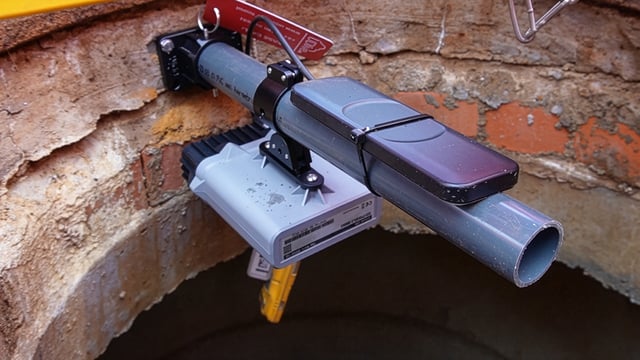
SEPM structured the deployment in two phases. The first phase targets six high-density communes, including Audincourt, Grand-Charmont, Montbéliard, and Seloncourt, with installation scheduled for completion by November 1, 2027. The remaining communes within the SEPM service perimeter will follow, with the program reaching full coverage by June 30, 2029. Pilot testing was conducted beforehand in the communes of Badevel and Mathay, where operational performance was validated before the broader rollout was approved. The Mathay pilot is also where SEPM had previously installed 800 acoustic pre-locator sensors between October and November 2024 to detect pipe anomalies, providing a parallel layer of network intelligence ahead of the AMI transition.
Self-Reading Burden Replaced by Near-Real-Time Consumption Data
Until now, SEPM relied primarily on customer-submitted index readings, a model that created friction for elderly subscribers, those with meters in hard-to-reach locations such as basements or rear gardens, and customers with limited digital access. Under the new system, meters transmit consumption data automatically at daily intervals, accessible through SEPM’s online customer portal and mobile application. Subscribers can configure personalized alerts for elevated consumption or suspected post-meter leaks, a function that converts the metering layer into a continuous monitoring service rather than a periodic billing mechanism.
Veolia Connected Solutions (Previously Birdz) and the Veolia LoRaWAN Ecosystem Underpin the Technology Stack
SEPM did not publicly name specific metering hardware vendors in the July 1 announcement, and the communications protocol for the Montbéliard deployment has not been confirmed in official documentation. However, the broader Veolia group relies on Veolia Connected Solutions (Previously Birdz), its IoT subsidiary, for smart water metering across France, using LoRaWAN connectivity provided through Orange’s nationwide public network and managed via Actility‘s ThingPark platform. Veolia and Veolia Connected Solutions have deployed more than three million connected water meters across France to date, with a stated national target of reading more than 70 percent of meters remotely. Whether the Montbéliard rollout draws on that same Veolia Connected Solutions-Orange-Actility stack or on an alternative architecture specific to the Doubs concession has not been disclosed. This article flags that detail as unconfirmed pending vendor clarification from SEPM.
Real-Time Leak Detection Translates Into Measurable Resource Savings
The operational case for AMI deployment in France is increasingly supported by data from comparable Veolia-operated territories. Nationally, the Veolia Connected Solutions-enabled network generated more than 60,000 leak notifications to subscribers in 2021 alone, enabling interventions that avoided the loss of over three million cubic meters of water, or roughly two percent of total water distributed across the network. At the city level, Eau du Grand Lyon’s LoRaWAN deployment identified and repaired more than 1,200 network leaks within four years, yielding an eight percentage point improvement in distribution efficiency. SEPM itself deployed 800 communicating acoustic pre-locators in Montbéliard’s urban zones in late 2024 to support network surveillance ahead of the AMI transition. Kurrantly News previously reported on a comparable Veolia AMI rollout in Grand Châteaudun, where 6,000 households were equipped with smart meters to reduce leak-related costs, illustrating the replicable nature of the concession model across French territories of varying scales.
Regulatory and Tariff Stability Defined as Conditions of the Avenant
The community council’s decision to approve the amendment reflects a deliberate constraint: the additional investment must not affect subscriber tariffs or extend the concession period. PMA framed the mid-term audit as a mechanism for asserting public oversight over a concession it awarded following a competitive tender in 2019, and the smart meter program was approved on the condition that value creation is shared equitably between the private operator and the public authority. The arrangement positions PMA to improve network intelligence and technical performance without incurring direct capital expenditure, while SEPM absorbs the infrastructure cost within the existing contract economics. The agglomeration covers 73 communes and approximately 140,000 inhabitants, though SEPM’s water service mandate covers 62 of those communes under the current concession.
Scaling Pressure From Climate and Resource Scarcity Intensifies the Investment Case
The project’s framing in climate adaptation terms is not incidental. PMA’s official rationale for approving the amendment explicitly cites water resource scarcity and the need for stronger network efficiency as conditions shaping public infrastructure decisions. The region draws on the Doubs river at Mathay as a primary production source, a resource that has faced increasing stress from below-average precipitation cycles in recent years across eastern France. In the Perpignan area, another Veolia subsidiary, Eau Agglo Perpignan Méditerranée, has pursued a parallel AMI transition using Kamstrup ultrasonic meters, replacing 126,000 mechanical meters by 2026 and improving its leak detection rate from 60 to over 75 percent in a matter of months. The Montbéliard deployment adds a further 48,740 endpoints to the accelerating pattern of utility-scale water metering in France.