The European Investment Bank (EIB) has agreed to provide €100 million to PWN, the publicly owned drinking water utility for the Dutch province of North Holland, under a loan announced on 10 July 2026. The financing, backed by the European Commission’s InvestEU programme, will fund PWN’s 2026 to 2029 investment programme, through which roughly 750 kilometres of water pipeline will be replaced, renovated or newly built and the network expanded to accommodate about 35,000 additional connections. The utility says the works are intended to strengthen security of supply across its service area and to adapt its distribution system to the pressures of a changing climate.
What The 2026 To 2029 Programme Actually Funds
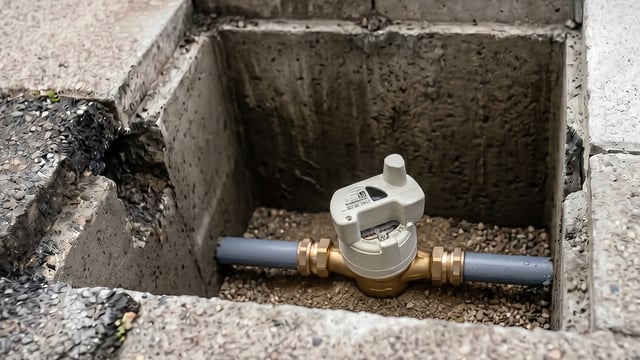
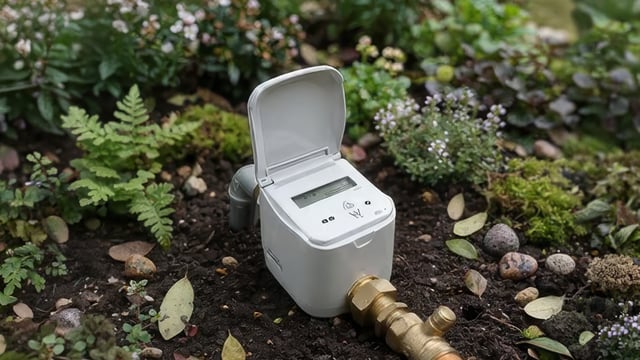
The loan supports a defined capital programme rather than a single asset, concentrating on the distribution layer of PWN’s system. According to the European Investment Bank, the works focus on replacing, reinforcing and extending water mains, upgrading service connections and modernising water meters between 2026 and 2029.
The pipeline component is the headline figure, with approximately 750 kilometres of network to be renewed, renovated or newly laid over the four year window. The expansion is expected to enable around 35,000 new drinking water connections, a measure of both replacement of ageing assets and growth to meet rising demand in a densely populated region north west of Amsterdam.
Why Climate Adaptation Sits At The Centre Of The Deal
The financing is framed primarily as climate resilience spending rather than routine maintenance. PWN aims to raise the resilience of its network against the effects of climate change on water resources while continuing to meet demand, a rationale echoed in its earlier EIB backed programmes that flagged more frequent and prolonged droughts as a threat to production and distribution.
Paulien Pistor, chief executive of PWN, tied the borrowing to the utility’s long term public mandate. “With EIB support, we can make substantial and sustainable investments in our underground ‘gold’: the pipeline network through which we deliver drinking water every day to households, businesses and institutions in our province. In doing so, we strengthen security of supply and continue to provide future generations with clean, safe and reliable drinking water,” said Paulien Pistor, CEO of PWN, in the EIB’s July 2026 press release.
The deal also aligns with PWN’s decarbonisation targets, under which the company intends to operate as a fully emissions free and circular organisation by 2050, having already cut its carbon footprint by 50% by 2030.
The Fifth Chapter In A Long EIB And PWN Relationship
The agreement is the fifth financing operation between the two institutions, extending a lending relationship that the EIB traces back to 1998. The bank previously signed €100 million loans with PWN in 2016, in support of a five year plan then valued at €275 million, and again in 2020 as a 20 year facility for the 2021 to 2025 programme.
That repeat cadence, with a roughly €100 million ticket aligned to each multi year investment cycle, reflects how European public utilities increasingly use the EU bank as a stable, long tenor funding source for infrastructure whose social and environmental benefits are not fully captured in water tariffs. The bank’s own appraisal of the current project describes co financing part of the 2026 to 2029 programme with goals including climate adaptation, reduced water losses and improved energy efficiency.
How The InvestEU Guarantee Extends The Bank’s Reach
The loan is delivered under InvestEU, the EU framework that consolidates earlier financial instruments into a single guarantee backed structure. The InvestEU Fund is implemented through financial partners investing against an EU budget guarantee of €26.2 billion, which the European Investment Bank says is expected to mobilise at least €372 billion in additional investment.
For a national context, the Netherlands holds a 5.2% share in the EIB, and the bank reports having provided more than €45 billion in financing across Dutch sectors including drinking water, healthcare, sustainable mobility and small and medium sized enterprises over the years.
PWN’s Scale And Dual Role As Utility And Land Manager
PWN is unusual in combining a water utility with a nature conservation mandate, and the scale of both sides is substantial. The company supplies 112 billion litres of drinking water each year to more than 800,000 households, businesses and public institutions in North Holland, drawing on four production facilities at Andijk, Bergen, Wijk aan Zee and Laren.
Alongside water supply, PWN manages more than 7,500 hectares of coastal dune landscape between Zandvoort and Bergen, including the Kennemerduinen and Noordhollands Duinreservaat reserves, which attract around eight million visitors annually and help protect the freshwater sources the utility depends on.
A Busy Week For EIB Water Lending In Europe
The PWN loan landed within days of comparable EIB water sector commitments elsewhere in the bloc, underscoring the institution’s positioning as a leading public financier of European water infrastructure. On 13 July 2026 the EIB signed a separate €50 million agreement with Italian multiutility AIMAG for integrated water services in the province of Modena.
That pattern of clustered water lending, spanning distribution renewal, leakage reduction and climate resilience, reflects a broader European push to modernise essential infrastructure that is exposed to drought, ageing asset stocks and rising demand. For utilities such as PWN, the appeal lies in matching long life underground assets with correspondingly long tenor, policy aligned finance.