The municipality of Castalla, a town of roughly 11,500 residents in the Alicante province of Spain, has formally closed a water cycle digitalization programme executed by Veolia, the operator of its integral water service. The council announced completion on 21 July 2026, reporting 38 of 40 planned actions delivered at a final cost of €790,479.22 against an initial grant of €1,100,933.20, funded entirely through Spain’s PERTE for water cycle digitalization under the EU-backed Recovery, Transformation and Resilience Plan.
A Dual-Protocol Radio Layer Carries Only 147 Metering Endpoints
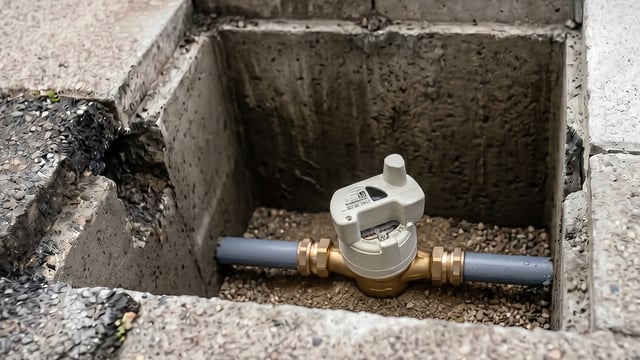
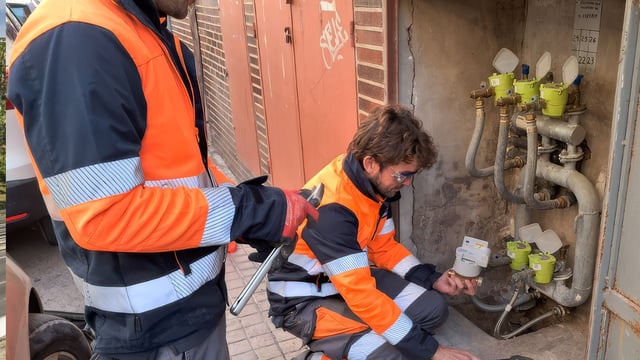
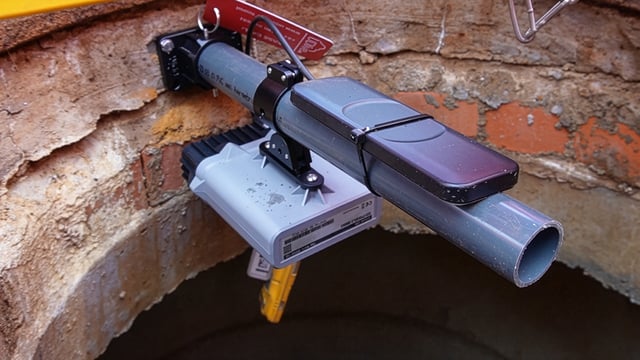
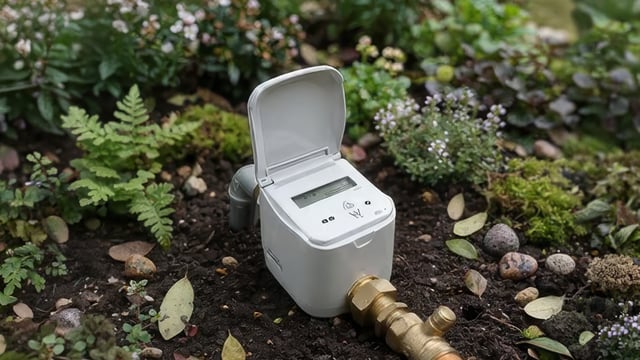
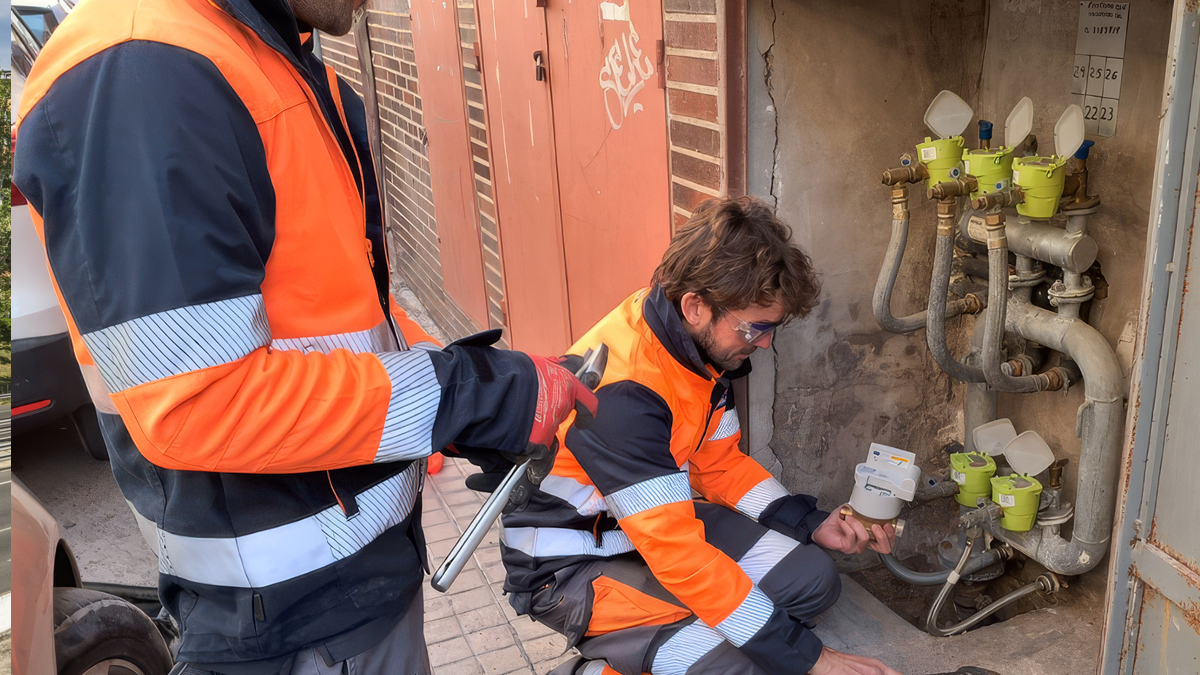
The metering component consists of five concentrators and 147 remote-read meters, communicating over a network combining LoRa and Wize. Wize is a 169 MHz low-power protocol derived from Wireless M-Bus mode N and promoted by an alliance founded by Suez, GRDF and Sagemcom in 2017, valued in water applications for its penetration of buried and basement meter pits.
The endpoint count is the most striking figure in the announcement. At 147 units against a population above 11,000, this is a fractional deployment rather than a municipal AMI rollout, and neither party has disclosed the selection criteria or whether the meters are district, large-consumer, or pilot household installations.
That distinction matters for benchmarking. Comparable PERTE-funded municipal projects have typically paired network sensing with far denser household metering, which suggests Castalla’s grant was weighted toward network instrumentation and planning rather than customer-side measurement.
Network Instrumentation Outweighs Customer Metering In The Asset Mix
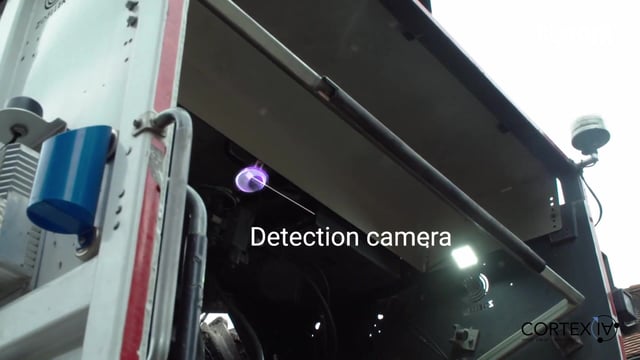
Twenty-one new permanent pressure and flow monitoring points were installed and integrated into municipal telecontrol systems, forming the basis for district metered area sectorization and leak localisation. Five autonomous continuous monitoring units measuring chlorine, pH and turbidity were placed across the distribution network and municipal reservoirs.
On the wastewater side, analysers were installed at five points in the sewer network to detect blockages and irregular or contaminating discharges before they reach the treatment plant. Four discharge points to the natural environment were instrumented with sensors and rain gauges.
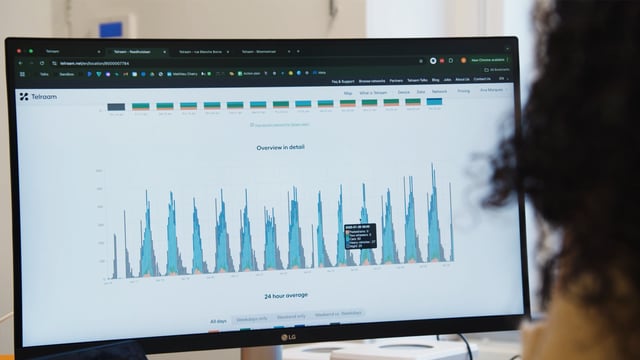
The council also commissioned an environmental indicators observatory, described as a digital dashboard intended to support data-based decision making. Public documentation does not name the underlying software platform or state whether the data layer is municipally owned or operator-hosted.
Seventeen Planning Documents Anchor The Hardware To Regulatory Deadlines
Alongside the physical assets, 17 technical documents were drafted, including a drought emergency plan, master plans for drinking water and sanitation, and an engineering project for interconnecting the supply systems of Onil and Castalla. Onil is itself an AquaAlliance participant, making the interconnection a shared-asset outcome rather than a purely local one.
The continuous quality monitoring and structural leak provisions align with obligations introduced by Royal Decree 3/2023, Spain’s partial transposition of EU Directive 2020/2184, which requires supply operators to maintain water safety plans and structural leak detection programmes. Grant-funded sensing therefore covers compliance costs that would otherwise fall on the municipal budget or the tariff.
AquaAlliance Spreads €7.8 Million Across Thirteen Alicante Municipalities
Castalla’s works sit inside “AquaAlliance. Digitalization for Sustainability,” a grouped project covering Agost, Aigües, Algueña, Banyeres de Mariola, Beneixama, Campo de Mirra, Cañada, Castalla, Mutxamel, Onil, Salinas, Sax and Xixona. Veolia puts the total AquaAlliance budget at more than €7.8 million, awarded under the second call of the urban water cycle PERTE.
Castalla’s original allocation therefore represented roughly 14 percent of the grouped project. Grouped bids of this type allow small inland municipalities, which individually lack the technical capacity to prepare competitive applications, to access funds sized for larger operators.
The Second Call Set The Competitive Terms For Small Municipal Awards
The second PERTE call was resolved by Spain’s Ministry for Ecological Transition and the Demographic Challenge with €300 million distributed across 50 projects, with individual awards ranging from €675,000 to €10 million and average financing above 80 percent of project budgets, reaching 100 percent in some cases. By late 2025 the wider water digitalization PERTE had mobilised more than €1.2 billion across urban operators, irrigation user communities, regional governments and basin authorities.
Veolia has been the dominant private beneficiary of that programme. Kurrant reported that the group secured around €76 million across 17 PERTE projects, roughly 40 percent of grants awarded to private operators, covering 209 municipalities and more than 6.2 million inhabitants.
Small-Municipality Projects Are Now The Programme’s Delivery Frontier
Castalla is the type of award where the PERTE’s practical effect is being tested: sub-€1 million, inland, and dependent on an external operator for both bid preparation and execution. Comparable cases include Acciona Agua’s €1.013 million D-ACUA deployment in Almodóvar del Campo, which instrumented 110 kilometres of distribution and 60 kilometres of sewer network.
With Recovery and Resilience Facility milestones tightening, completion announcements of this kind serve a reporting function as much as an operational one. The measurable test will be published non-revenue water and leak response figures over the next two service years, neither of which Castalla has yet disclosed a baseline for.