in Barcelona
 3 to 5 Nov 2026
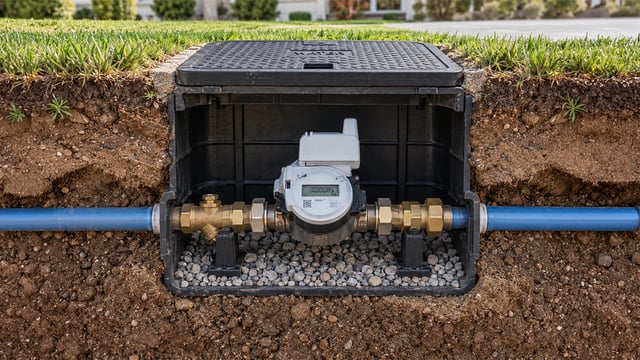
Valencia City Council has begun operating a smart urban irrigation pilot announced on 11 August 2026 under the Sandbox Urbà, the municipal framework that allows companies to test unproven technology in live city conditions. The trial covers roughly 1,680 square metres of green space on Calle de Almassora and connects sprinkler and drip systems to Fliwer One, an Internet of Things platform that sets watering volumes from real-time field data rather than a fixed timer. The city has set an initial three-month run, extendable to twelve months, to establish whether automated irrigation control can cut water consumption while keeping street trees healthy through progressively hotter Mediterranean summers.
A Single Street As The Unit Of Municipal Experimentation
The site is deliberately small. At roughly 1,680 square metres, the Almassora deployment is a street-level installation rather than a park-scale rollout, chosen so the council can compare performance against conventional scheduling under real operating conditions.
The stated objectives are threefold: optimise water use, improve tree health, and generate transferable knowledge for green space management. Scalability is an explicit evaluation criterion, which signals that the council is treating the trial as a screening exercise ahead of a possible wider deployment rather than as a demonstration project.
Track tenders like this
New smart water tenders across Europe, flagged daily with an AI summary.
How Fliwer One Replaces The Irrigation Clock
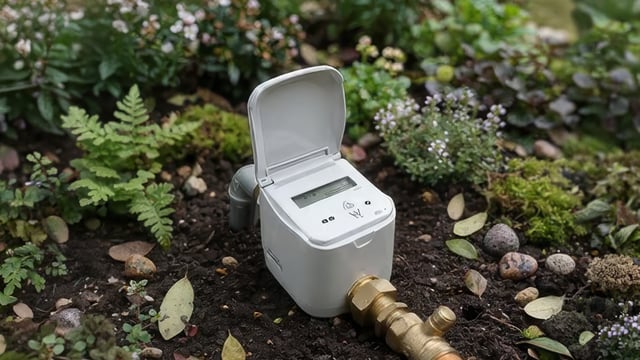
Fliwer, the Spanish technology company supplying the platform, builds sensor nodes that read light, air temperature and humidity, soil moisture and electrical conductivity, then push the data to a cloud layer that compares readings against plant physiological profiles and weather forecasts before opening or closing valves. The company describes its devices as compatible with standard solenoid valves, which allows retrofitting onto existing irrigation circuits without replacing the hydraulic infrastructure.
That retrofit path matters commercially. Most municipal landscape irrigation in Spain still runs on time-based controllers with no feedback from the soil or the forecast, so the addressable market is largely a replacement of control logic rather than of pipework.
Fliwer’s connectivity options span cellular and low-power wide-area technologies including NB-IoT and LoRa, which is the same communications stack now standard in municipal smart metering. The council has not disclosed how many sensor nodes or valve controllers are installed at Almassora.
A Corporate And Startup Pairing Rather Than A Public Tender
The pilot did not originate in a procurement notice. It came out of a collaboration agreement between València Innovation Capital, the municipal innovation agency, and The Mother Trees under the VLC City Lab banner, which matches established corporates with startups against defined city challenges.
The first challenge issued under that agreement asked how to make Valencia more resilient to extreme climate events, a framing that carries obvious weight in a city still working through the consequences of the October 2024 flooding in its metropolitan area. Efficient water management and urban tree resilience were identified as priority responses, and the Almassora pilot was scoped with Grupo Simetría and Fliwer.
Grupo Simetría is not a peripheral participant. The Castellón-based group’s subsidiary Vivers Centre Verd holds the street tree conservation lot of Valencia’s green space maintenance contract, valued at around 5.9 million euros a year within a total award of 95 million euros made in 2022, which places the incumbent maintenance contractor at the centre of the technology trial.
The Metrics That Will Decide Whether This Scales
Four indicators will be tracked: reduction in water consumption, technical reliability of the system, ability to integrate with existing municipal infrastructure, and contribution to urban resilience. Integration is the least glamorous of the four and probably the most decisive, since a control platform that cannot exchange data with municipal systems creates a parallel silo the city then has to maintain.
The extension option from three to twelve months exists to capture seasonal variation. A summer-only dataset in Valencia would tell the council little about winter overwatering, which is where a substantial share of landscape irrigation waste typically occurs.
The council also commits to technical reports and dissemination activities intended to support replication, and states that the trial will run in line with local and European rules on security, confidentiality and data protection.
Scale In Context: 1,680 Square Metres Against A 1,254 Hectare Estate
Valencia maintains around 148,270 trees across municipally conserved green areas and street planting, within roughly 1,254 hectares of parks and public green space under municipal conservation. The Almassora footprint therefore represents somewhere near one ten-thousandth of that estate.
That ratio is the point rather than a criticism. Sandbox trials are designed to fail cheaply, and the relevant question for other cities is whether Valencia’s evaluation produces figures robust enough to justify a procurement decision across the remaining hectares.
The city carries reputational weight here as the European Green Capital for 2024, which raises the bar for what counts as a credible result.
Spain’s Water Digitalisation Funding Has Largely Bypassed Landscape Irrigation
Spain has been among Europe’s more aggressive spenders on water digitalisation, mostly through the PERTE recovery programme, which allocated 200 million euros in its first call, 300 million euros to 50 projects in 2023 and a further 50 million euros in a third phase opened in January 2025. As Kurrantly News reported, a single supplier, Hidroconta, had delivered more than 100,000 smart devices under the first phase alone.
Almost all of that spending has targeted the drinking water cycle and agricultural irrigation networks. Municipal landscape irrigation sits awkwardly between the two, funded from parks and gardens maintenance budgets rather than water utility capital programmes, which is one reason it has remained a timer-driven activity while metering moved to NB-IoT.
The policy pull is nonetheless tightening. The European Commission’s Water Resilience Strategy, adopted on 4 June 2025, sets a non-binding target of improving EU water efficiency by 10 percent by 2030 and names digital solutions and leak reduction as core instruments, with more than 15 billion euros in European Investment Bank support signalled for 2025 to 2027.
The Sandbox As An Unofficial Procurement Pipeline
Valencia’s Urban Sandbox reached its first anniversary in September 2025 with 143 municipal resources on offer and 12 pilots under way, including autonomous street and beach cleaning robots, smart parking, and HortaTech for fibre and sensor-based irrigation management in the surrounding market gardens. The ordinance behind it makes the whole municipal territory available for controlled testing without added cost or a formal tender.
“The Urban Sandbox allows us to turn the city into an open innovation laboratory where companies, the administration and citizens collaborate to test solutions that can respond to the major urban challenges,” said Paula Llobet, Councillor for Innovation at Valencia City Council, in the municipal announcement of the pilot.
For vendors, the strategic read is that Valencia has built a low-friction entry route into a municipal market that is otherwise gated by multi-year framework contracts. For other cities, the more interesting question is governance: a sandbox that consistently converts pilots into deployments by the incumbent maintenance contractor starts to look less like open experimentation and more like a supplier development programme, and Valencia’s published evaluation reports will be the test of which it is.