The Utah Department of Transportation has awarded Econolite an expansion contract to install Ouster‘s BlueCity lidar traffic management system at an additional 160 intersections statewide, the sensor maker announced on 11 August 2026. The award builds on a 2025 deal covering more than 100 sites and brings UDOT’s total contracted footprint to close to 300 intersection and roadway deployments, one of the largest single-agency lidar detection programmes in the United States. Neither party disclosed the contract value beyond describing it as multimillion-dollar.
Rev8 Sensors Mark A Hardware Break From The 2025 Phase
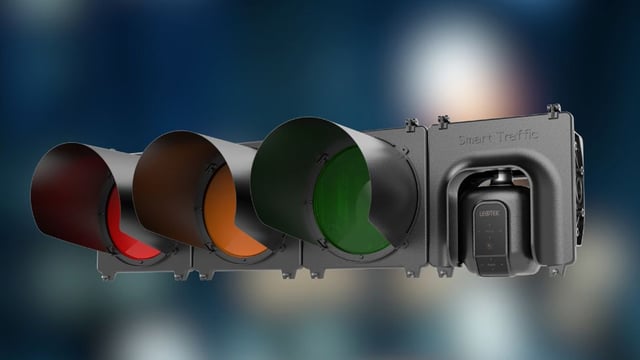
The new sites will use Ouster’s OS1 Max Rev8 digital lidar, a step up from the Rev7 units specified in the earlier UDOT award. The company says the sensor supports advance detection at ranges up to 500 feet, shifting detection from the intersection box to corridor scale.
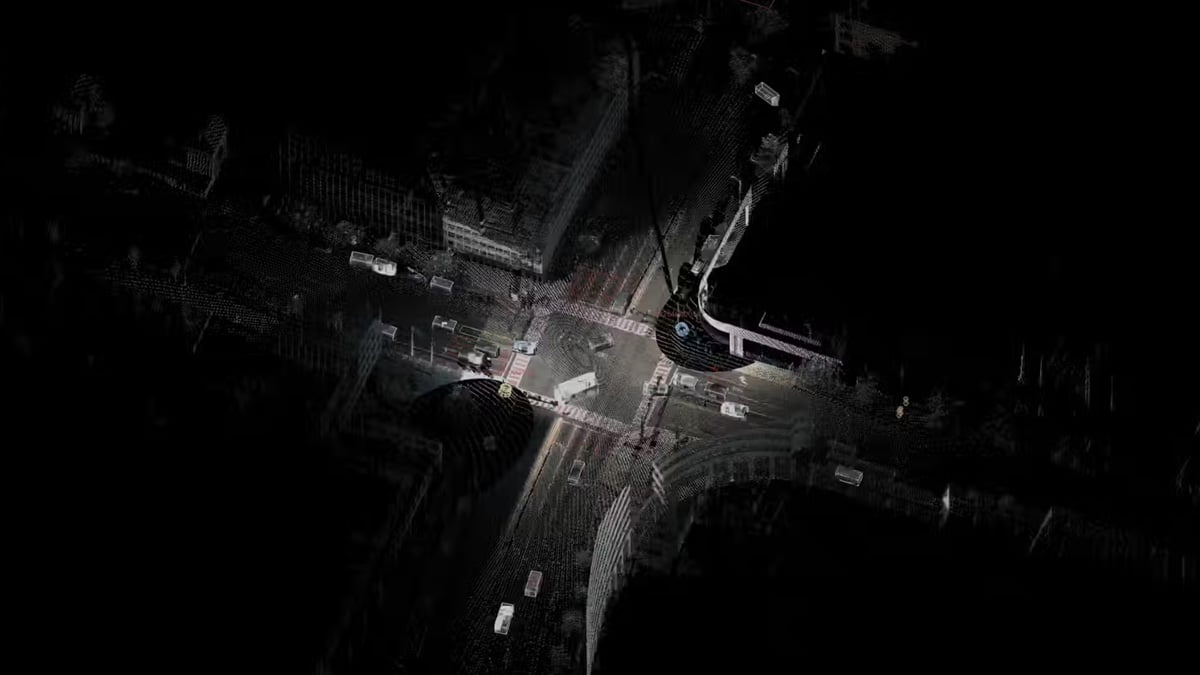
Rev8 also carries what Ouster describes as the first native colour lidar detection system, capturing colour and 3D depth in a single unit. According to Ouster’s product announcement, the combined output feeds a colour 3D digital traffic twin intended to simplify detection zone configuration and post-event review.
Privacy handling is done at the edge, with pedestrians and cyclists blurred in the imagery while colour data is retained for operational analysis. A first Rev8-equipped BlueCity installation is already live in Utah, according to the vendor.
Integration Rides On Econolite’s Existing Controller Base
BlueCity connects to UDOT’s current traffic control stack through an open API, including Econolite Cobalt signal controllers already installed across the state. That existing footprint is a significant part of why the pairing works commercially, since it removes the need for parallel cabinet infrastructure.
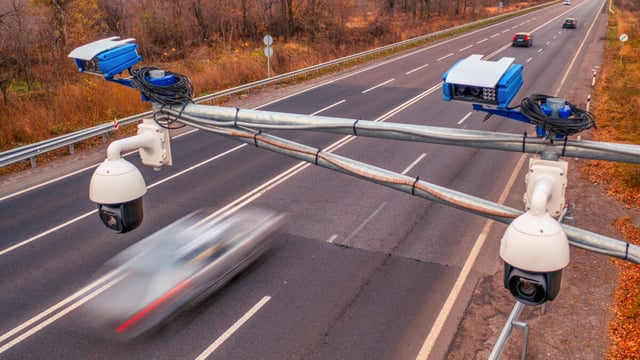
Installation is non-intrusive and takes as little as three to five hours per intersection, avoiding the pavement cutting associated with inductive loops. The system supports crosswalk extension for slower pedestrians, dilemma zone protection, turning-vehicle yield warnings, and V2X alerts broadcast through roadside units.
Compliance is a quiet but decisive factor. The solution meets system-level NEMA TS2, holds ISO 27001 certification, and is Build America, Buy America compliant, which keeps federal funding channels open to agencies buying it.
Vulnerable Road Users Drive The Safety Case
UDOT’s stated objective is collision reduction and protection of pedestrians and cyclists. Preliminary 2025 data from UDOT and the Utah Department of Public Safety recorded 264 traffic deaths, down from 277 in 2024 and the lowest total since 2019.
The distribution behind that figure explains the sensor choice. In the previous year’s data release, roughly one third of all fatalities involved motorcyclists, pedestrians, or cyclists, the categories conventional loop detection handles worst.
Scale context also matters. UDOT operated and maintained 1,328 signals as of July 2022, according to Utah’s transportation technology programme, meaning the contracted lidar footprint would cover somewhere near a fifth of the state-run network.
Nashville And Chattanooga Define The Comparable Benchmarks
Ouster claims that with Utah included, BlueCity now underpins the three largest fully integrated lidar traffic management deployments in the United States, alongside two Tennessee cities. Chattanooga contracted BlueCity across more than 120 intersections in a deal valued at roughly two million dollars, giving a rough per-intersection reference point for the Utah figures.
Nashville offers the closest thing to published outcome data. Early lidar work in North Nashville reported a 30 percent drop in high-speed driving incidents after signal timing was adjusted using near-miss analysis, the kind of evidence agencies will look for from Utah.
“UDOT’s decision to expand this deployment underscores the heightened levels of situational awareness the Econolite-Ouster integrated lidar solution brings to modern traffic management,” said Jim Madden, Senior Vice President of U.S. Sales at Econolite, in the company’s August 2026 announcement.