in Barcelona
 3 to 5 Nov 2026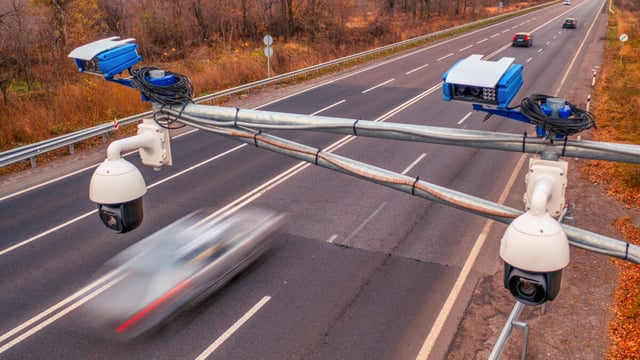
Greece’s Ministry of Digital Governance received four consortium bids by the 30 September 2026 deadline for a €44,055,805 contract, VAT included, to install and operate 1,000 fixed traffic-violation cameras across Attica, Thessaloniki and Crete. The offers were opened electronically on 1 October, and Attica, a region of 3,814,064 residents at the 2021 census, is first in line for installation.
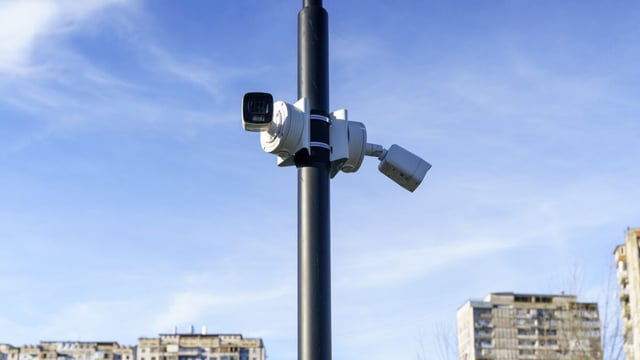
The units will flag red-light running, speeding, bus-lane intrusion, handheld phone use and missing seatbelts or helmets, then send evidence over mobile networks to a central Hellenic Police system. Penalties will reach drivers through the Gov.gr Wallet, according to tender details reported by ICT Plus and the joint ministerial press release of 30 March 2026.
Telecom Operators And Builders Split Across Four Consortia
The bidders, as listed by Mononews, are Hellenic Telecommunications Organization S.A. (OTE) with GEK TERNA and Neurosoft, Aktor with Nova ICT, Amco with Indigital, and Quality & Reliability with GlobiLED. Each consortium pairs a network operator, contractor or manufacturer with a systems integrator, and evaluation of the technical and financial offers is under way with no award date announced, Economix reported.
This project is heading to tender
New smart mobility tenders worldwide, flagged daily with an AI summary.
The OTE group, headquartered in Marousi and controlled by Deutsche Telekom, brings the national fixed and mobile backbone. Its partner Neurosoft, a Euronext Milan-listed integrator based in Iraklio Attica, was one of the parties that appealed against the first version of this tender in May, through a joint venture with OTS.
Nova ICT bids under new ownership after Motor Oil subsidiary Ireon Technologies agreed on 21 July 2026 to buy the remaining 50% of the integrator for €60.5 million, according to Naftemporiki. Corinth-based Amco manufactures transport systems, while Athens Exchange-listed Quality & Reliability pairs its software business with GlobiLED, an LED lighting manufacturer founded in 2007.
A Re-Tender Without The €44 Million Option
The current competition is the second attempt. The first notice, published on 28 April 2026, was worth €88.11 million including VAT, split between a €44.05 million base and an equal option, and the EU tender notice put its value at €71,057,750 excluding VAT over six years.
Minister Dimitris Papastergiou cancelled that procedure on 26 May under Article 106 of Law 4412/2016. Three pre-contractual appeals, from the Neurosoft and OTS joint venture, Aktor and Maycon, had contested over-specialised specifications, the use of a single lot and the financing method, Naftemporiki reported.
“We postponed the tender for a week, we took down the previous notice because, despite the large participation (19 economic operators expressed interest), three objections were filed with the Single Public Procurement Authority,” said Dimitris Papastergiou, Minister of Digital Governance, in a 27 May 2026 interview with REAL FM reported by CNN Greece.
The replacement notice went to the EU journal on 5 June without the option, covering six years that include five of operation and maintenance. The procurement authority suspended it on 6 July on new appeals from Maycon and Aktor over unspecified camera locations and a financing model tied to fine revenue, per Naftemporiki.
Both appellants withdrew in mid-August, iapopsi reported. The deadline then slid from 27 July to 15 September and finally to 30 September.
Detection Rests On Plate Reading And Image Analysis At The Kerb
Each unit combines day and night capture without driver-dazzling flash, optical character recognition for licence plates and computer-vision models that judge whether a driver is holding a phone or unbelted. Images must be anonymised to meet GDPR requirements, according to ICT Plus. The contract also covers the telecoms and computing infrastructure behind the cameras and a single digital platform for recording violations and managing fines on behalf of the Hellenic Police.
The legal basis is Greece’s revised Road Traffic Code, Law 5209/2025, which applied from September 2025. A follow-on law on digital road safety enforcement, Law 5256/2025, allows camera evidence to generate fines without a roadside stop.
Eight Pilot Cameras Supplied The Baseline For The Business Case
The ministry switched on eight pilot units at high-risk Attica junctions in December 2025. In their first four days the Syngrou Avenue site logged more than 1,000 phone or seatbelt violations and roughly 800 speeding offences, while Mesogeion in Chalandri recorded 480 red-light cases, Proto Thema reported.
By early June 2026 the pilot had produced 2,453 tickets, 520 objections and 52 upheld appeals, Papastergiou told SKAI, a reversal rate of 2.1% of all tickets issued. A separate 388-camera network run by the Attica Region, covered by Kurrantly in January, starts with red-light enforcement only.
The ministry’s pre-tender business case projected €96.4 million in fine revenue over five years, or €47 million in a downside case, on the assumption of fewer than two violations per camera per day. Those projections were reported by Autotriti and have not been independently audited.
Greece recorded 517 road deaths in 2025 against 664 in 2024, equal to 49.7 per million inhabitants against an EU average of 43. The figures are provisional and come from the National Technical University of Athens Road Safety Observatory.
Dutch And British Deployments Keep Human Review In Every Case
In the Netherlands, 40 phone-detection cameras produced more than 73,000 of the 248,020 handheld-phone fines issued in 2025. Staff at the Central Judicial Collection Agency check each detection before a €440 penalty is sent, IamExpat reported from agency data.
In Devon and Cornwall, mobile cameras supplied by Acusensus recorded about 10,000 offences in a year, with at least two human reviewers verifying every case, according to the Torbay Weekly. The Greek tender details published so far do not describe a review operation sized for 1,000 sites.