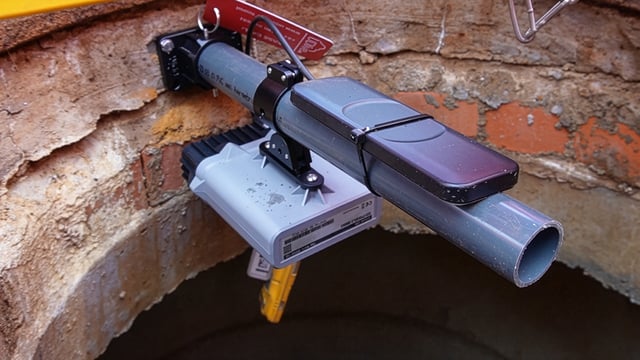
The Ayuntamiento de Blanca, a municipality of 6,882 residents in the Vega Alta del Segura comarca of the Región de Murcia, said on 24 September 2026 that it has completed a €25,030.99 environmental monitoring project, VAT included. The project places two combined air quality and noise stations beside a primary school and an elderly care home and streams their readings into the regional SmartRegion platform.
The work was run by the town’s Concejalía de Nuevas Tecnologías under mayor Ángel Pablo Cano Gómez of the Partido Popular. It was financed 60% by the European Regional Development Fund and 40% by the Comunidad Autónoma de la Región de Murcia (CARM) through the regional FEDER programme for 2021-2027.
Two Pole-Mounted Units Sited For Children And Elderly Residents
The town hall rolled the project out through a sequence of releases It connected them to the regional network on 11 September and declared the project complete on 24 September.
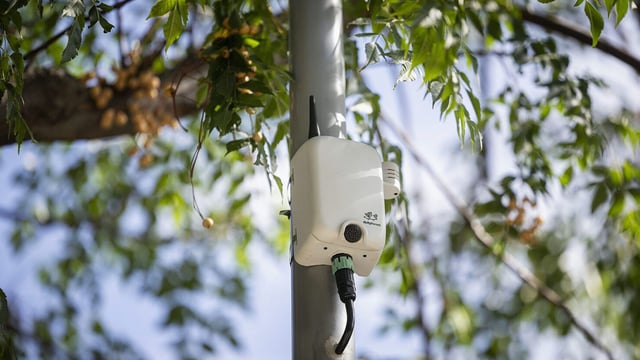
Both stations are mounted on municipal streetlight poles next to CEIP Virgen del Pilar, a public primary school, and the Residencia Virgen de los Dolores care home. The council says it chose the sites to cover the residents most exposed to poor air, and the final release describes the two locations as the town centre and the La Estación district.
The service contract runs for five years. The council says the compact units cost significantly less than conventional large-format analysers, a saving it has not quantified.
Seven Pollutants And Three Noise Periods Measured Over Mobile Networks
According to the August release, each unit measures nitrogen dioxide, ozone, carbon monoxide, sulphur dioxide and particulate matter in the PM1, PM2.5 and PM10 fractions. Gases are read by electrochemical cells, while particles are counted by an optical sensor fed by a forced-suction pump.
The optical sensor is described as able to classify up to 10,000 particles per second. That is a manufacturer-style specification the council has not supported with independent test data.
Noise is captured by an external microphone with windproof foam and humidity protection across a range of 40 to 115 decibels. The system computes day, evening and night indicators of the type required under the EU Environmental Noise Directive.
Data travels over conventional mobile networks rather than a dedicated low-power network such as LoRaWAN, and the releases do not specify the cellular technology. The council says transmission is encrypted and complies with Spain’s Esquema Nacional de Seguridad, with a two-stage alert for vandalism, tampering, power cuts and network outages.
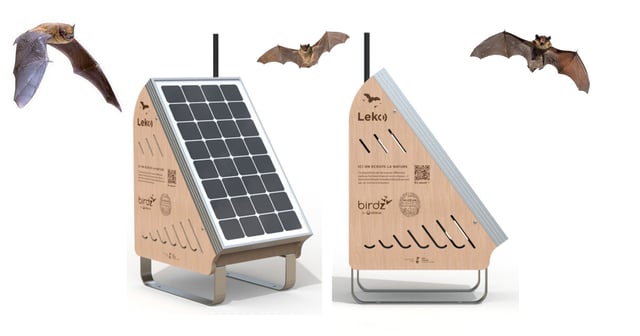
The releases call the units “Smart Spots”, the product name used by Ceutí-based HOP Ubiquitous, which the sensor maker Libelium acquired in June 2022. The town hall has not named its supplier, however, and no contract award notice for the project has been published.
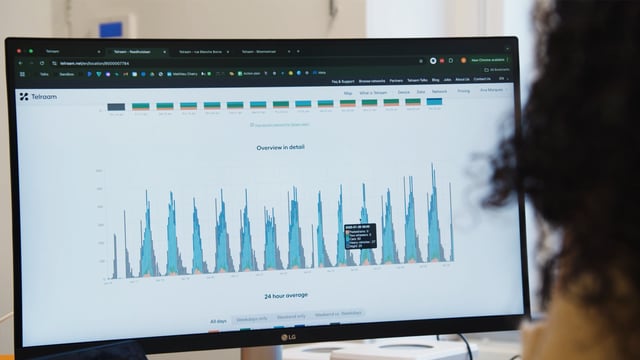
A public web dashboard showing live readings for residents and municipal staff was announced on 17 September. No address for it had been published at the time of writing.
A Regional Grant Line Capped At €30,000 Per Municipality
Blanca’s funding came from the SmartRegion municipal aid call of 2024, established by an order of 2 May 2024 published in the Boletín Oficial de la Región de Murcia on 8 May. The call set a total budget of €1,350,000 and capped each municipality at €30,000.
Funded devices must be compatible with the standard data-exchange protocols of the CARM SmartRegion platform. The regional foundation Fundación Integra developed that platform for about €800,000 over four years, with pilots in Yecla, Pliego and Cieza and a target of all 45 municipalities in the region, as ESMARTCITY reported in 2023.
Other towns are drawing on the same line for different use cases. Pliego announced on 18 September 2026 that it had installed soil moisture sensors, water meters, solenoid valves and weather stations to automate irrigation in four parks.
Blanca’s project, at €25,030.99 including 21% VAT or roughly €20,687 before tax, sits close to the per-municipality ceiling. That cap places a hard limit on how many measuring points small councils in the region can buy through this route, and Blanca’s two stations cover a municipal area of 87.7 square kilometres.
No Reference Station And No Low Emission Zone Obligation
CARM operates 11 fixed air quality stations and one mobile unit, having spent €1,463,584 over two years on upgrades and €401,198 in 2025. In March 2025 it launched a municipal air quality index with 24-hour forecasts for all 45 municipalities, developed with the University of Murcia, according to La 7 TV.
None of those regional stations is in Blanca. At under 7,000 residents, the town also falls well below the 50,000-inhabitant threshold at which Ley 7/2021 obliges Spanish municipalities to create low emission zones.
The recast EU Ambient Air Quality Directive, Directive (EU) 2024/2881, must be transposed by 11 December 2026. From 1 January 2030 it tightens annual limits to 10 micrograms per cubic metre for PM2.5 and to 20 for both PM10 and nitrogen dioxide.
Under that directive, compliance is assessed with fixed reference instruments. Sensor systems can supply only indicative measurements, and their performance is evaluated against the CEN/TS 17660-1:2021 technical specification.
School-sited monitoring has become a common entry point for councils outside Spain as well, as with Birmingham City Council’s plan to fit sensors at 376 schools. Those networks also report indicative rather than regulatory data.
Blanca’s releases say nothing about co-locating the two stations with a reference analyser or classifying them under CEN/TS 17660-1. Until that happens, the readings residents see on a dashboard beside a school cannot be read directly against the 2030 limits that will define whether the town’s air is legally clean.