in Barcelona
 3 to 5 Nov 2026
Waikato Regional Council, the Hamilton-based authority for a North Island region with a 2023 census usually resident population of 498,771, announced a $1.65 million programme to repair, strengthen or install equipment at approximately 40 telemetry flood monitoring sites by July 2028. The Government is contributing up to $990,000 through the Regional Infrastructure Fund, and the council is funding the remaining $660,000.
The work is the Waikato component of a $9.38 million early flood warning package spread across 10 councils, which Environment Canterbury coordinates on behalf of the group. Its aim is to keep existing river and rainfall data flowing during storms, not to add new monitoring points to the regional network.
A Programme Built Around Failure Points Rather Than Coverage
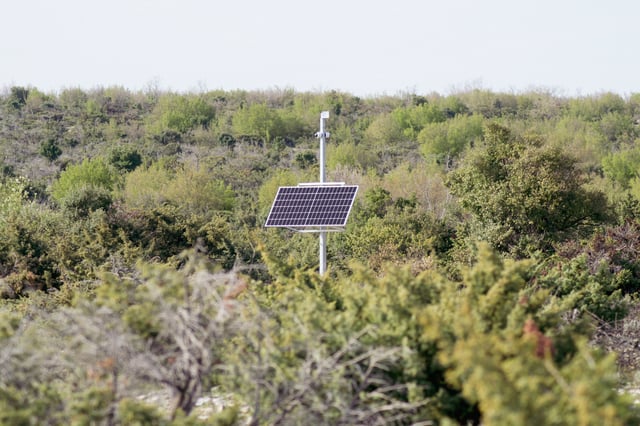
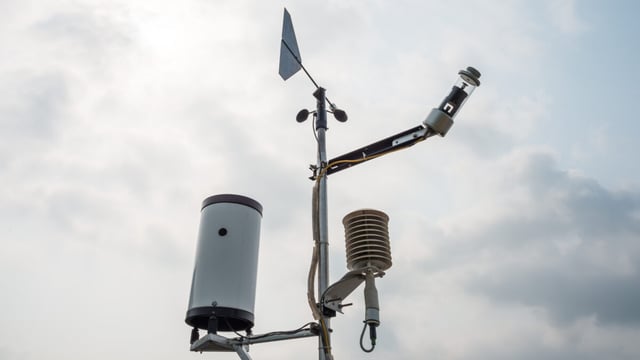
According to the council’s media release published on Scoop, the funding will pay for extra gauges, replacement batteries and loggers, improved radio links, backup sensors and alternative communications paths at sites that already feed the council’s real-time river level and rainfall data.
The most specific change concerns the radio backbone. The council has installed two new radio repeaters after identifying that between 10 and 15 monitoring sites were relying on a single repeater, so one fault at that repeater during a flood could remove a whole cluster of gauges from view.
A further five duplicate rain gauge installations are being completed at existing sites. The second instrument at each location is intended to keep data available if the primary gauge fails during a rainfall event.
“Strengthening these sites gives us more confidence that the data will be there when people need it most,” said Dr Ed Brown, Manager Environmental Monitoring and project sponsor at Waikato Regional Council, in the council’s September 2026 media release.
Hydrology Team Leader Kane Lynn said in the same release that the external funding compresses a work programme that could otherwise have taken many years into the next two to three years, which places the bulk of the physical work inside the July 2028 deadline.
How The Money Is Split Between Crown And Council
The Waikato arrangement follows the national formula exactly: $990,000 is 60% of the $1.65 million total, and the council’s $660,000 is the remaining 40%. That matches the co-funding split that Grow Regions, the agency administering the fund, sets out for the early warning package.
At $1.65 million, Waikato accounts for roughly 17.6% of the $9.38 million total cost across the 10 participating councils. The others are Taranaki, Greater Wellington, Tasman, Nelson, Marlborough, Canterbury, Otago, the West Coast and Southland.
Grow Regions lists the Crown share of the early warning package at $5.62 million. A separate $2.1 million from the same fund is going to a national platform intended to help government agencies make better-informed decisions about flood resilience investment, and the two amounts together account for the $7.7 million figure used in ministerial announcements.
Associate Regional Development Minister Mark Patterson said in a 21 September 2026 statement that physical construction was under way in all participating regions and that the national platform was in detailed design. Equipment funded across the 10 regions includes river level sensors, flow gauges, telemetry equipment and surveillance cameras.
The early warning package sits inside a larger Regional Infrastructure Fund flood resilience programme of close to $200 million across 74 projects. That money was allocated in a first tranche of $101.1 million for 42 projects in August 2024 and a second tranche of $96.8 million for 32 projects in October 2025, most of it directed at physical works such as stopbanks, spillways and rock walls.
Why Sensor Uptime Matters In The Waikato Catchment
The region contains the Waikato River, New Zealand’s longest at 425 kilometres. It drains a catchment of 13,701 square kilometres down to Mercer and passes through eight dams and nine hydroelectric stations before reaching the Tasman Sea at Port Waikato.
The council states on its Flood Room page that its telemetry network provides real-time rainfall and river level data. That feed is monitored around the clock by its Regional Flood Response team, which advises emergency management partners during events.
During Cyclone Gabrielle, Waikato District Council declared a local state of emergency on 13 February 2023, naming low-lying areas near the Waikato River at Port Waikato among the highest-risk locations. New Zealand declared a national state of emergency the following day, only the third in its history.
Events of that scale are when gauges and radio links are most likely to be damaged or lose power, and when forecasters and civil defence teams most need their readings. Duplicate gauges and additional repeaters are a direct response to that coincidence of risk.
A Smaller Bet Than Recent Overseas Warning Systems
The Waikato budget is modest against recent flood warning investments elsewhere. Bexar County in Texas launched a $21 million NextGen Flood Warning System in May 2026 that pairs upgraded upstream gauges with predictive modelling and automated road gates at low-water crossings.
Spread evenly, the Waikato figure works out at about $41,000 per site across the roughly 40 locations. The council has not published a site-by-site breakdown, so the actual split between repeater, communications and gauge work is not known.
Neither the council release nor the ministerial statement names the equipment suppliers, telemetry protocols or communications carriers involved. Neither says whether the alternative communications paths include satellite or cellular fallback, which leaves open how the backup links will behave when terrestrial power and mobile networks fail in the same storm.
What The Announcement Leaves Open
The programme addresses hardware redundancy at around 40 sites, but the council has not said what share of its full telemetry network those sites represent, how many outages its gauges recorded during recent flood events, or what uptime target the upgraded network is expected to meet.
Those figures, together with how the Waikato data is fed into the $2.1 million national platform still in design, will determine whether the money buys measurably more reliable warnings or a harder network that no one can yet benchmark.