in Barcelona
 3 to 5 Nov 2026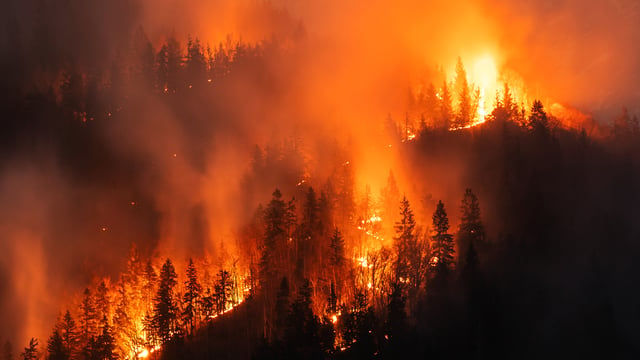
Allianz Seguros has partnered with Argentine climate-tech startup Satellites on Fire to deploy an early wildfire detection system combining artificial intelligence and multi-satellite observation across Spain, the companies announced this month. The initiative will monitor more than 50 million hectares nationwide through the summer of 2026 as an initial validation phase. It follows Spain’s worst wildfire season in three decades and arrives as insurers reposition themselves around prevention rather than post-loss compensation.
A Detection Model Built on Satellite Aggregation, Not New Hardware
The system pools data from multiple geostationary and polar satellite constellations to increase observation frequency and detection accuracy. According to the companies, it cuts average detection times by about 35 minutes compared with reference systems such as NASA’s FIRMS, identifies up to 30 percent more fires, and reduces false negatives by 40 percent in early-stage events.
Satellites on Fire’s underlying architecture requires no ground hardware. The platform pulls imagery from more than eight satellites operated by NASA, NOAA and the European Space Agency, feeding proprietary AI models that detect thermal signatures and simulate fire spread using climate, topography and fuel-load data.
Spain’s Record 2025 Fire Season Sets the Backdrop
Spain recorded 354,793 hectares burned in 2025, its worst wildfire year in three decades, with close to 500,000 hectares lost since 2023. Economic losses from fires approached 5 billion euros last year, while insurance-sector payouts reached 770 million euros, according to figures Allianz attributes to UNESPA, the Spanish insurers’ association.
Coverage of the same figure by Spanish financial outlet El Economista describes the 770 million euro payout total as UNESPA’s most recent available data, tied to 2024 claims rather than 2025. The discrepancy has not been independently reconciled and is noted here as a caveat on the underlying statistic.
From Post-Loss Compensation to Anticipatory Risk Management
The deployment reflects a broader shift in the insurance sector, moving from a model centered on indemnifying damage after the fact toward one built on anticipation and prevention. Allianz frames the project as part of that transition, extending its role beyond claims handling into active risk mitigation.
“Wildfires have become one of the main climate risks for Spain. As an insurer, our commitment is no longer limited to supporting people when an incident occurs but extends to anticipating risk and actively helping to prevent it,” said Veit Stutz, CEO of Allianz Seguros, in the company’s July 2026 press release.
Client Alerts and Coordination With Public Authorities
Allianz will use the system to proactively notify policyholders when insured homes, businesses or other assets sit near fire hotspots with potential to spread. The insurer has also said it intends to share detection data with public authorities to support territorial-level prevention efforts, though no formal agreement with a specific Spanish agency has been disclosed.
An Argentine Startup Scaling Into the European Insurance Market
Satellites on Fire was founded in Buenos Aires in 2020 by Franco Rodríguez Viau, Ulises López Pacholczak and Joaquín Chamo, and closed a $2.7 million seed round in April 2026 led by Dalus Capital with participation from Draper Associates and Draper Cygnus, according to reporting from Kurrant. The company monitors territory in 21 countries across four continents for forestry, agricultural and energy clients, insurers, carbon-credit projects and governments, and counts more than 55,000 registered users.
Its most significant institutional deployment to date is with Aon, which has embedded the platform across its Latin American forestry insurance book for risk calculation and premium pricing, and it has also partnered with the US wildfire tracking nonprofit Watch Duty as it expands into the American market. The Allianz Seguros agreement marks the company’s entry into the European insurance sector.
The Climate-Risk Calculus Driving Insurer Investment
Allianz points to a wider financial rationale behind the initiative. A separate Allianz Trade study published in June 2026 estimates Spain could face cumulative GDP losses of up to 120 billion dollars, roughly 104 billion euros, by 2030 under a sustained extreme-heat stress scenario, equivalent to about 7 percent of GDP. Rising temperatures and drier conditions are cited in both reports as compounding pressure on infrastructure, energy systems and public finances while increasing fire risk.
Market Context for AI-Driven Fire Detection
The Allianz deployment sits within a fast-growing field of AI and satellite-based wildfire detection tools. Comparable efforts include Google’s FireSat satellite constellation developed with the Earth Fire Alliance and Muon Space, and Munich-based OroraTech’s proprietary CubeSat network, which recently began monitoring 20 million hectares of Patagonia for Argentina’s Río Negro province. Unlike those hardware-owning approaches, Satellites on Fire’s model competes primarily on AI processing speed and satellite-feed aggregation rather than owned orbital infrastructure.