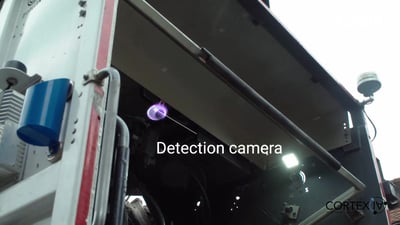
Over the summer, the Spanish city of Valencia launched another smart city project: a smart irrigation pilot. Walk around Valencia and you’ll find plenty of other examples, from air-quality sensors to smart streetlights. But Valencia’s smart city journey started more than a decade ago. The city developed its first smart city strategy in 2012–2013, followed by the launch of the VLCi platform in 2014, bringing data from municipal systems and sensors together for more integrated city management. First, city management becomes more efficient. Municipal technical staff can access the platform, use the data, and manage the city much more efficiently. And secondly, citizens can access it. There are specific platforms for visualization with data on real-time traffic and the number of parking spaces available in the city. Since then, Valencia has continued to deploy technology across the city, with a particular focus on sustainability and more recently, smart tourism. Sensors mounted on busses can help map pollution, while smart cameras provide new mobility data. The city is also trying to make it easier for new technologies to be tested. That's where the Urban Sandbox comes in. It is about leveraging the full knowledge of the city’s technology hub and applying it within the city itself, treating the city as a lab. To test, develop, and improve the technology directly in a real-world environment. As we all know, dealing with public adminitration to get anything done usually involves a lot of red tape; it’s a difficult process. So, having things made easier for you helps a lot. I personally submitted a project to this sandbox and it was very agile. But testing technology is one thing, the hard part is deploying at full scale. After the pilot, Valencia struggles to do that, just like many other cities. Valencia’s sandbox is designed partly to capture what worked, what didn’t and what can be learned from each experiment. But moving from experimentation to permanent deployment still means confronting public procurement principles. One of the problems that public administration has is the procurement. So, for instance, if a municipality wants to procure an innovation, it has to launch a tender process; months go by before the contract is finally awarded and the innovation work actually begins. By that time, a year might have gone by. And we know that, after a year, the innovation might already be obsolete. Valencia is also starting to explore this area, looking for ways to procure innovative solutions much, much more quickly. And procurement isn't the only barrier. Interoperability remains another. A smart city service may work inside Valencia but citizens and data don't stop at municipal boundaries. We should stop talking about cities as such. I believe that concept is becoming obsolete, and we need to start talking about territories, functional territories. And as Valencia looks to the next phase of its smart city strategy, the challenge isn't simply deploying more sensors or building more dashboards. It's turning all that data into decisions in real time. AI could help, but only if the data underneath it works. Often, you might have a very powerful artificial intelligence solution, but if the data you receive isn’t good, or can’t be properly integrated in the platform, then you have nothing. For Joan, that is where the next generation of smart cities will be decided, not simply by how much technology they deploy, but whether their systems can produce reliable, structured and interoperable data that cities can act on. Valencia has made it easier to experiment. The next challenge is one that cities everywhere face: turning smart, successful pilots into solutions that actually scale.
Inside Valencia’s Smart City Strategy
The Spanish city of Valencia began its smart city journey more than a decade ago, and since then, it has been exploring how technology can make its streets and services more efficient. But that journey hasn’t come without challenges. In this video, we speak with Joan Simó, Technology and Innovation Specialist at the Valencian regional government, about Valencia’s smart city journey, how it’s trying to cut through red tape, and the challenges of turning innovation into real-world deployment.
View transcript auto-generated







Similar Picks


📰 Latest News


🎬 Kurrant Originals

🎥 Recent Event Coverage



Featured Case Studies
Real client work behind the news. Strategy, M&A and engineering projects we've delivered for cities and utilities.


Stay in the Loop
Get smart cities and utilities insights delivered your way. Choose your channel
Join our WhatsApp Channel