in Barcelona
 3 to 5 Nov 2026
Abertis, the Barcelona-headquartered toll road operator, and its Fundación Abertis opened applications on 5 November 2026 for the Safe Road Operations Challenge, the third edition of the Abertis Global Challenge, offering a €40,000 prize and a pilot inside one of the group’s business units to the startup or technology SME whose solution best protects people working on roads. Applications close on 16 November 2026 through the Beyond Roads innovation hub, the winner is due to be announced on 23 February 2027, and the call was launched from Santiago through the group’s Chilean subsidiary VíasChile, according to the company press release.
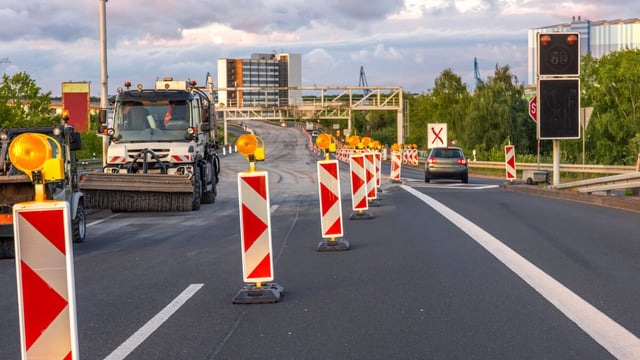
The call shifts the programme from monitoring road infrastructure to protecting the maintenance, inspection, assistance and operations staff who work beside live traffic.
Three Use Cases Rather Than One Technology
The challenge is organised around three lines of action: detecting and predicting risk before crews are exposed, reducing or removing the presence of professionals in hazardous areas through automated or remote solutions, and preventing intrusions and dangerous driver behaviour near work zones. The press release lists artificial intelligence, computer vision, robotics, connected vehicles, IoT, wearables, digital twins and predictive analytics as the technologies in scope, and Ecosistema Startup reports that the group’s subsidiary Emovis expects proposals to combine several data sources and to demonstrate scalability.
This project is heading to tender
New smart mobility tenders worldwide, flagged daily with an AI summary.
Eligibility is open to startups and technology SMEs from any country, provided the solution can be applied to real road operations, and a panel of experts drawn from several countries of the Abertis Group will score potential impact, feasibility, integration capability and scalability.
“Abertis professionals work every day in real traffic environments in more than 15 countries,” said Antonio Durán, global head of innovation at Abertis, in the company’s November 2026 press release, in a translation from the Spanish original.
The Safety Case In Spanish Data
The press release cites the Spanish national registry of road accident victims, published by the Dirección General de Tráfico, which recorded 154 incidents linked to road maintenance and conservation works in Spain in 2025. Most were collisions in which a vehicle from outside the work zone struck a worker, and speed was the main risk factor.
That pattern explains why the third line of the challenge targets driver behaviour as well as crew equipment, since a wearable that warns a worker addresses only half of an incident that begins with an approaching vehicle.
Timeline And Prize Structure
Finalists are due to be announced on 22 December 2026, according to Ecosistema Startup citing Emovis, and will enter the Connect & Build Sessions in which their proposals are tested against the group’s operating conditions, with each finalist receiving €6,000. The winner, announced on 23 February 2027, receives €40,000 to run a pilot in an Abertis business unit, with validation in real conditions and an assessment of extension to other markets.
The prize structure matches the previous edition, in which three runners-up each received €6,000 alongside the €40,000 pilot award, according to the Abertis announcement of that result.
What The Earlier Editions Delivered
The second edition, the Zero Accidents AI Challenge, drew 63 startups from 26 countries and was won by EarthPulse, a Spanish company whose Road Safety Pulse platform combines satellite imagery, weather, traffic and road network data to predict high-risk road sections, with the result announced in Barcelona on 8 May 2025.
The first edition, focused on drones for road operations and maintenance, attracted close to 70 startups, according to Ecosistema Startup, and was won by Azisa of Spain and Aren of the United States for an infrastructure inspection system that, as reported by ABC and cited by Ecosistema Startup, was being tested at RCO, the group’s Mexican subsidiary.
The earlier editions therefore show a consistent route from competition to operating pilot, with a single winner per round and a subsidiary in a different country acting as the test site.
What To Watch In The Selection
The measure for this edition will be the same one the earlier winners faced: whether a pilot in a single business unit produces results that the group’s other subsidiaries across more than 15 countries can adopt.
The 22 December finalist list and the Connect & Build Sessions that follow will show which of the three lines of action, prediction, remote work or driver-behaviour prevention, the selection panel weights most heavily before the 23 February 2027 award.