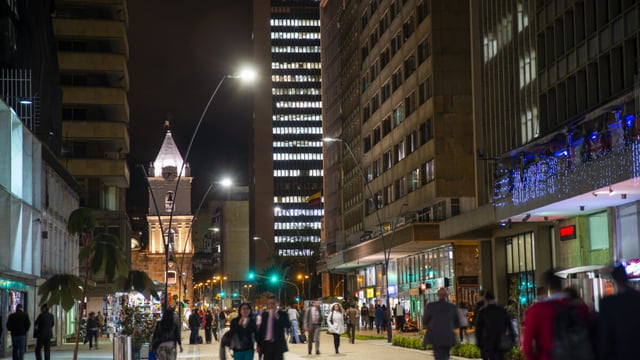
Aguas de Cádiz, the fully publicly owned municipal water and sanitation company for the city of Cádiz, Spain, began a sewer rehabilitation project on June 15, 2026, targeting 1.5 kilometers of deteriorated concrete collector pipes across 12 streets in both the historic intra-muros district and surrounding urban areas. The contract, awarded to Aquatec Soluciones Medioambientales SAU, a wholly owned subsidiary of the Veolia group in Spain, carries a tender budget of €363,000 including VAT and an estimated completion window of three months. The intervention uses ultraviolet-cured cured-in-place pipe (UV-CIPP) lining, eliminating the need for open-cut excavation across the affected road network.
Deteriorated Concrete Collectors Drove the Investment Case
The network sections selected for intervention had reached an advanced state of structural deterioration and had required repeated maintenance callouts in recent years, generating both operational costs and service reliability risks. The project falls under a rolling contract framework for continuous lining rehabilitation of sewer collectors, positioning this phase as part of a longer-term asset management program rather than a reactive repair. Aguas de Cádiz, which has operated Cádiz’s water supply, sewerage, and wastewater treatment services since 1995 as a direct-management municipal entity, previously committed to a ten-year strategic investment plan exceeding €60 million in total network improvements.
UV-CIPP Method Creates a Structural Pipe Within the Host Pipe
The technical approach relies on UV-CIPP, a process in which a flexible, fiberglass-reinforced liner pre-impregnated with photosensitive resin is introduced into the existing collector through standard maintenance manholes. Once positioned, an ultraviolet light train is drawn through the liner, triggering resin polymerization and producing a fully structural, seamless, and watertight pipe formed within the original host pipe. The resulting conduit also delivers improved hydraulic performance: the smooth interior surface of the cured composite reduces friction coefficients relative to aged concrete, increasing flow capacity without upsizing the pipe envelope.
Prior to liner insertion, robotic CCTV cameras perform a detailed internal inspection of each section, recording structural condition and identifying defect locations that inform the rehabilitation plan. A mechanical cleaning operation follows before the liner is installed, and a final post-cure inspection confirms correct installation and structural integrity across every rehabilitated segment.
Aquatec Brings Veolia’s Full-Cycle Water Technology to the Project
Aquatec Soluciones Medioambientales SAU, the contracted execution party, operates as a specialized water-cycle technology company within the Veolia Spain structure, with competencies spanning network diagnostics, trenchless rehabilitation, and digital infrastructure. Its parent, Veolia, reports operations across five continents with over 215,000 employees and positions itself as a global provider of services for water, waste, and energy management. Trenchless technologies including UV-CIPP sit within a division that Aquatec describes as covering solutions for a broad range of pipeline service conditions and diameters.
UV-CIPP Gains Ground Across Spanish and European Municipal Markets
Spain has an established, if still-growing, track record with UV-CIPP in municipal sewer applications. A prior large-scale deployment in Northern Spain, executed by AST Grupo using BKP Berolina Polyester liner systems, demonstrated the technology’s viability for complex urban conditions and drew attention to its relevance for smart city infrastructure programs. Proponents of the method argue that each completed project further demonstrates to network operators the efficiency, cost-effectiveness, and sustainability credentials of trenchless solutions, particularly as pressure mounts to manage urban infrastructure more intelligently.
No-Dig Approach Reduces Carbon Footprint and Urban Disruption
From an asset lifecycle perspective, CIPP accounts for approximately 50% of the global sewer rehabilitation market and, when configured as a fully structural class installation, produces a rehabilitated pipe with a design life exceeding 50 years. Against open-cut replacement, the technology avoids spoil disposal, surface reinstatement, and the secondary disruption costs associated with cutting through historic street fabric — a particularly significant factor in Cádiz, where the intra-muros urban core contains dense infrastructure and constrained access. CIPP curing can typically be completed within a single day for individual sections, a characteristic that differentiates it from trenchless methods requiring extended installation periods. The UV variant also eliminates styrene off-gassing associated with thermally cured alternatives, reducing occupational and environmental exposure risks in enclosed urban environments.