in Barcelona
 3 to 5 Nov 2026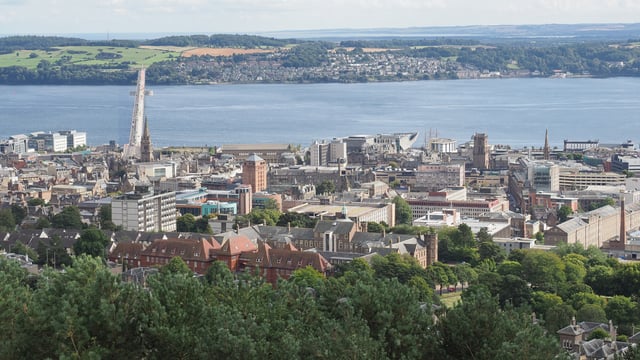
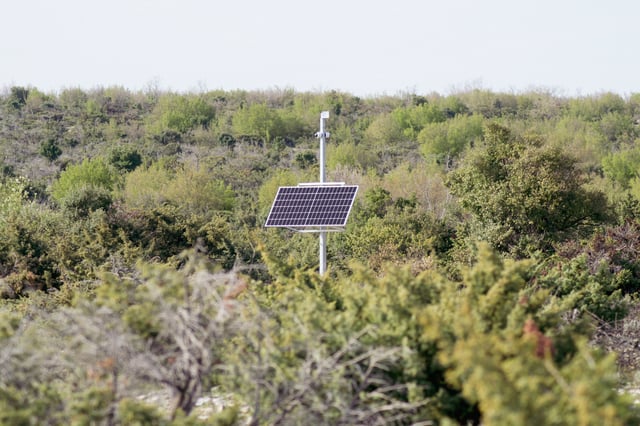
Dundee City Council has installed low-cost PM2.5 air quality sensors at three primary schools in the city, using the deployment to publish real-time pollution readings and to anchor a new pupil education campaign. The sensors went live at Glebelands Primary School and at the North East Campus, which houses St Francis RC Primary and Longhaugh Primary, with the council confirming the rollout on 3 July 2026. The installation is the Dundee school-gate contribution to Urban ReLeaf, a six-city European citizen-science programme co-funded by Horizon Europe and UK Research and Innovation, and it channels sensor data toward both public health messaging and classroom STEM learning rather than regulatory enforcement.
Why Fine Particulate Matter Is the Metric Being Watched at the School Gate
The Dundee sensors track PM2.5, the fraction of airborne particulate matter measuring 2.5 microns or less that is small enough to penetrate deep into the lungs and enter the bloodstream. Traffic is a primary source of this pollution at schools, and the council has framed the monitoring around the twice-daily surge of vehicles at drop-off and pick-up. Children are considered a high-risk group for particulate exposure because their lungs are still developing and their breathing rates are higher relative to body size.
The Six-City EU Project Bankrolling the Deployment
The installation sits within Urban ReLeaf, a four-year Horizon Europe Innovation Action that runs from January 2023 to December 2026 and is coordinated by Austria’s International Institute for Applied Systems Analysis. According to the European Commission’s CORDIS record, the project carries a total budget of roughly 4.46 million euros, of which about 4.21 million euros is EU contribution, spread across a consortium of academic, municipal and private partners.
Beyond Dundee, Urban ReLeaf runs parallel citizen-science pilots in Athens, Cascais, Mannheim, Riga and Utrecht, each testing how resident-gathered environmental data can feed municipal planning. In Dundee, the work is delivered by the University of Dundee alongside the council, building on design-led citizen-observatory research led by Professor Mel Woods. UK participation is supported through United Kingdom Research and Innovation’s Innovate UK, which underwrites British partners in Horizon projects following the country’s association terms.
Low-Cost Sensing and a Public PurpleAir Data Trail
The readings are being published openly on the PurpleAir community map, the crowdsourced platform widely used by schools and local agencies to display neighbourhood-level particulate data. The council did not name a hardware vendor, but publication on PurpleAir and the project’s own specification of low-cost stationary PM2.5 units point to that class of optical particle-counting sensor, which draws air past a laser to estimate particle concentration and uploads readings roughly every one to two minutes.
Devices of this type are indicative rather than reference-grade, meaning they are valued for hyperlocal awareness and trend-spotting but are not certified for statutory air quality compliance. That distinction matters for how the data can be used: it can inform behaviour and education, but not enforcement or formal breach assessments.
Education and Behaviour Change as the Stated Payoff
Alongside the hardware, the council has produced a “What Are We Breathing?” educational booklet with classroom activities on pollution and its long-term health effects. The stated aim is to convert live data into a teaching resource and to nudge families toward walking, cycling or scooting to school, and to discourage engine idling among those who drive. This positions the sensors less as a compliance tool and more as a civic-engagement and curriculum instrument, consistent with Urban ReLeaf’s thesis that citizen-generated observations can build public support for cleaner-air measures.
How Dundee Fits a Wider Wave of School Sensor Programmes
School-based particulate monitoring has become a common entry point for cities experimenting with low-cost sensing. In England, Oadby and Wigston Borough Council fitted EarthSense Zephyr monitors at two primary schools in late 2025 for the same awareness-raising purpose, while the SAMHE research initiative has placed classroom monitors in roughly 2,000 UK schools to build a national indoor-air dataset. In the United States, the Santa Barbara County Air Pollution Control District has been rolling out around 150 PurpleAir sensors across schools and public buildings, adding to some 50 already deployed.
The pattern extends to cities using sensor networks to target health outcomes directly, an approach documented in Kurrantly News coverage of Cleveland’s use of air quality sensors to investigate high asthma rates. Across these programmes, the recurring design choice is the same one Dundee has made: pair inexpensive, publicly visible sensors with community outreach, and treat the data as a driver of awareness and local action rather than a regulatory instrument.
The Benchmarks That Frame the Rollout
The health case for monitoring PM2.5 near schools is well established, with the World Health Organization citing air pollution as a leading environmental risk to health and its 2021 guidelines tightening recommended annual PM2.5 limits to 5 micrograms per cubic metre. Set against that backdrop, a three-site Dundee deployment is modest in absolute scale, but it is designed as a demonstrator within a larger EU pilot rather than a citywide network. The value it is meant to prove is methodological: whether openly published, school-anchored sensor data can shift travel behaviour and be absorbed into how a council plans and communicates around air quality before the Urban ReLeaf programme closes at the end of 2026.