in Barcelona
 3 to 5 Nov 2026
The Cunit City Council, a coastal municipality of approximately 15,800 residents in the Baix Penedès comarca of Tarragona, has awarded a water network digitalization contract valued at over €442,000 to Veolia, funded primarily through a grant from the Spanish Ministry for Ecological Transition and the Demographic Challenge (MITECO) covering 80 percent of total project costs. The contract, awarded under Spain’s second call for subsidies within the Strategic Project for Economic Recovery and Transformation (PERTE) for water cycle digitalization, encompasses hydraulic sectorization, acoustic leak detection, telemetric metering, water quality monitoring, and an integrated data management platform. Works began in June 2026 with a planned execution period of three months.
PERTE Framework Targets Small Municipalities With High Subsidy Rates
The second call for PERTE water digitalization funding, published in Spain’s Official State Gazette on August 20, 2024, targeted projects primarily in municipalities with fewer than 20,000 residents, offering subsidy rates of up to 90 percent to promote more equitable water management across the country. Cunit, with a registered population placing it squarely within the 5,000 to 20,000 inhabitant bracket specified for this call, received a grant covering 80 percent of its project cost.
Spain’s PERTE for water digitalization, coordinated by MITECO and co-financed through the EU’s NextGenerationEU mechanism, provides €1.94 billion in public investment structured around four lines: basin-authority digitalization, improved water governance, support for urban, agricultural, and industrial users, and capacity-building in digital competencies. The Cunit award is one of dozens of municipal-scale projects moving into active execution across Catalonia and other regions under this framework.
Hydraulic Sectorization Divides Network Into Four Independent Zones
The core infrastructure change in Cunit involves dividing the drinking water supply network into four independent hydraulic sectors: Cal Cego, Sol Cunit, Els Jardins, and Costa-Cunit. Each sector will operate as an isolated hydraulic unit, allowing operators to contain the impact of faults or breakdowns within a defined boundary and to attribute consumption anomalies or pressure losses to a specific zone rather than treating the network as an undifferentiated whole.
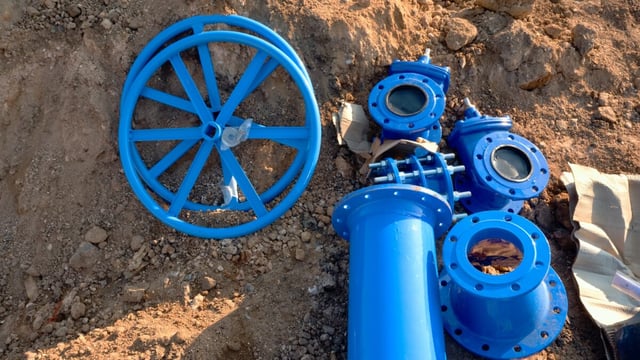
Pressure regulating valves and flow meters will be installed at each sector boundary. The pressure regulating valves enable operators to stabilize and reduce pressure within each zone, including night-time pressure reduction where demand is lowest, which directly reduces mechanical stress on aging pipes and joints and lowers the probability of bursts. Flow meters at sector inlets allow the continuous computation of minimum night-time flow, the standard industry method for estimating background leakage within a zone.
33 Acoustic Correlators And 52 Smart Meters Form The Sensing Layer
Leak detection will rely on 33 remote acoustic noise-logging devices distributed across the network. Acoustic correlators of this type listen for pipe vibration signatures characteristic of leakage and allow maintenance crews to locate approximate leak positions without excavation, reducing both the cost and disruption of repair campaigns. This sensor density, for a municipality of Cunit’s size, is consistent with deployment models used in mature district-metered area programs across Western Europe.
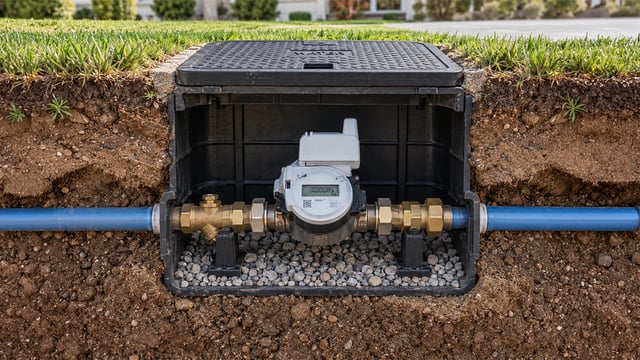
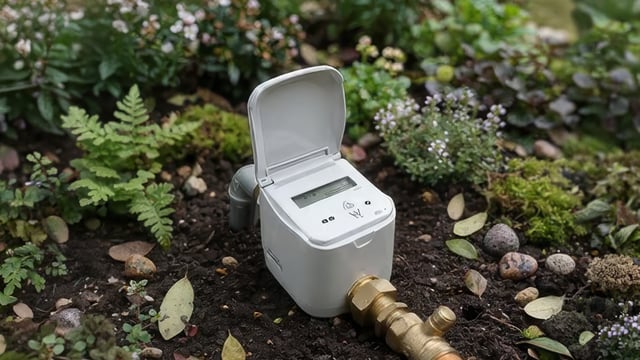
On the consumption side, 52 meters equipped with telemetry modules will replace manual-read units, enabling continuous, uninterrupted consumption data without site visits. Three concentrator antennas will aggregate and relay meter readings to a central platform, ensuring stable radio frequency coverage across the service area. Remote meter reading eliminates estimated billing cycles, provides near-real-time anomaly alerts for irregular consumption patterns potentially indicating customer-side leaks, and supports the kind of granular demand analysis that underpins pressure management decisions.
Five Continuous Water Quality Analyzers Complete The Monitoring Architecture
Five inline analyzers will monitor key drinking water quality parameters continuously rather than relying on periodic sampling. Real-time quality monitoring provides early warning of parameter deviations before they affect consumers and supports compliance documentation under Spain’s transposition of the revised EU Drinking Water Directive. The integration of quality monitoring data into the same operational platform as hydraulic and consumption data marks a meaningful step toward consolidated network awareness for a utility of this scale.
Integrated Data Platform Ties All Sensor Streams Into Unified Operations
All data streams, including telemetry from meters and concentrators, pressure and flow readings from sector boundaries, acoustic noise logs from leak detection units, and water quality analyzer outputs, will feed into a single advanced data management platform. This integration is the operational capstone of the project: it allows network managers to correlate signals across domains, for example, identifying whether a pressure drop in a given sector coincides with increased acoustic activity and diverging flow balance, to prioritize field response more precisely than any individual monitoring channel would permit alone.
The platform architecture reflects an approach to water utility operations that is increasingly standard among mid-tier European utilities, where real-time situational awareness, rather than periodic inspection, drives maintenance scheduling and leakage control.
Veolia Brings PERTE Scale Expertise To Municipal Deployment
Veolia was named as the contractor by the Cunit City Council. The company has established a substantial position within Spain’s PERTE water program. Veolia has emerged as the leading private-sector beneficiary of Spain’s PERTE for Water Digitalization, securing €76 million in grants across 17 projects with a total investment volume exceeding €109 million including local co-financing, reaching over 6.2 million inhabitants across 209 municipalities. As previously reported by Kurrantly News, more than €19 million of the company’s PERTE aid, roughly one quarter of the total, is directed to Catalonia, where Veolia and its subsidiaries are executing four projects with a combined value surpassing €30 million. The Cunit contract, while a small-scale municipal deployment, sits within that broader Catalan portfolio. KurrantKurrant
Veolia operates 3 R&D centers and 14 digital centers across Spain dedicated to deploying innovative solutions in water, energy, and waste management. That infrastructure enables the company to offer centralized data management capabilities to smaller municipalities that would otherwise lack the technical capacity to operate complex sensor networks independently.
EU Benchmarks Validate The Technology Mix Deployed In Cunit
The specific combination of technologies selected for Cunit, namely pressure management, acoustic leak detection, telemetric metering, and inline water quality monitoring, aligns closely with the technology mix endorsed at the European level. The European Commission’s forthcoming Action Plan for the Digitalisation of the Water Sector, a flagship initiative under the 2025 Water Resilience Strategy, supports large-scale deployment of IoT technologies including smart sensors and meters, and cites evidence that smart meters can reduce water use by up to 25 percent, with digital systems delivering additional savings of 5 to 8 percent and leak detection reducing consumption by a further 7 to 14 percent.
A study supporting the Commission’s initiative found that digital metering reduced water consumption in Spain by 12.3 percent on average, a figure above the EU median and one that underscores the particular efficiency gains available in the Spanish context. For a coastal municipality like Cunit, which faces seasonal population swings typical of the Costa Daurada tourism corridor, the ability to monitor and adjust consumption in near-real-time has operational and financial significance beyond baseline efficiency gains.